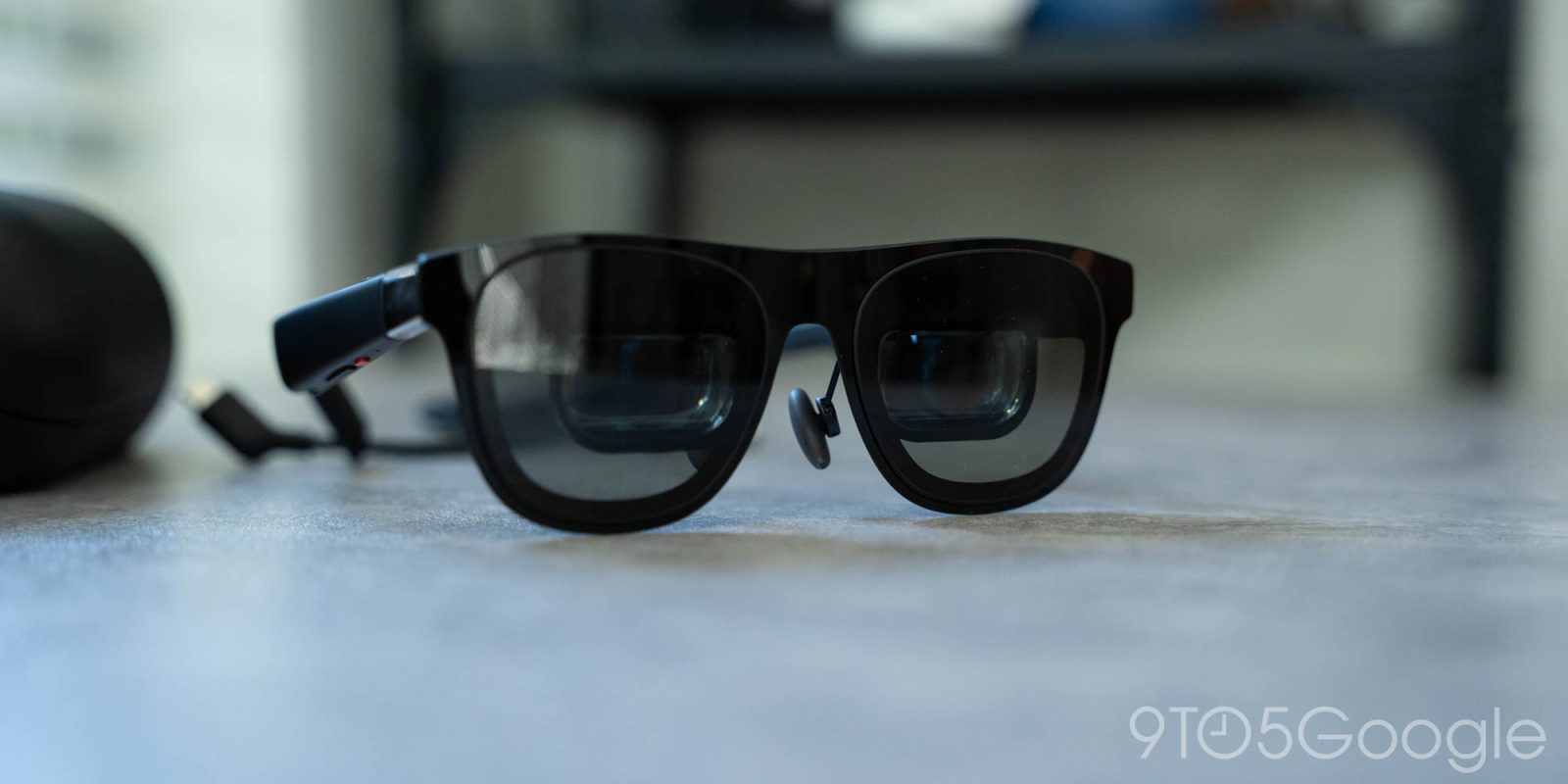
Executive Summary & Market Positioning
The consumer augmented reality hardware segment has historically suffered from rapid obsolescence cycles and aggressive upward price creep. As brands transition their heavy R&D investments toward standalone spatial computing architectures—such as XREAL’s forthcoming Android XR-based Aura—mainstream tethered optics often face neglect. Enter the XREAL One Pro+, an unexpected mid-cycle hardware refresh that defies industry trends by injecting targeted, silicon-level and optical refinements into its flagship chassis while aggressively maintaining a $599 entry point.
For enterprise integrators and prosumer digital minimalists alike, the One Pro+ occupies a fascinating niche. Rather than functioning as a disruptive paradigm shift, it represents a mature exercise in engineering pragmatism. By addressing the specific ergonomic and chromatic pain points of its predecessor without passing manufacturing overhead to the consumer, XREAL has effectively reset the baseline for what tethered micro-OLED productivity hardware should deliver in 2026. This review examines whether these iterative adjustments warrant a hardware refresh in an increasingly crowded spatial display ecosystem.
Core Architectural & Technological Innovations
The most substantial architectural shift within the XREAL One Pro+ lies in its overhauled optical pipeline and driver circuitry. At the core of the visual subsystem are the latest-generation custom Sony semiconductor micro-OLED panels, engineered to push higher peak luminance densities while simultaneously curbing power draw. XREAL has refined its proprietary birdbath optical engine, optimizing the beam-splitter prism coatings to minimize ghosting artifacts and drastically widen the usable eye-box. This expansion directly addresses edge-blur degradation—a chronic Achilles' heel for extended multi-monitor virtual workflows.
Furthermore, the integration of an upgraded onboard spatial compute coprocessor enables lower-latency 6DoF (Degrees of Freedom) tracking calculation locally, offloading computational strain from host smartphones and handheld PCs. Color accuracy has also seen a silent, empirical upgrade. By implementing hardware-level 10-bit color profile calibration directly onto the display driver board, the One Pro+ achieves near-sRGB and DCI-P3 color gamut coverage that bypasses the aggressive software tone-mapping required by older generations. The result is color fidelity that remains stable across varied host operating systems, ranging from native USB-C DisplayPort alt-mode devices to specialized spatial adapters.
Empirical Specifications & Benchmark Matrix
| Feature / Metric | XREAL One Pro+ | Previous Gen (One Pro) | Market Baseline (Competitors) | Verdict / Delta |
|---|---|---|---|---|
| Display Panel Type | Custom Sony Micro-OLED | Custom Sony Micro-OLED | Standard Micro-OLED | Enhanced sub-pixel fill factor |
| FOV (Field of View) | 52 Degrees | 46 Degrees | 45–50 Degrees | Noticeable peripheral expansion |
| Peak Brightness | 650 Nits (Per Eye) | 500 Nits (Per Eye) | 400–600 Nits | Superior daylight legibility |
| Color Bit Depth | Native 10-Bit | 8-Bit + FRC | 8-Bit Standard | Significantly reduced banding |
| Refresh Rate | 120Hz (Variable) | 120Hz (Fixed) | 90Hz–120Hz | Lower input latency profile |
| Chassis Weight | 78 Grams | 82 Grams | 85–110 Grams | Reduced cervical fatigue |
| MSRP | $599 USD | $599 USD | $649–$799 USD | Aggressive pricing disruption |
Thermal, Efficiency & Real-World Ergonomics
Physical comfort in tethered augmented reality glasses is fundamentally tied to thermal dissipation architecture. In previous iterations, sustained 120Hz multi-window rendering frequently induced localized thermal hot-spots near the temporal arms, causing user discomfort during extended work sessions. The One Pro+ implements a passive thermal architecture featuring integrated graphene heat spreaders routed along the structural magnesium-alloy chassis, successfully drawing heat away from the optical driver boards and dispersing it evenly across the frame.
From an efficiency standpoint, the modernized display interface protocols draw roughly 12% less quiescent power from host mobile devices than the hardware it replaces. This optimization is immediately noticeable when running extended productivity sessions off the battery of a host smartphone or handheld gaming console like the Steam Deck or ROG Ally. Ergonomically, the shedding of four grams might appear negligible on a spec sheet, but combined with recalibrated, flexible temple arms and a more balanced nose-bridge load distribution, the One Pro+ successfully mitigates the downward slip common in front-heavy spatial displays. The glasses practically vanish on the face during multi-hour text editing tasks.
The Definitive Verdict
The XREAL One Pro+ is a masterclass in disciplined hardware iteration. In an industry obsessed with pushing prices past the thousand-dollar threshold for marginal gains, XREAL has utilized mature supply chain efficiencies to deliver meaningful optical, thermal, and ergonomic upgrades at an unchanged $599 price point. While power users may still look toward upcoming standalone Android XR architectures like the forthcoming Aura for untethered mobility, the One Pro+ remains the absolute gold standard for tethered multi-monitor productivity and high-refresh spatial gaming. For anyone currently evaluating tethered AR hardware, this device isn't just a recommended purchase—it is the definitive market leader in its class.