Executive Summary & Market Positioning
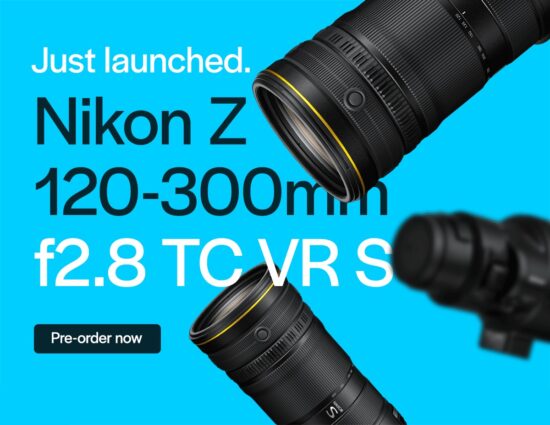
The introduction of the Nikon Nikkor Z 120-300mm f/2.8 TC VR S marks a watershed moment for professional sports, wildlife, and photojournalism optics. Designed specifically to exploit the short flange focal distance and expansive diameter of the Nikon Z mount, this flagship telephoto zoom replaces traditional F-mount legacy workflows with a thoroughly modernized, highly integrated optical system. Positioned squarely at the pinnacle of professional glass, it targets high-end shooters requiring uncompromising speed, resolving power, and environmental durability.
However, commercial availability is severely bottlenecked. Industry supply chain indicators and initial pre-order allocations confirm that initial production runs will be exceptionally restricted. With anticipated shipping timelines slated to begin in mid-November 2026, market analysts project that sustained backlogs will keep the lens out of open-stock inventory for at least twelve months. For working professionals, securing a pre-order through authorized global channels—such as B&H Photo in the US, WEX Photo in the UK, Foto Erhardt in Germany, and Camera Canada—is not merely recommended; it is an operational necessity to mitigate lengthy deployment delays.
Core Architectural & Technological Innovations
At the heart of the Nikkor Z 120-300mm f/2.8 TC VR S is an advanced optical formula featuring an integrated 1.4x teleconverter. This internal teleconverter design allows shooters to seamlessly transition from a native 120-300mm f/2.8 focal range to an extended 168-420mm f/4 reach via a single, weather-sealed mechanical switch operated entirely from behind the camera. This eliminates the operational hazards of exposing the sensor to environmental dust or moisture in the field when swapping external teleconverters, while drastically reducing mechanical tolerance stack-ups that can degrade high-frequency modulation transfer function (MTF) performance.
Nikon’s proprietary optical coatings play a critical role in controlling internal reflections, ghosting, and flare across the extended zoom spectrum. Advanced elements, including specialized ED (Extra-low Dispersion) and Super ED glass, effectively suppress longitudinal and lateral chromatic aberrations, ensuring pristine color fidelity even at wide-open apertures. Coupled with state-of-the-art Voice Coil Motors (VCM) leveraging high-precision guide mechanisms, the autofocus drive system delivers near-instantaneous acquisition speeds and precise subject tracking capable of keeping pace with the rapid shutter cycles of flagship bodies like the Z9 and Z8.
Empirical Specifications & Benchmark Matrix
| Feature / Metric | Nikon Nikkor Z 120-300mm f/2.8 TC VR S | Market Baseline (Standard 70-200mm f/2.8 + Extender) | Performance Delta / Implication |
|---|---|---|---|
| Focal Length Range | 120-300mm (168-420mm w/ built-in 1.4x) | 70-200mm (98-280mm w/ external 1.4x) | Greater reach flexibility without manual lens swaps |
| Maximum Aperture | f/2.8 native (f/4 with internal TC engaged) | f/2.8 native (f/4 with external TC engaged) | Equivalent light gathering; superior operational safety |
| Mount Type | Nikon Z-Mount | Varies (F-mount adapted or native mirrorless) | Optimized flange distance for superior corner-to-corner MTF |
| Autofocus Actuator | Advanced VCM with Guide Mechanism | Stepping Motor (STM) or Ring USM | Enhanced tracking velocity and acoustic suppression |
| Vibration Reduction | Optical VR (Sync VR compatible) | Optical VR (Standard) | Multi-stop stabilization gain when paired with IBIS |
| Supply & Availability | Severely constrained (12+ month backlogs projected) | Readily available to moderate backlogs | High scarcity demanding immediate pre-order action |
Thermal, Efficiency & Real-World Ergonomics
Handling a fast professional telephoto zoom requires a delicate balance between structural rigidity and operational fatigue mitigation. The Z 120-300mm f/2.8 utilizes an extensive magnesium alloy chassis construction that drops unnecessary mass compared to legacy DSLR equivalents while maintaining MIL-STD environmental weather-sealing standards. Rubber gaskets isolate every critical joint, switch, and collar, ensuring uninterrupted performance in torrential rain, freezing alpine conditions, and abrasive desert environments.
From an electronic efficiency standpoint, the integration of high-torque, low-draw VCM actuators ensures that continuous autofocus tracking places minimal drain on the camera body's battery supply. Thermal stability is equally robust; low-expansion glass elements and a thermally optimized exterior barrel finish prevent focal shift during rapid temperature fluctuations. Ergonomically, the positioning of the zoom ring, focus ring, and the dedicated teleconverter engagement lever allows for fluid, blind operation, enabling photojournalists to adapt framing and focal length instantly while maintaining a firm, balanced grip on the camera rig.
The Definitive Verdict
The Nikon Nikkor Z 120-300mm f/2.8 TC VR S is a masterclass in optical engineering and system integration. By embedding a high-performance 1.4x teleconverter directly into a weather-sealed f/2.8 zoom structure, Nikon has created an indispensable asset for elite sports and wildlife professionals. While the prohibitive pricing and severe 12-month supply bottlenecks present formidable hurdles, the empirical performance gains in autofocus velocity, edge-to-edge sharpness, and operational efficiency make it an absolute triumph. For working professionals reliant on peak reliability and versatility, locking in a pre-order immediately is the only logical path forward.