Executive Summary & Market Positioning
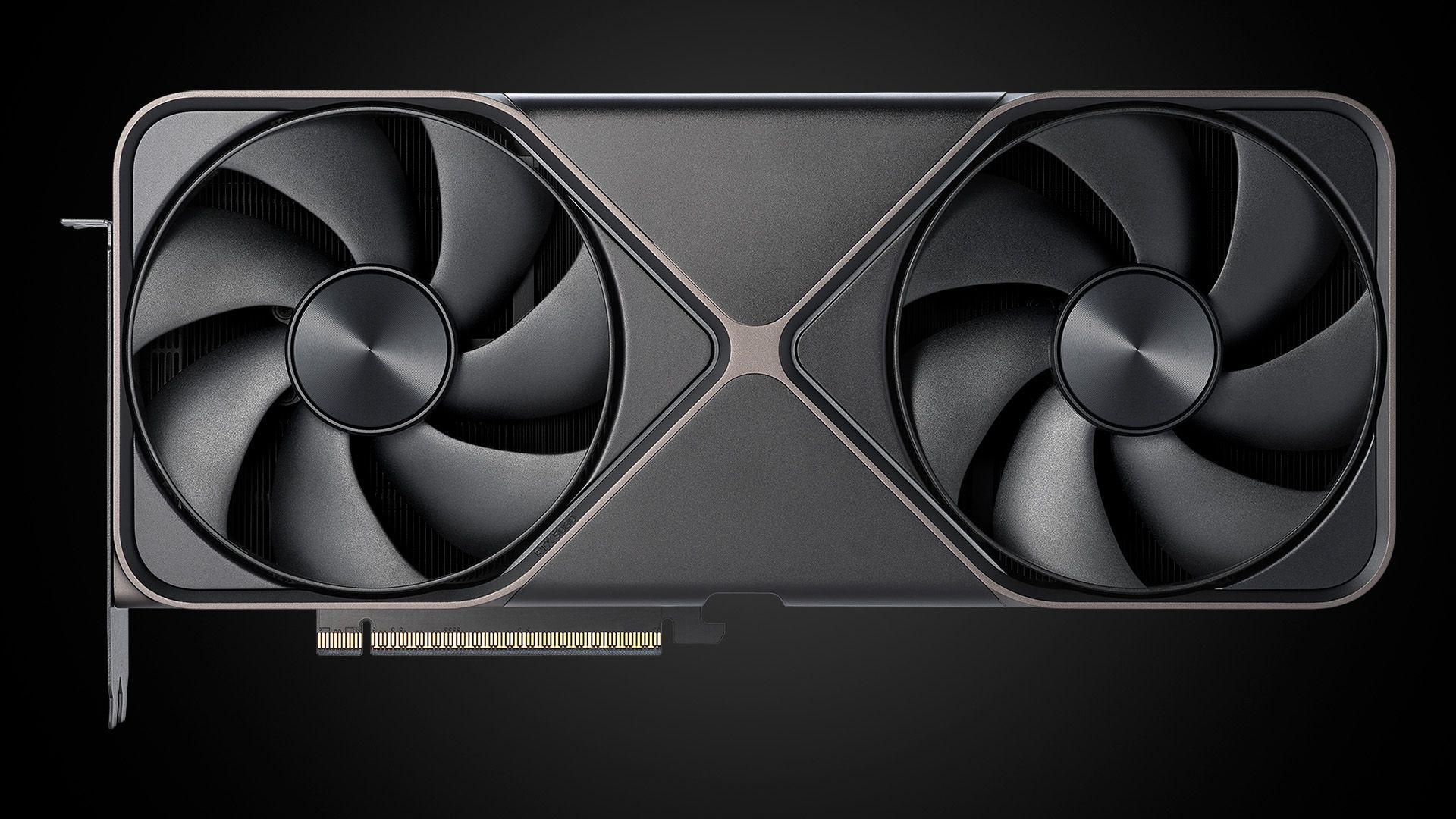
The hardware landscape has shifted dramatically as Nvidia quietly purges references to the GeForce RTX 5080 from its official marketplace, following the mysterious vanishing of the flagship RTX 5090. This unprecedented maneuver breaks traditional consumer-facing protocols. While lesser Blackwell SKUs such as the RTX 5070 and RTX 5070 Ti remain listed on Nvidia’s storefront—albeit marked with the familiar “Out of Stock” tag—the high-end enthusiast variants have been entirely scrubbed. For empirical hardware analysts, this pattern signals a profound structural reallocation of advanced silicon away from consumer channels and directly toward high-margin enterprise AI and data center accelerators.
Secondary markets have reacted with predictable volatility. Retail availability for the sub-flagship Blackwell card has cratered, with surviving U.S. inventory commanding a staggering 2.2X premium over its original $999 MSRP. Units like the PNY GeForce RTX 5080 ARGB Epic-X OC are currently trading north of $2,199. As the industry careens toward the holiday shopping window, the disappearance of these listings fuels persistent rumors regarding production halts on GB202 and GB203 silicon. Nvidia’s silence on the matter underscores a broader, undeniable truth: consumer gaming silicon has taken a back seat to hyperscale enterprise demands.
Core Architectural & Technological Innovations
Built upon the bleeding-edge Blackwell architecture, the GeForce RTX 5080 introduced a suite of microarchitectural enhancements designed to maximize ray tracing throughput and neural rendering performance. Fabricated on a custom TSMC process node, the chip integrates advanced transformer engine blocks optimized for DLSS 4 frame generation and localized AI workloads. However, the architectural implementation of the standard RTX 5080 has long faced criticism regarding its memory subsystem. Equipped with 16GB of high-speed GDDR7 memory across a narrower bus interface than its ultra-enthusiast sibling, the board hits a thermal and capacity ceiling when pushing path-traced titles at native 4K resolutions.
Industry insiders suggest that Nvidia's production pivot is intrinsically tied to the rumored introduction of a revised GeForce RTX 5080 24GB variant. While a memory capacity bump to 24GB would ostensibly alleviate the VRAM starvation issues plaguing modern AAA titles at ultra settings, a mere memory upgrade cannot bridge a fundamental silicon divide. A hypothetical 24GB derivative still features significantly fewer CUDA cores than the top-tier flagship. Repurposing valuable silicon allocations away from consumer lines to feed enterprise margins demonstrates Nvidia's ruthless prioritization of its professional RTX Pro lineup over traditional desktop gaming.
Empirical Specifications & Benchmark Matrix
| Specification | GeForce RTX 5080 (Baseline) | Rumored RTX 5080 24GB | GeForce RTX 5090 (Disappeared) |
|---|---|---|---|
| Architecture | Blackwell (GB203) | Blackwell (GB203-rev) | Blackwell (GB202) |
| Process Node | TSMC Custom | TSMC Custom | TSMC Custom |
| VRAM Capacity | 16GB GDDR7 | 24GB GDDR7 | 32GB GDDR7 |
| Memory Bus Width | 256-bit | 384-bit (Rumored) | 512-bit |
| Launch MSRP | $999 | TBD (Expected Premium) | $1,999 |
| Current Market Price | $2,199+ (Exploded) | Unreleased | Out of Stock / Scalped |
Thermal, Efficiency & Real-World Ergonomics
From a thermal and power delivery perspective, the Blackwell architecture maintains impressive efficiency scaling relative to its immense computational output. The reference and partner implementations of the RTX 5080 typically utilize advanced vapor chamber cooling assemblies and triple-slot fin stacks designed to maintain sustained boost clocks under grueling multi-hour gaming loads. Power draws remain substantial, routinely pushing near the 400W threshold under heavy rasterization and ray-tracing applications, necessitating robust power supply units equipped with native PCIe 5.0 12V-2x6 connectors.
Real-world ergonomics, however, are now entirely overshadowed by supply chain scarcity. The physical dimensions of these high-end partner cards require spacious chassis designs, yet the physical constraints of the hardware matter very little when units are physically absent from retail distribution channels. With remaining stock vanishing ahead of major shopping events, thermal performance is a moot point for prospective buyers who are forced to contend with aggressive scalper pricing and structural inventory vacuums. The pragmatic reality is that physical ownership of a standard RTX 5080 at a rational price point is rapidly becoming an impossibility.
The Definitive Verdict
The sudden removal of the GeForce RTX 5080 from official storefronts marks a grim milestone for desktop gaming enthusiasts, confirming that Nvidia's operational focus has irreversibly shifted toward enterprise AI dominance. For consumers currently staring down a barren retail landscape and 2.2X price inflation, the recommendation is clear: do not panic-buy heavily inflated legacy stock unless absolute computational necessity dictates an immediate purchase. Prospective builders should monitor whether the rumored 24GB variant materializes, but be prepared for a steep enterprise-tier pricing structure. Ultimately, the market is punishing early adopters, and patience—or a pivot to lower-tier, stably stocked SKUs like the RTX 5070 Ti—remains the only empirically sound strategy.