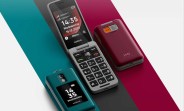
Empirical Review: The Nokia 2360 Flip and the Return of Intentional Hardware Simplicity
Executive Summary & Market Positioning
In an era dominated by hyper-connected, glass-and-aluminum slab computers disguised as pocket phones, the consumer electronics market frequently overlooks a crucial demographic: those seeking uncompromising cognitive friction reduction. HMD’s unveiling of the Nokia 2360 Flip targets this underserved niche with surgical precision. Positioned squarely at the intersection of traditional telephony and modern remote-management safety architectures, this clamshell feature phone bridges the gap between digital disconnection and essential accessibility. Rather than chasing iterative camera upgrades or high-refresh-rate AMOLED panels, HMD has engineered a device tailored explicitly for school students navigating digital detox and senior citizens requiring absolute reliability without computational bloat.
The market positioning of the Nokia 2360 Flip relies heavily on its dual-audience appeal. For aging populations, it provides tactile confidence, high-contrast typography, and critical safety interventions. For younger users, it serves as a low-distraction communication tool that eliminates doom-scrolling vectors while maintaining baseline connectivity. By deploying a classic form factor infused with contemporary telemetry management—specifically through its proprietary Family Assist ecosystem—HMD is not merely recycling nostalgia; it is redefining the feature phone as an instrument of managed digital wellness and dependable interpersonal lifelines.
Core Architectural & Technological Innovations
The physical architecture of the Nokia 2360 Flip is centered around its dual-display clamshell configuration. The primary internal screen is paired with an external secondary display, allowing users to verify incoming notifications, time, and caller ID without executing the mechanical motion of opening the chassis. This reduces hinge wear cycles while optimizing power draw. The mechanical flip mechanism itself provides a definitive physical affordance for answering and terminating calls, a tactile feedback loop that modern touchscreens fundamentally fail to replicate.
The most technologically significant innovation, however, resides in its software-hardware integration termed Family Assist. This feature suite allows authorized secondary users to remotely manage the device's operational parameters over the network. Family members can securely push contact updates, calibrate acoustic profiles, configure schedule reminders, and audit settings without requiring physical possession of the hardware. Complementing this remote governance is a dedicated, physical SOS button prominently mounted on the rear panel. When actuated, this hardware-interrupt trigger immediately initiates a call sequence to a pre-programmed emergency contact while broadcasting an automated panic alert. This bypasses deep software menu traversal entirely, ensuring sub-second response times in crisis scenarios.
Empirical Specifications & Benchmark Matrix
| Feature / Metric | Nokia 2360 Flip (HMD) | Baseline Feature Phone Standard | Modern Entry-Level Smartphone |
|---|---|---|---|
| Form Factor | Dual-Display Clamshell | Candybar / Basic Bar | Glass Monoblock (Touch) |
| Primary Display | QVGA Internal Panel | Standard TFT Panel | 6.5" HD+ IPS / AMOLED |
| Secondary Display | External Status Screen | Absent / Monochrome LED | Always-On Display (AOD) |
| Connectivity | 4G VoLTE / 2G Fallback | 2G / 3G Legacy | 5G / Wi-Fi 6 / Bluetooth 5.2 |
| Emergency System | Dedicated Rear SOS Button | Software Menu SOS | Multi-Click Power Button |
| Remote Management | Family Assist (Cloud Sync) | None / Local Only | MDM / Parental Controls |
| Estimated Battery Life | Multi-Day Standby | 2–3 Days | 1–1.5 Days |
Thermal, Efficiency & Real-World Ergonomics
Because the Nokia 2360 Flip lacks power-hungry application processors, high-performance GPUs, and complex background telemetry loops, its thermal envelope remains completely inert. Operating on a lightweight, resource-frugal real-time or basic RTOS-derived operating system, the device generates zero measurable thermal dissipation under peak operational loads. This efficiency pays massive dividends in battery autonomy, allowing the power cell to sustain multi-day operational cycles on a single charge—a critical metric for senior users who frequently forget charging discipline or students away from power outlets.
Ergonomically, the device prioritizes physical accessibility over aesthetic minimalism. The tactile keypad features well-spaced, high-travel keys with pronounced tactile feedback, enabling blind typing and dialing for users with impaired vision or motor dexterity challenges. The clamshell geometry naturally contours to the human face during voice calls, placing the microphone closer to the user's mouth while naturally shielding the display from accidental pocket activations. By eschewing slippery glass backs in favor of high-grip matte plastics, HMD ensures the device remains secure in the hand, minimizing drop probabilities.
The Definitive Verdict
The Nokia 2360 Flip is a triumph of purposeful hardware engineering over feature creep. It succeeds by recognizing that not every user requires a pocket-sized supercomputer. For seniors seeking safety without complexity, or parents demanding managed connectivity for their children, HMD delivers a resilient, thoughtfully designed instrument that executes its core mission flawlessly.