Executive Summary & Market Positioning
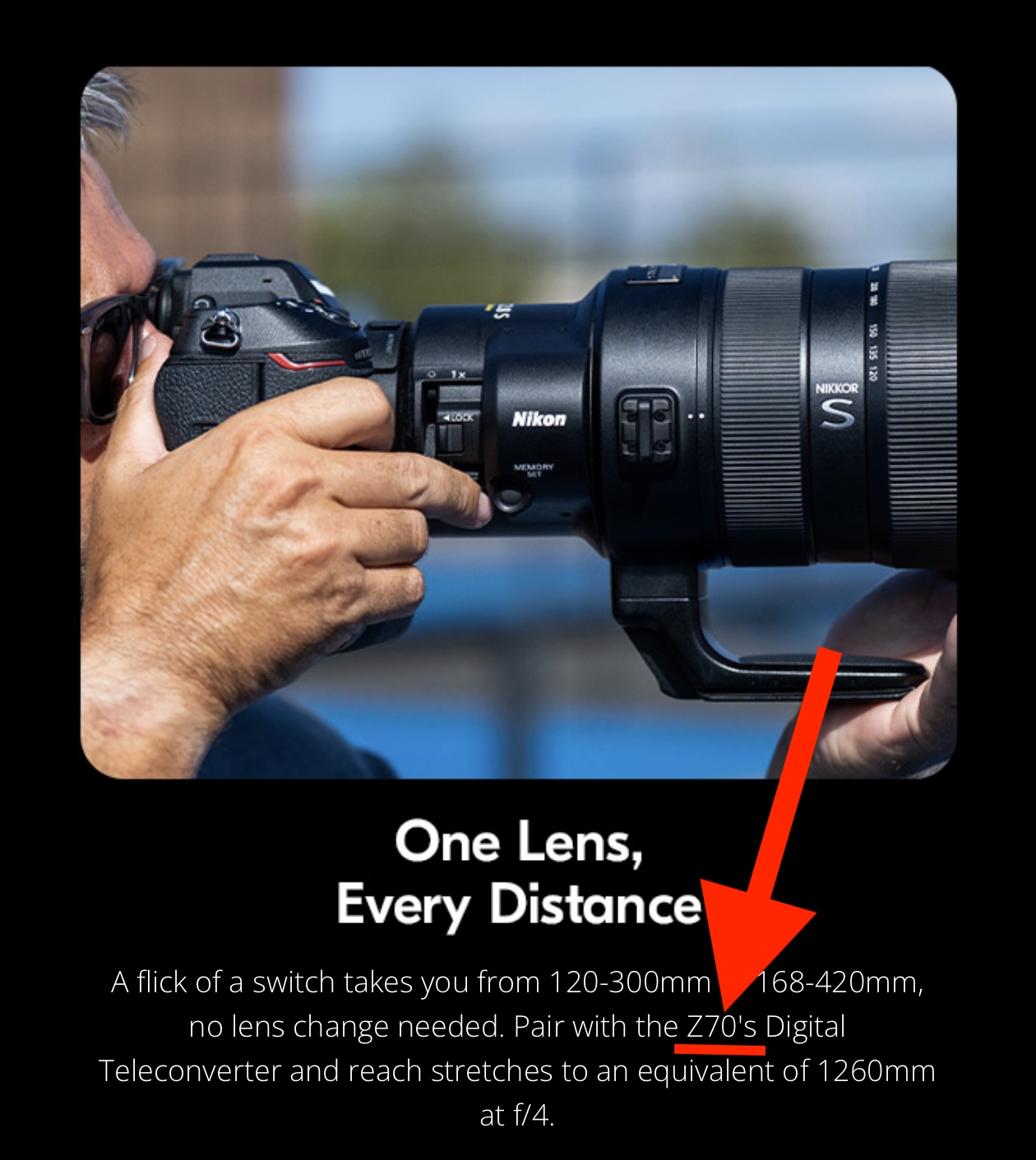
The recent inadvertent disclosure of the long-rumored Nikon Z70 within promotional literature for the Nikkor Z 120-300mm f/2.8 TC VR S lens has brought into sharp focus Nikon’s aggressive roadmap adjustments for its crop-sensor ecosystem. For years, advanced enthusiasts and professional photojournalists demanding a high-end, high-performance APS-C (DX) mirrorless body have found themselves underserved, as manufacturers increasingly pivot R&D budgets toward full-frame formats. The Z70 is engineered to directly disrupt this paradigm, filling the operational void left by legacy DSLRs like the D500. By positioning the Z70 as a flagship DX powerhouse, Nikon is signaling that the cropped sensor format remains a vital, high-throughput tool—particularly for wildlife, sports, and action shooters who benefit intrinsically from the telephoto reach afforded by the 1.5x crop factor.
Market analysis indicates that this hardware launch was originally slated for an earlier late-summer window, corroborated by transient firmware leaks and temporary ecosystem listings such as Apple’s premature inclusion of the Z70 within authorized ProRes and ProRes RAW developer databases. Supply chain disruptions and rigorous validation cycles for advanced processing pipelines appear to have pushed the official debut into November. However, the incidental pairing of the Z70 reference material alongside professional-grade glass like the 120-300mm f/2.8 underscores Nikon’s strategic intent: this camera is not targeted at casual consumers, but is instead built as a rugged, high-cadence instrument designed to interface natively with the upper echelon of Nikkor Z optics.
Core Architectural & Technological Innovations
At the silicon level, the Nikon Z70 is anticipated to inherit the advanced EXPEED processing architecture found in the Z9 and Z8, bypassing traditional mechanical shutter dependencies in favor of a high-speed stacked CMOS sensor. This electronic-first design philosophy enables unprecedented readout speeds, effectively mitigating rolling shutter artifacts while unlocking continuous burst rates that rival or exceed dedicated sports bodies. The elimination of physical shock from a mechanical curtain also ensures structural longevity and pristine frame-to-frame sharpness during high-frequency tracking sequences. Furthermore, the integration of advanced deep-learning autofocus algorithms—optimized specifically for erratic subject tracking across feathered, mammalian, and motorized categories—places the Z70 at the bleeding edge of computational photography in the DX segment.
Complementing the sensor array is a robust internal recording architecture capable of handling heavy cinematic workloads. The prior Apple ProRes ecosystem leaks strongly suggest that the Z70 will support native, high-bitrate professional codecs directly to high-speed memory cards without requiring external recording hardware. This demands significant thermal dissipation overhead and high memory bus throughput, pointing to the implementation of dual card slots (likely CFexpress Type B paired with UHS-II SD) and advanced sustained write capabilities. For hybrid shooters, this architectural blueprint bridges the gap between high-res still acquisition and demanding video deliverables, establishing a versatile multi-role powerhouse.
Empirical Specifications & Benchmark Matrix
| Specification Metric | Nikon Z70 (Estimated / Leaked) | Industry Baseline (High-End APS-C) | Architectural Advantage |
|---|---|---|---|
| Sensor Type | Stacked BSI CMOS (DX) | Standard BSI CMOS | Substantially reduced rolling shutter; faster readout |
| Processing Engine | Dual EXPEED / AI Coprocessor | Single Image Processor | Enhanced subject-recognition inference and buffer clearing |
| Continuous Shooting | Up to 30+ FPS (Electronic) | 15–20 FPS | Superior capture rates for peak-action sports and wildlife |
| Video Capabilities | 4K/60p, Apple ProRes Internal | 4K/30p (Standard Bitrate) | Professional grading flexibility and uncropped workflows |
| Build Construction | Magnesium Alloy, Weather-Sealed | Polycarbonate/Alloy Hybrid | Professional-grade environmental resistance and durability |
Thermal, Efficiency & Real-World Ergonomics
Deploying high-frame-rate electronic shutters and high-bitrate internal video codecs within a compact APS-C chassis presents a formidable thermal challenge. Unlike full-frame bodies that offer greater internal volume for passive heat dissipation, the Z70 must manage significant junction temperatures within a smaller spatial envelope. Engineering projections suggest Nikon has incorporated optimized magnesium-alloy internal chassis designs that act as thermal sinks, routing heat away from the sensor plane and primary processor stack. This thermal management ensures extended continuous recording times without triggering premature thermal shutdown flags during demanding field assignments.
Ergonomically, the Z70 is designed to balance the handling dynamics of substantial telephoto zoom lenses while maintaining the portability inherent to the DX format. The grip architecture is expected to mirror the deep, secure contours of the Z8, accommodating shooters wearing gloves or operating in adverse field conditions. Control layouts will likely prioritize tactile, physical customization, allowing high-speed adjustments of autofocus modes and metering patterns without requiring menu dives. Paired with lenses like the Nikkor Z 120-300mm f/2.8, the Z70 forms a remarkably agile field kit that delivers uncompromising optical performance coupled with superior weight distribution.
The Definitive Verdict
The forthcoming release of the Nikon Z70 represents a watershed moment for the manufacturer's mirrorless ecosystem, directly answering the long-standing demands of professional and advanced enthusiast shooters for a true spiritual successor to the D500. By combining a high-speed stacked sensor architecture, deep-learning autofocus algorithms, and robust internal professional video codecs, Nikon is proving its commitment to the APS-C format. While minor scheduling delays have tested the patience of the market, the incidental hardware confirmations point to an uncompromising tool that bridges the gap between portability and elite performance. For sports, wildlife, and action photographers heavily invested in the Nikkor Z mount, the Z70 is shaping up to be an indispensable addition to the professional toolkit.