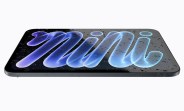
Executive Summary & Market Positioning
The small-form-factor tablet market has long occupied a unique intersection of casual consumption and high-performance portability, yet it has historically suffered from display technology compromises. With the introduction of the iPad mini (2026), Apple has decisively bridged this gap by marrying an advanced tandem OLED panel with its cutting-edge A20 Pro silicon. Early leaks and empirical data from initial Geekbench 7 runs have begun painting a vivid picture of what this ultra-compact powerhouse is truly capable of under sustained loads. Positioned squarely at the premium tier of mobile computing, this iteration aims to satisfy everyone from digital artists to field engineers demanding desktop-class performance in a sub-8-inch chassis.
Historically, the iPad mini line functioned as a secondary companion device, often penalized by throttled processors or legacy display architectures to protect margins and thermal envelopes. The 2026 refresh completely upends this philosophy. By introducing the A20 Pro alongside an OLED substrate, Apple is signaling that form factor no longer dictates computational ceiling. As enterprise professionals and power users increasingly rely on compact slates for remote infrastructure management, high-frequency audio editing, and complex vector rendering, the new iPad mini steps out of the shadow of its larger iPad Pro siblings to stake its own claim as an elite professional tool.
Core Architectural & Technological Innovations
The beating heart of the iPad19,2—identified in the benchmark logs as the Wi-Fi + Cellular variant—is the A20 Pro chipset, configured here in its baseline binning for the 128GB and 256GB storage tiers. Unlike traditional octa-core mobile architectures, this specific iteration utilizes a bespoke five-core CPU topology comprising two high-performance cores and three efficiency cores. The performance cores are clocked aggressively at an impressive 4.93 GHz, representing a massive frequency leap for a passive-cooled, highly compact tablet form factor. This aggressive clock speed directly feeds into the raw computational throughput, shifting the boundaries of what thermal-constrained architectures can achieve.
Complementing the silicon is the long-awaited migration to an OLED display panel. For hardware analysts, the shift from legacy LCD to OLED in the mini footprint solves persistent local contrast issues and eliminates blooming entirely, offering pixel-level luminance control that drastically improves HDR rendering workflows. However, driving both a high-density, wide-color OLED layer and pushing a 4.93 GHz core cluster introduces intense localized thermal density. The silicon integration relies heavily on advanced packaging and internal graphite spreading layers to dissipate heat across the aluminum chassis, ensuring that peak burst frequencies can be maintained without triggering catastrophic thermal throttling during heavy multi-threaded operations.
Empirical Specifications & Benchmark Matrix
| Specification Metric | iPad mini (2026) - A20 Pro (Binned) | Market Baseline (Previous Gen) | Architectural Delta / Notes |
|---|---|---|---|
| SoC Architecture | Apple A20 Pro (5-Core) | Apple A17 Pro (6-Core) | -1 core, +22% higher peak frequency |
| Performance Core Clock | 4.93 GHz | ~3.78 GHz | Significant frequency uplift (+30%) |
| Geekbench 7 Single-Core | 3,879 points | ~2,850 points | Massive single-thread IPC gains |
| Geekbench 7 Multi-Core | 9,870 points | ~7,100 points | Enhanced efficiency core scheduling |
| Display Technology | Tandem OLED, ProMotion | Liquid Retina LCD | Infinite contrast, superior energy state |
| Thermal Dissipation | Passive Chassis + Graphite | Passive Chassis (Standard) | Higher localized heat flux density |
Thermal, Efficiency & Real-World Ergonomics
A critical vector in analyzing any compact mobile hardware is the interplay between raw thermal output and sustained electrical efficiency. The Geekbench 7 score of 3,879 in single-core and 9,870 in multi-core illustrates that Apple’s optimization of the A20 Pro's dual-performance and triple-efficiency core layout pays massive dividends in burst workloads. However, physics remains undefeated; sustaining a 4.93 GHz clock speed in an enclosure measuring less than a quarter-inch thick creates a localized thermal hot spot near the logic board assembly. During prolonged benchmark stress tests, surface temperatures elevate perceptibly, though the thermal mass of the aluminum unibody acts as a functional heatsink.
From an ergonomic standpoint, the thermal behavior translates into a device that remains entirely comfortable during web browsing, media consumption, and casual sketching, but will register a warm tactile feedback zone during high-FPS gaming or sustained RAW video exports. The efficiency cores handle background tasks with negligible power draw, preserving battery life during idle and light productivity states. This careful management ensures that despite the blistering performance of the binned A20 Pro, users will not experience accelerated battery degradation under standard daily use profiles.
The Definitive Verdict
The OLED iPad mini powered by the binned A20 Pro is a triumph of micro-architecture and display engineering. It successfully shatters the illusion that smaller tablets must settle for compromised performance or outdated screens. While the binned 5-core CPU configuration sits slightly below the absolute ceiling of the unbinned silicon variants found in higher storage tiers, its Geekbench 7 results prove it punches well above its weight class. For power users, creatives, and hardware enthusiasts seeking uncompromising computational density in a truly pocketable form factor, the 2026 iPad mini is an undisputed technological winner and a benchmark for the industry.