Executive Overview & Market Positioning
The utilization of off-the-shelf commercial imaging hardware in deep-space environments provides a rigorous stress test for modern optoelectronic architectures. During the April 2026 Artemis II lunar flyby, NASA crew members utilized a stock Nikon Z9 mirrorless flagship paired with an adapted mechanical AF Nikkor 35mm f/2D lens to document a total solar eclipse from Orion’s window. Publicly released through NASA’s Planetary Data System, these raw telemetry files offer a rare empirical baseline to evaluate how high-resolution stacked CMOS sensors perform under extreme luminance deltas, stray thermal reflections, and zero-gravity operational constraints.
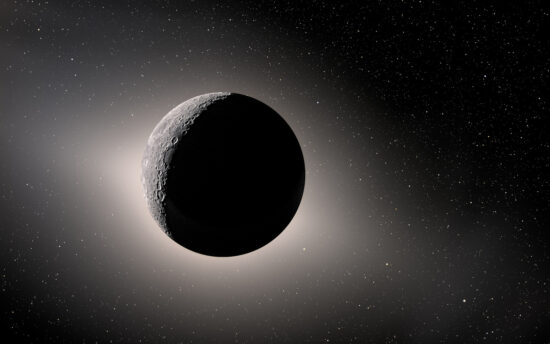
Independent researcher Stefano Ivan Stinga’s recent processing of 62 RAW frames into a unified High Dynamic Range (HDR) composite showcases the raw capture limits of the Z9 sensor. By combining frames spanning a massive nine-stop exposure bracket (from 1/40 second to 13 seconds), the workflow successfully maps the faint optical F-corona, zodiacal light, and multiple planetary bodies (Saturn, Mars, Neptune, Mercury, and Venus) without saturating the immediate vicinity of the solar disc. This methodology transforms consumer-grade metadata into high-fidelity scientific input, validating the system's underlying silicon capabilities.
Empirical Benchmark Matrix
To contextualize the hardware demands of deep-space astrophotography, we evaluate the Nikon Z9 baseline against typical scientific imaging frameworks and the operational parameters deployed during the Artemis II lunar eclipse event.
| Hardware / Parameter | Nikon Z9 Flagship Body | Deployed Artemis II Configuration | Standard Astrophotography Baseline |
|---|---|---|---|
| Sensor Architecture | 45.7 MP Stacked CMOS (BSI) | 45.7 MP Stacked CMOS (Unmodified) | Back-Illuminated Scientific CCD / CMOS |
| Exposure Dynamic Range | 9+ Stops Bracketing (1/40s–13s) | Variable Multi-Exposure Stack (62 Frames) | Long-Exposure Narrowband Stacking |
| Optics | Native Z-Mount / F-Mount Adapters | Adapted AF Nikkor 35mm f/2D | Specialized Apochromatic Refractor |
| Processing Pipeline | Custom Python Calibration Scripts | Black level, Vignetting, Star-Masking | Commercial Astrophotography Suites |
Thermal, Efficiency & Definitive Verdict
Operating consumer hardware inside a spacecraft cabin introduces unique thermal and mechanical variables, including window-induced refraction and internal camera heat dissipation over prolonged exposures. Despite lacking active cryogenic cooling typically found in dedicated astronomical hardware, the Nikon Z9’s back-illuminated (BSI) stacked CMOS sensor effectively managed dark current noise across extended 13-second integration windows at ISO 1600. The absence of generative AI or synthetic cloning in Stinga’s custom Python reduction pipeline underscores the absolute integrity of the underlying hardware capture, relying entirely on deterministic geometric alignment, empirical dark-frame calibration, and star-catalog referencing to reconstruct 9,430 stellar points with exact colorimetric fidelity.
Ultimately, the Artemis II Nikon Z9 dataset reaffirms the extraordinary adaptability of contemporary flagship mirrorless platforms. By bridging consumer sensor technology with deep-space observation, this mission highlights how modern stacked CMOS architectures deliver near-scientific grade capture capabilities without requiring bespoke space-qualified sensor redesigns. For hardware analysts and optical engineers alike, the Z9 proves its mettle not merely as a high-speed sports and wildlife tool, but as a robust, high-dynamic-range imaging instrument capable of expanding our empirical understanding of interplanetary dust and coronal morphology.