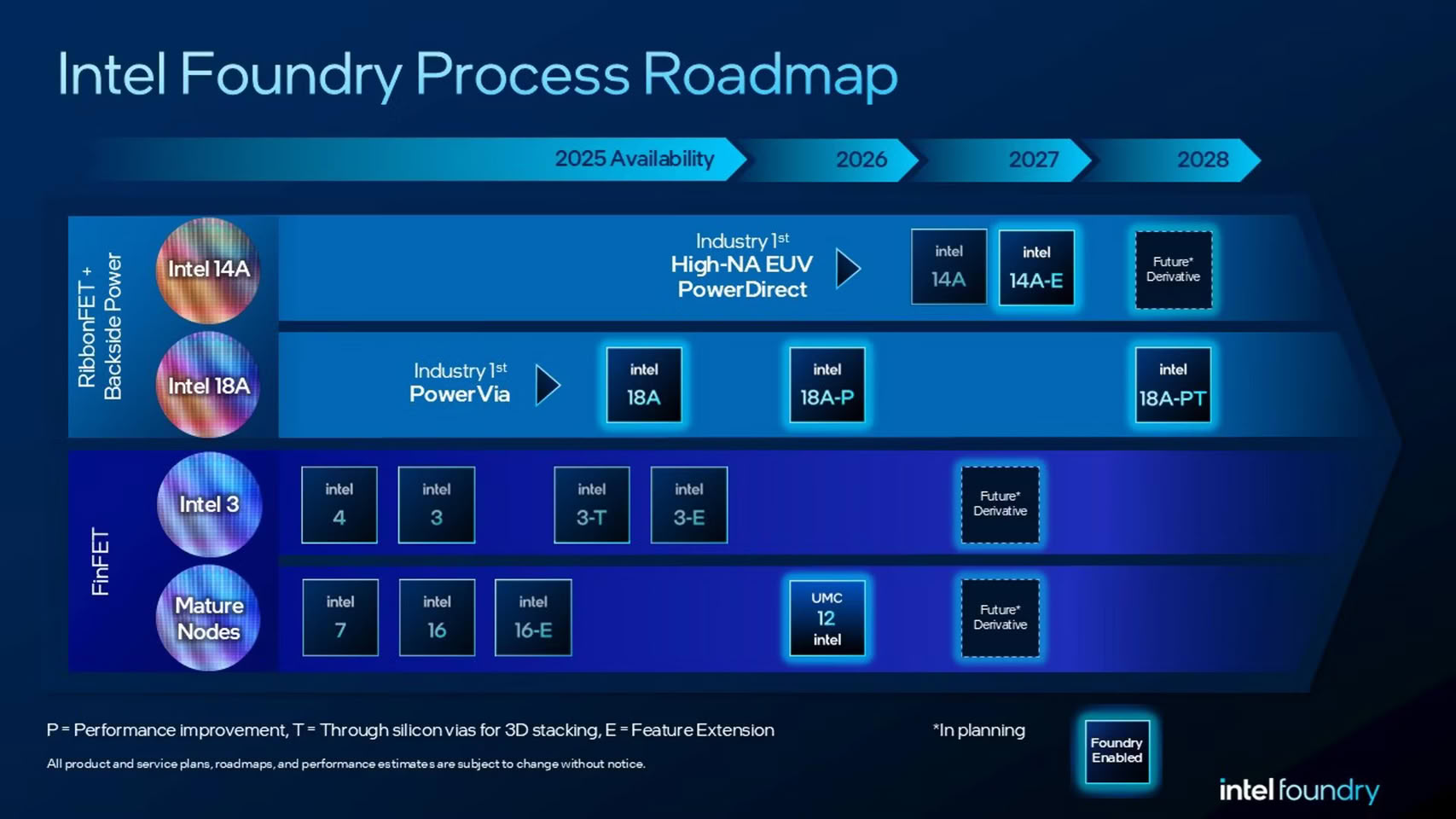
Executive Overview & Market Positioning
Intel Foundry has achieved a critical validation milestone by securing its first anonymous external customer for the advanced Intel 18A-P manufacturing node. Originally disclosed by executive leadership at the TomorrowX Summit and subsequently confirmed by CTO Pushkar Ranade, this design win marks a pivotal turning point for Intel's external foundry ambitions. While specific production volumes, delivery timelines, and the identity of the partner remain undisclosed, the acquisition signals growing industry confidence in Intel’s sub-2nm process roadmap despite broader macroeconomic and competitive pressures in the semiconductor sector.
Simultaneously, Intel is anchoring its internal product roadmap to the 18A-P variant. Confirmed deployments include the upcoming Nova Lake CPU architecture, ensuring that Intel's internal design teams serve as primary lead vehicles for yield optimization and library maturation. Crucially, 18A-P maintains strict design-rule compatibility with the baseline 18A node. This interoperability allows fabless clients to migrate existing tape-outs to the performance-enhanced variant without necessitating expensive, time-consuming foundational layout redesigns.
Empirical Benchmark Matrix
The 18A-P node delivers quantifiable silicon-level optimizations over the standard 18A architecture, entering risk production to capture high-performance computing (HPC) and client workloads. Unofficial yield metrics floating near the 70% threshold further underscore the manufacturability of the gate-all-around (GAA) RibbonFET architecture.
| Parameter / Metric | Baseline Intel 18A | Intel 18A-P Variant | Empirical Delta | Foundry Status |
|---|---|---|---|---|
| Performance Scaling | Baseline | +9% Frequency / Throughput | +9% at Iso-Power | Active / Risk Production |
| Power Reduction | Baseline | -18% Dynamic Power | 18% Savings at Iso-Freq | Internal & External Target |
| Design Rule Compatibility | Native Rules | Compatible Base Layouts | Zero Major Rework | Seamless Porting |
| Packaging Integration | Standard EMIB | Advanced EMIB & Xeon Link | Multi-Year Azure Supply | Commercial Deployment |
Thermal, Efficiency & Definitive Verdict
From a thermal and power-delivery perspective, the transition to 18A-P offers engineers a compelling design vector: either a direct 9% performance uplift at equivalent thermal envelopes or an 18% power reduction at iso-performance. This flexibility is vital for mobile client platforms like Nova Lake and hyperscale cloud infrastructure, where thermal design power (TDP) walls constrain raw frequency scaling. Complementing these silicon gains, Microsoft's parallel commitment to Intel's EMIB advanced packaging for Azure silicon and multi-year Xeon supply—spanning platforms like Diamond Rapids—illustrates a holistic ecosystem strategy. While questions linger regarding the exact delineation between Socionext's previously announced engagements and this newly formalized contract, Intel Foundry is methodically assembling the necessary triad of advanced nodes, packaging prowess, and external validation to contest TSMC's hegemony in the leading-edge foundry market.