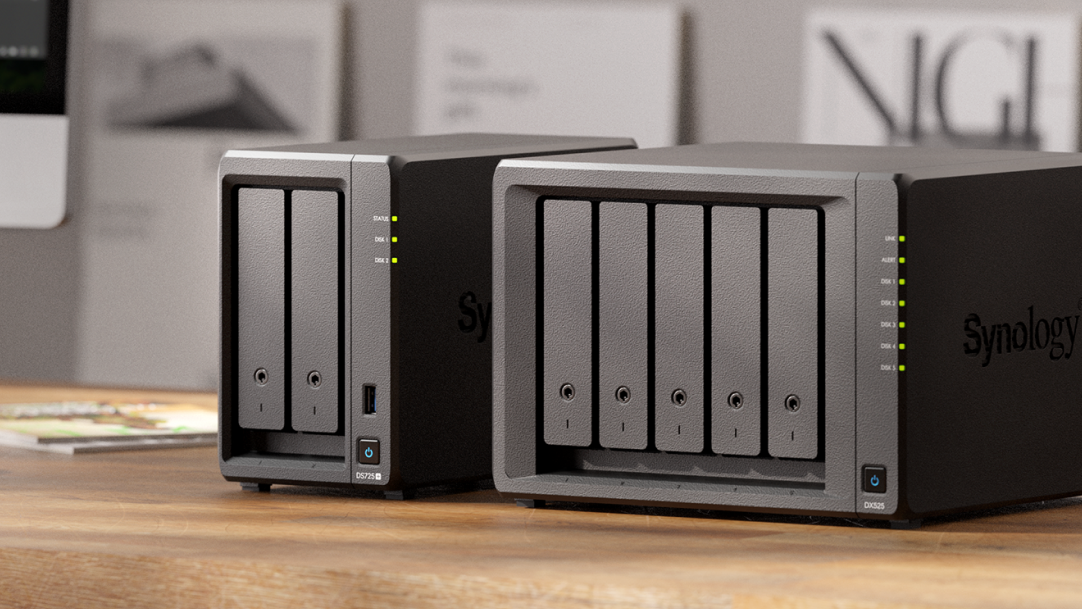
Executive Summary & Market Positioning
Network-Attached Storage (NAS) devices occupy a critical intersection between enterprise reliability and consumer accessibility. Among them, the Synology DS918+ has long enjoyed a stellar reputation as a go-to platform for prosumers, small businesses, and enthusiast system administrators seeking robust local cloud capabilities. However, a recent high-profile security incident involving a technically proficient Reddit user highlights a persistent vulnerability in the modern home-lab ecosystem: the friction between hardware longevity and software maintenance discipline. When a seasoned administrator falls victim to an automated ransomware campaign, it serves as a stark empirical reminder that operational security is a continuous process, not a set-it-and-forget-it appliance feature.
At the heart of this breach lies a dangerous convergence of unforced administrative errors and architectural opacity. Specifically, exposing a storage gateway directly to the public internet combined with a software stack running 18 months behind current security patches created an ideal attack vector. While the affected user successfully leveraged a 3-2-1 backup strategy to recover their data—utilizing Proxmox to mount the underlying Linux mdraid partitions—the incident lays bare the structural risks of edge-exposed storage. As hardware manufacturers push deeper into services, the onus remains on both the vendor to provide transparent notification pipelines and the user to adhere to zero-trust perimeter principles.
Core Architectural & Technological Innovations
Underneath the sleek, black plastic chassis of the Synology DS918+ runs DiskStation Manager (DSM), a sophisticated operating system built upon a Linux kernel foundation. Storage pooling is handled via standard Linux software RAID (mdadm), which proved to be the ultimate safety net during the incident recovery phase. Because DSM relies on standard partitioning and file systems (predominantly Btrfs or ext4 atop mdraid), administrators are not locked into proprietary hardware controllers. When catastrophe strikes, drives can be extracted from the physical bay, connected to a hypervisor like Proxmox or a vanilla Linux host, and mounted natively to retrieve raw data blocks—a testament to open-source resilience within closed-ecosystem hardware.
However, the attack vector itself underscores systemic challenges in how firmware and package updates are delivered and signaled to the end user. The breach was attributed to CVE-2024-10441, a critical remote code execution (RCE) vulnerability that had been documented for over a year. Compounding the risk, community reports indicate that older iterations of DSM's graphical user interface occasionally report systems as "up to date" even when major security bulletins require manual intervention. Furthermore, Synology's architecture splits core OS updates from individual package patches (such as PHP runtime environments), requiring multi-tiered maintenance that easily slips past even diligent administrators if direct push-notifications or out-of-band email alerts are missed.
Empirical Specifications & Benchmark Matrix
| Parameter / Feature | Synology DS918+ (Incident Unit) | Modern Prosumer Baseline | Enterprise Standard |
|---|---|---|---|
| CPU Architecture | Intel Celeron J3455 (4C/4T) | Intel Celeron N5105 / AMD Ryzen | Intel Xeon D / EPYC Embedded |
| Default Storage Backend | mdadm / Btrfs / ext4 | ZFS / Btrfs software RAID | ZFS / Hardware RAID with BBU |
| Primary Attack Vector | Direct WAN Web UI Exposure | WireGuard / Tailscale VPN Tunnel | Zero Trust Network Access (ZTNA) |
| Update Mechanism | Manual / Fragmented UI prompts | Automated background updates | Centralized fleet management |
| Vulnerability State | CVE-2024-10441 (18 mos unpatched) | Zero-day monitored via telemetry | Automated hot-patching |
Thermal, Efficiency & Real-World Ergonomics
From a purely physical and environmental standpoint, units in the DS918+ class excel by offering high storage density, four drive bays, and dual M.2 NVMe cache slots within a compact, low-power envelope. Drawing minimal idle wattage, these devices sit quietly in home offices or utility closets, balancing thermal dissipation via dual variable-speed fans with acoustic output that rarely disturbs users. This hardware efficiency is precisely why they remain beloved by the enthusiast community long after their official software support lifecycles begin to wind down.
Yet, this physical discretion creates a false sense of security. Because the hardware operates silently and reliably in the background, users rarely audit its security posture unless forced to do so. The ergonomics of the web interface—designed to simplify complex Linux storage management into intuitive point-and-click menus—can inadvertently abstract away critical system telemetry. When the UI obscures underlying CVE statuses or fails to aggressively push vital security advisories via direct communication channels, the sleek user experience transforms into a liability, lulling administrators into a dangerous state of operational complacency.
The Definitive Verdict
The ransomware incident involving the Synology DS918+ is not a failure of the hardware itself, but a masterclass in the cascading risks of edge exposure and maintenance drift. The hardware performed admirably—both in its years of reliable local storage service and in how its open standards (mdadm) facilitated rapid disaster recovery via Proxmox. However, the event serves as an emphatic warning to the entire hardware community: never expose storage appliances directly to the public internet.
For system administrators and prosumers alike, the takeaway is absolute. Edge services must be locked behind secure, modern tunneling protocols like Tailscale or WireGuard. Simultaneously, hardware vendors must modernize their telemetry to ensure critical security patches are never masked by ambiguous UI states. Ultimately, human discipline in patch management remains the single most critical line of defense in modern data infrastructure.