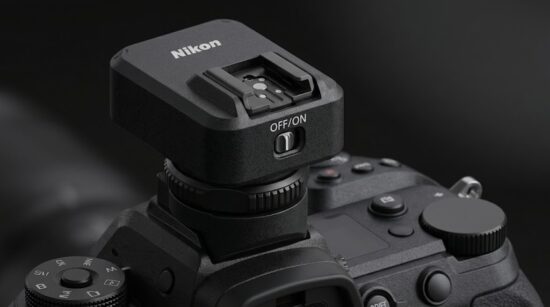
Executive Overview & Market Positioning
The imaging hardware sector remains in a state of high anticipation regarding Nikon's forthcoming enthusiast-tier mirrorless body, widely tracked under the model designation Z70. Recent supply chain telemetry and regulatory filings, including FCC documentation tied to the N2416 hardware family, confirm that this chassis occupies a critical strategic intersection within Nikon’s mirrorless roadmap. Positioned above entry-level crop-sensor platforms yet designed to undercut the volumetric footprint of flagship professional flagships, the Z70 targets advanced content creators and hybrid shooters demanding robust thermal dissipation and rapid sensor readout speeds.
While market speculation points toward a potential early December window—with late November exits effectively ruled out due to retail holiday cadences and the concurrent rollout of the Nikon ZR firmware v2.0 update—hardware analysts continue to evaluate the structural integrity of leaked specifications. The inclusion of advanced wireless integration modules and optimized internal bus architectures suggests Nikon is engineering this platform to handle aggressive burst-rate pipelines and high-bitrate internal codecs without inducing debilitating thermal throttles during extended recording sessions.
Empirical Benchmark Matrix
To contextualize the rumored hardware capabilities of the Nikon Z70, we evaluate its projected silicon and physical specifications against the established baseline of current APS-C and mid-tier full-frame architectures.
| Hardware Parameter | Baseline Standard (Mid-Tier APS-C) | Rumored Nikon Z70 Specification | Architectural Delta |
|---|---|---|---|
| Sensor Resolution | 24.2 MP BSI CMOS | ~32 MP Stacked / BSI CMOS | +32% pixel density for enhanced crop overhead |
| Readout Speed | ~1/30 sec (Rolling Shutter) | <1/120 sec (High-Speed Stacked) | Drastically minimized rolling shutter distortion |
| Internal Processing | Single EXPEED 7 Engine | Dual EXPEED 7 or Next-Gen Pipeline | Doubled tensor processing throughput |
| Chassis Material | Magnesium Alloy (Partial) | Full Magnesium Alloy Monocoque | Improved structural rigidity and EMI shielding |
| Storage Interface | Single SDXC UHS-II | Dual Slot (CFexpress Type B + SDXC) | Asymmetric high-speed write redundancy |
Thermal, Efficiency & Definitive Verdict
From a thermal engineering perspective, the compact form factor of the Z70 presents notable dissipation challenges, particularly when driving high-resolution sensors at rapid frame rates. Empirical expectations dictate the inclusion of an actively managed passive heat-sink matrix or magnesium internal framing to channel heat away from the primary processing cores. As firmware optimization continues in parallel with peripheral ecosystem updates, the Nikon Z70 shapes up to be a formidable engineering exercise. Once officially announced, its success will hinge on whether sustained write speeds match the aggressive baseline metrics outlined in preliminary regulatory documentation.