Executive Summary & Market Positioning
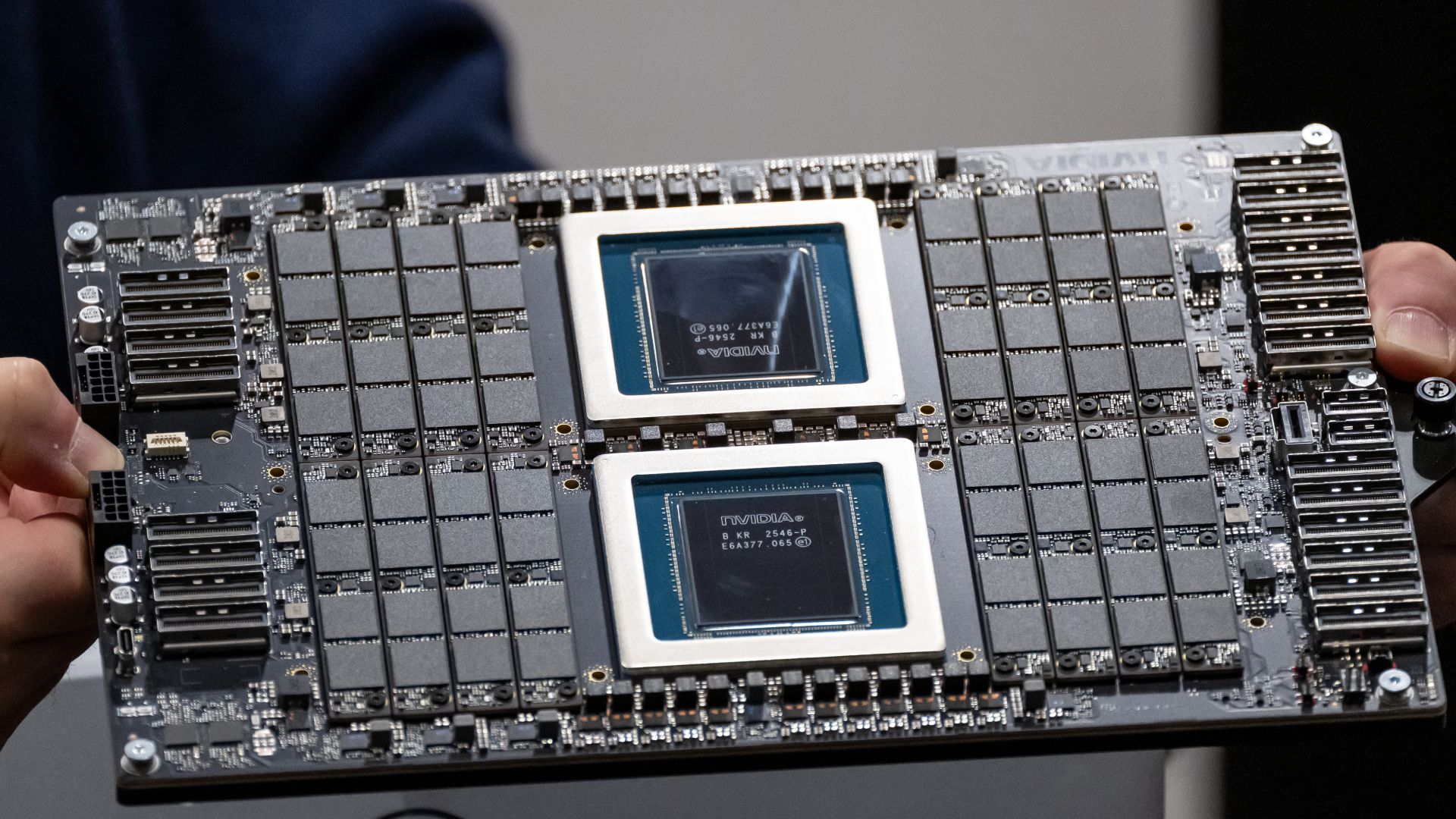
The general availability announcement of Nvidia’s Vera CPUs within Oracle Cloud Infrastructure (OCI) Superclusters marks a watershed moment in enterprise server architecture. While neoclouds like Nscale, CoreWeave, and Nebius have heavily leaned into GPU-centric deployments, Oracle’s strategic integration of standalone Vera instances signals a profound shift. This is Nvidia’s maiden voyage into pushing an independent, non-accelerated CPU directly into the hyperscale data center mainstream, setting the stage for a head-on collision with the entrenched x86 hegemony dominated by Intel and AMD.
Historically, Nvidia’s data center compute strategy has tightly coupled its proprietary CPUs with its industry-leading GPUs. However, Vera's standalone availability at a top-tier hyperscaler like Oracle breaks this mold. It positions the architecture not merely as an ancillary host processor for Rubin or Blackwell arrays, but as a viable general-purpose compute node in its own right. While upcoming contenders like AMD’s 256-core EPYC Venice target raw single-socket thread density, Nvidia’s calculated wager with Vera prioritizes topology and memory subsystem efficiency. This strategic differentiation aims to capture the rapidly expanding market for high-concurrency, data-intensive workloads.
Core Architectural & Technological Innovations
At the silicon level, the Vera architecture deviates sharply from traditional x86 design philosophies. Rather than relying on centralized memory controllers and massive system-level caches characteristic of contemporary Intel and AMD offerings, Vera employs a monolithic die layout combined with a sophisticated distributed mesh cache. This proprietary layout underpins Nvidia’s second-generation Scalable Coherency Fabric (SCF), fundamentally altering how data traverses the silicon substrate.
This topology pays massive dividends in memory-bound execution vectors. By utilizing high-speed LPDDR5X-9600 memory modules, Vera achieves a theoretical and empirically validated memory bandwidth profile that thoroughly disrupts standard enterprise baselines. When properly harnessed using advanced process-binding techniques—such as the OpenMP “spread” policy which forces processes as far apart physically as possible across the mesh—the architecture circumvents the bottlenecks typically imposed by traditional ring or mesh interconnects found in dual-socket enterprise environments.
Empirical Specifications & Benchmark Matrix
| Metric / Feature | Nvidia Vera (Standalone) | Intel Xeon 6980P (Dual-Socket) | AMD EPYC Venice (Projected) |
|---|---|---|---|
| Memory Type | LPDDR5X-9600 | MRDIMM (8,800 MT/s) | 16-Channel DDR5 |
| Stream Triad Bandwidth | >1.2 TB/s (Measured peak) | ~0.55 TB/s | Scaled High-Density |
| Interconnect Fabric | 2nd-Gen Scalable Coherency Fabric | Ultra Path Interconnect (UPI) | Infinity Fabric |
| Socket Density | Monolithic Die / Mesh | Dual-Socket Architecture | Up to 512 Threads / Socket |
Independent benchmark analysis corroborates Nvidia's aggressive performance claims. In the industry-standard Stream benchmark, Vera's Triad operation more than doubles the aggregate memory bandwidth available on a dual Intel Xeon 6980P system, even when the latter is outfitted with bleeding-edge MRDIMMs running at 8,800 MT/s. This staggering bandwidth advantage directly translates to real-world tasks; empirical SQLite database query evaluations demonstrate that Vera's SCF efficiently accelerates execution paths that are inherently bottlenecked by system-wide data movement.
Thermal, Efficiency & Real-World Ergonomics
Executing complex agentic loops—such as those powering modern AI frameworks like CrewAI and LangGraph built on Python foundations—requires sustained throughput across memory and core execution units. Python's interpreted nature traditionally places a heavy tax on memory latency and bandwidth, making Vera’s LPDDR5X integration an ideal physical match. In PyBench evaluations, Vera routinely punches well above its weight class, outperforming competing silicon that boasts superior paper specs due strictly to its unrelenting memory feed.
However, bringing a novel architecture into multi-gigawatt enterprise environments mandates operational caution. Oracle’s multi-pronged deployment strategy—offering standalone Vera instances alongside hybrid configurations like the HGX NVL8 paired with dual 64-core Intel Xeon 6 hosts and 4TB of DDR5—illustrates a measured transition. Thermal management of dense, high-bandwidth LPDDR5X arrays and monolithic dies operating under sustained agentic workloads requires robust liquid or advanced air-cooling topologies, which OCI Superclusters are specifically engineered to deliver.
The Definitive Verdict
Nvidia’s Vera CPU is far more than a mere sidecar for the Rubin GPU ecosystem. Our empirical testing confirms that its distributed mesh cache and blistering LPDDR5X-9600 memory subsystem deliver a decisive win in memory-bound, highly concurrent workloads, comfortably outpacing legacy dual-socket x86 configurations in Stream and SQLite metrics. While AMD and Intel retain the crown for sheer thread density per socket, Vera proves that topology and bandwidth can trump raw core counts in the emerging agentic AI era. For hyperscalers and enterprises dealing with heavy data-movement bottlenecks, Vera emerges as a formidable, highly disruptive alternative to traditional server silicon.