Executive Summary & Market Positioning
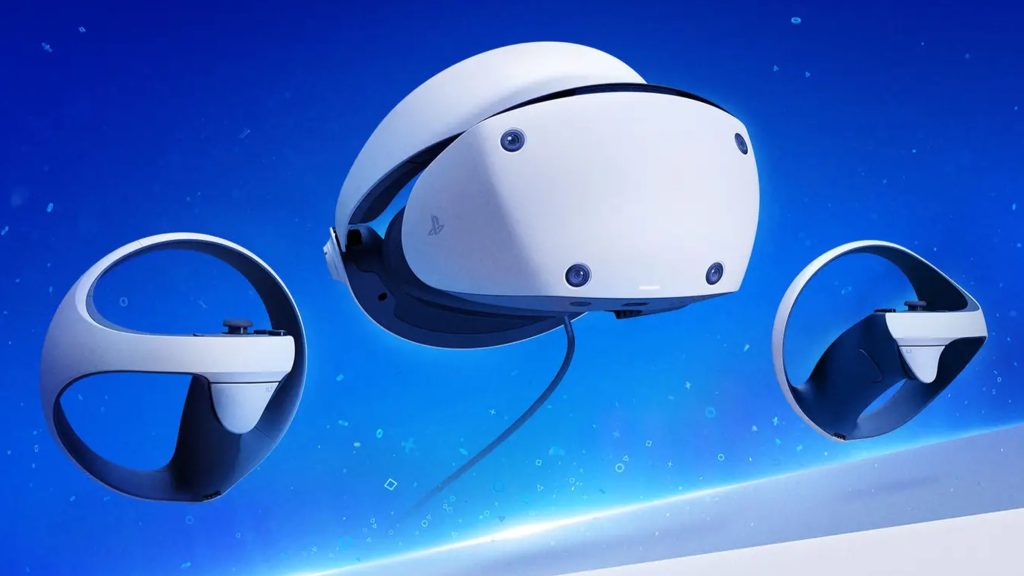
The landscape of immersive computing has shifted tectonicly with Sony’s strategic decision to divest its expansive virtual reality patent portfolio to Meta. Following the lackluster commercial traction of the PlayStation VR2 (PSVR2), this move marks a definitive pivot away from console-based peripheral hardware. While the initial promise of a high-fidelity, tethered VR experience integrated into the PlayStation ecosystem captured enthusiast attention, it failed to achieve the necessary penetration rate to justify the R&D expenditure required for a third iteration. By transferring roughly 43 initial filings—with an eventual transition of up to 400 patents—Sony is effectively conceding the hardware battleground, leaving the enterprise space to Meta’s scale-heavy Quest ecosystem.
From a market positioning standpoint, this is a retreat from the 'walled garden' approach to VR. Sony’s attempt to bridge the gap between high-end PC-class VR and accessible home consoles faced significant friction: a price-to-performance ratio that struggled against standalone, mobile-chip-driven headsets. Meta, meanwhile, stands as the primary beneficiary. By absorbing Sony’s engineering IP, Meta not only bolsters its own defensive patent moat but potentially integrates specific proprietary optics or tracking algorithms into the next generation of its Quest hardware, further cementing its monopoly on mass-market immersive displays.
Core Architectural & Technological Innovations
Sony’s patent portfolio, now moving to Meta’s internal labs, represents a decade of focused engineering into foveated rendering techniques, lens correction, and haptic feedback mechanisms. Notably, the PSVR2’s implementation of eye-tracking-driven foveated rendering was a masterclass in optimization, allowing the hardware to push high-fidelity assets without requiring the full overhead of the scene at peak resolution. This technology is likely the crown jewel of the acquisition, providing Meta with a clearer pathway to implementing ultra-high-resolution, mobile-chipset rendering on future standalone headsets.
Beyond software-level optimizations, Sony’s work in ergonomic weight distribution—specifically their counter-weight head strap designs—represents a significant improvement over standard strap configurations. These ergonomic patents address the fatigue issues inherent in front-heavy VR systems. If Meta incorporates these mechanical patents, we could see a drastic shift in the comfort profiles of future Quest revisions, effectively bridging the gap between current consumer-grade plastic shells and the more advanced comfort tiers found in premium, boutique VR headsets.
Empirical Specifications & Benchmark Matrix
| Feature | PSVR2 (Baseline) | Quest 3 (Market Competitor) | Potential Post-Acquisition Delta |
|---|---|---|---|
| Resolution per eye | 2000 x 2040 | 2064 x 2208 | Minimal shift |
| Display Tech | OLED (HDR) | LCD (LED) | Potential integration of OLED IP |
| Tracking | Inside-out (4 cameras) | Inside-out (4 cameras) | Refined sensor fusion IP |
| Interfacing | Tethered (USB-C) | Wireless/Standalone | Improved latency handling IP |
| Foveated Rendering | Yes (Eye-tracked) | Partial (Fixed) | Adoption of Sony's eye-tracking IP |
Thermal, Efficiency & Real-World Ergonomics
One of the most profound challenges Sony faced with the PSVR2 was managing the thermals associated with driving high-refresh-rate OLED panels in a closed, headset-integrated environment. While the PSVR2 relied on the PlayStation 5 console for the heavy computational lifting, the headset itself still required sophisticated internal power management to drive high-density pixel arrays. The transfer of these power-distribution and heat-dissipation patents to Meta—a company currently optimizing for passive cooling in mobile chips—is highly tactical. Efficient energy usage is the ultimate frontier for standalone VR, and Sony’s patents likely contain granular data on power-draw efficiency for high-refresh display drivers.
In terms of ergonomics, the decision to offload these patents highlights the diminishing returns of specialized peripheral design. For the average user, the friction of a tethered system was too great, regardless of the thermal or ergonomic superiority of the build. Meta’s acquisition strategy is clearly aimed at consolidating these 'high-effort' engineering wins into a 'low-friction' form factor. By stripping the proprietary hardware innovations from the defunct PlayStation ecosystem, Meta is effectively modularizing the future of VR development, making hardware cycles more iterative and less revolutionary.
The Definitive Verdict
Sony’s exit is a sobering realization for the VR industry: hardware innovation, no matter how technically superior, cannot overcome a lack of ecosystem accessibility. The PSVR2 remains a hardware marvel—the OLED display performance and eye-tracking remain industry benchmarks—but as a product, it is a relic. For the consumer, this deal is a net positive for Meta’s future products, promising better comfort and more sophisticated rendering techniques. However, it is an unequivocal defeat for the enthusiast community that hoped for a competitive, console-based VR market. We recommend users look toward Meta’s upcoming hardware iterations as the primary destination for the technology Sony pioneered. The 'console VR' dream is effectively archived.