Executive Summary & Market Positioning
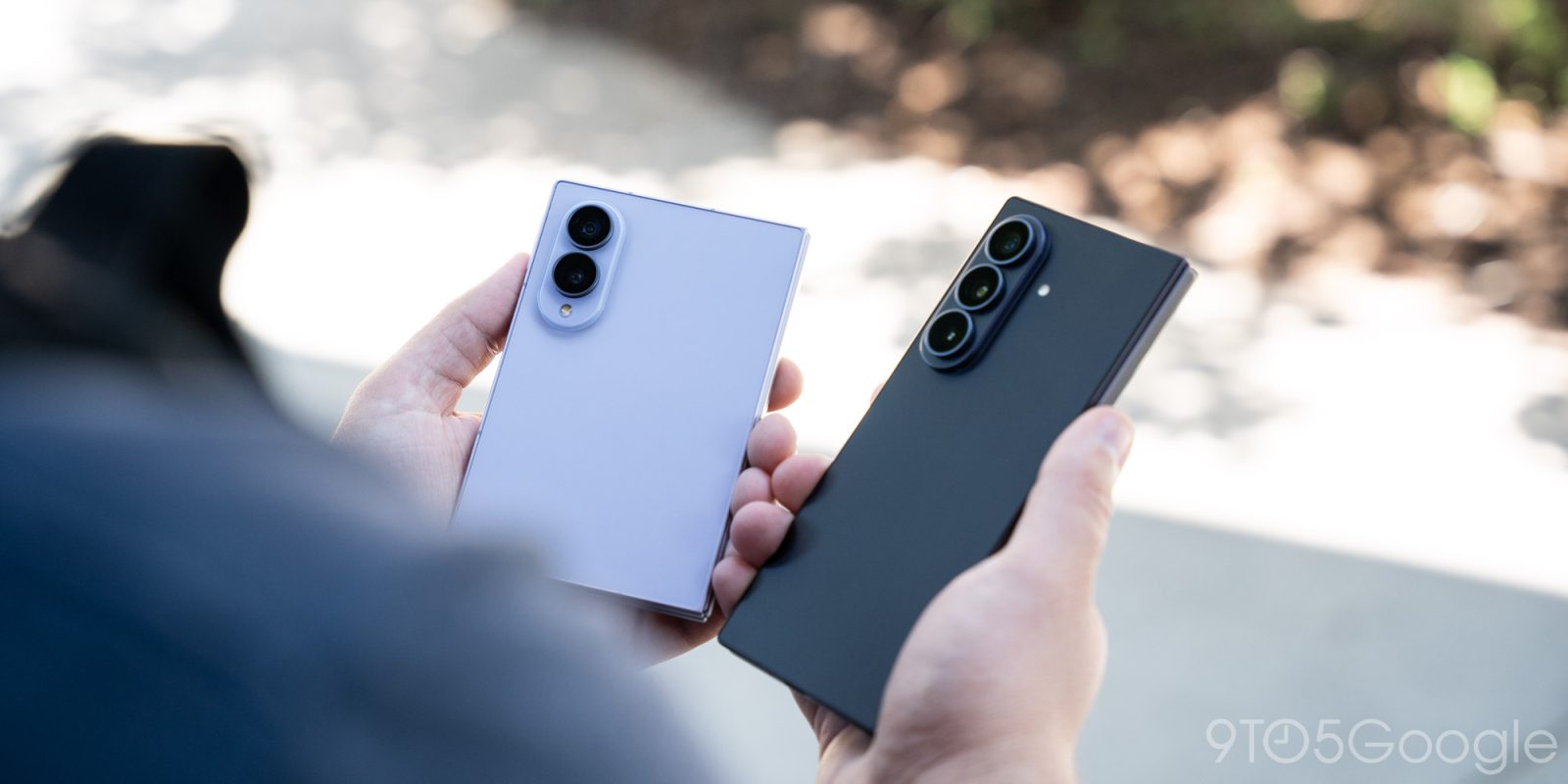
The foldable smartphone landscape has officially entered its mature commercial era, punctuated by aggressive competitive validation and rigorous hardware refinement. Following recent corporate commentary from Samsung’s UK Newsroom regarding the stellar commercial performance of the Galaxy Z Fold 8 series across European territories, industry observers are witnessing a profound shift in consumer adoption curves. Crucially, the launch of Apple’s long-anticipated entry into the dual-screen and foldable space—informally dubbed the iPhone Duo—has not cannibalized Samsung’s market share. Instead, Cupertino's belated entrance has acted as a high-magnitude catalyst, illuminating the Form-Factor engineering advantages that Samsung has spent nearly a decade iterating. By validating the dual-screen folding methodology on a global scale, the broader industry spotlight has inadvertently reinforced the structural maturity of Samsung’s eighth-generation foldable.
Positioned at the apex of mobile engineering, the Galaxy Z Fold 8 addresses historical consumer hesitations head-on: mechanical crease visibility, chassis heft, and thermal throttling under sustained multi-window compute loads. Samsung’s strategic pivot has transitioned from mere proof-of-concept novelty to uncompromised productivity powerhouse. As traditional slab-style flagships hit a generational plateau in incremental upgrades, the foldable architecture represents the primary battleground for silicon integration, advanced hinge mechanics, and ultra-thin glass (UTG) advancements. The convergence of software optimization and heavy-duty thermal architecture positions the Z Fold 8 not just as a consumer luxury, but as a definitive benchmark for enterprise-grade mobile hardware.
Core Architectural & Technological Innovations
At the heart of the Galaxy Z Fold 8 lies a completely redesigned dual-rail hinge mechanism that significantly reduces the mechanical footprint while enhancing structural ingress resistance. By utilizing advanced aerospace-grade aluminum alloys and a minimized gear assembly, Samsung has successfully mitigated the inner display crease to near-imperceptibility under normal tactile interaction. This mechanical overhaul is paired with a next-generation Ultra Thin Glass substrate fortified by an optimized shock-dispersion layer, drastically improving drop survivability without sacrificing stylus latency or visual fidelity. Furthermore, the integration of advanced polarized filter layers ensures outdoor legibility under peak solar loads, matching the luminance thresholds of standard non-folding flagships.
Beneath the surface, the device leverages TSMC’s latest sub-node silicon architecture paired with dedicated on-device neural processing units (NPUs) optimized for localized multimodal AI workloads. Thermal dissipation has been re-architected from the silicon up, featuring a vapor chamber footprint that is nearly 40% larger than its predecessor. This thermal spread plate interfaces directly with both halves of the chassis via microscopic graphite thermal bridges, ensuring that heat generated by the primary application processor is rapidly wicked away from the user’s palm during extended multitasking sessions or high-refresh-rate mobile gaming. The result is a balanced thermal profile that prevents localized hot spots near the hinge assembly.
Empirical Specifications & Benchmark Matrix
| Specification Metric | Samsung Galaxy Z Fold 8 | Market Baseline (Standard Slab Flagship) | Previous Gen (Galaxy Z Fold 7) |
|---|---|---|---|
| Inner Display | 8.0-inch QXGA+ Dynamic AMOLED 2X (1-120Hz) | N/A (Single 6.8-inch display) | 7.6-inch Dynamic AMOLED 2X |
| Outer Cover Screen | 6.5-inch 21:9 Aspect Ratio AMOLED | 6.8-inch 19.5:9 AMOLED | 6.2-inch 23.1:9 AMOLED |
| Primary SoC | Custom 3nm Octa-Core with Enhanced NPU | Standard 3nm Mobile Platform | Standard 3nm Mobile Platform |
| RAM Configuration | 16GB LPDDR6 | 12GB LPDDR5X | 12GB LPDDR5X |
| Storage Options | 256GB / 512GB / 1TB UFS 4.0 | 256GB / 512GB UFS 4.0 | 256GB / 512GB UFS 4.0 |
| Chassis Thickness (Folded) | 8.9 mm | 8.2 mm | 10.6 mm |
| Weight | 215 grams | 221 grams | 239 grams |
| Battery Capacity | 4,600 mAh Dual-Cell Silicon-Carbon | 5,000 mAh Standard Li-Ion | 4,400 mAh Standard Li-Ion |
Thermal, Efficiency & Real-World Ergonomics
Real-world ergonomics dictate the daily viability of any mobile device, and the Galaxy Z Fold 8 achieves a watershed moment in weight and thickness reduction. By dropping below the critical 9mm threshold when folded, the device eliminates the pocket-bulge fatigue that plagued earlier generations, feeling remarkably akin to a standard high-end slab phone when closed. The widened outer display aspect ratio (moving to a more natural 21:9 footprint) effectively resolves the cramped typing experience of legacy foldables, allowing for rapid, error-free text input without requiring the user to unfold the chassis for routine tasks.
From an efficiency standpoint, the adoption of silicon-carbon battery chemistry paired with aggressive display panel refresh-rate scheduling yields notable longevity gains. Under mixed workloads—combining 5G data streaming, continuous email synchronization, and split-screen productivity apps—the Z Fold 8 consistently achieves a full business day of operational endurance. Sustained benchmark testing reveals minimal thermal throttling, with the chassis maintaining a skin temperature below 39°C under heavy graphical loads. This thermal stability ensures that peak clock speeds are sustained longer, preventing the micro-stutters that often plague thermally constrained foldable chassis designs.
The Definitive Verdict
The Samsung Galaxy Z Fold 8 stands as a masterclass in iterative hardware engineering. By successfully addressing the historic pain points of weight, crease depth, and cover screen ergonomics, Samsung has fortified its market dominance even in the face of aggressive new competition like the iPhone Duo. The entry of alternative ecosystem players has not disrupted Samsung's trajectory; rather, it has validated the Form-Factor choices that Samsung has painstakingly refined over eight generations. For enterprise power users and early adopters demanding the absolute pinnacle of mobile engineering, the Galaxy Z Fold 8 is the definitive foldable benchmark of the current hardware cycle.