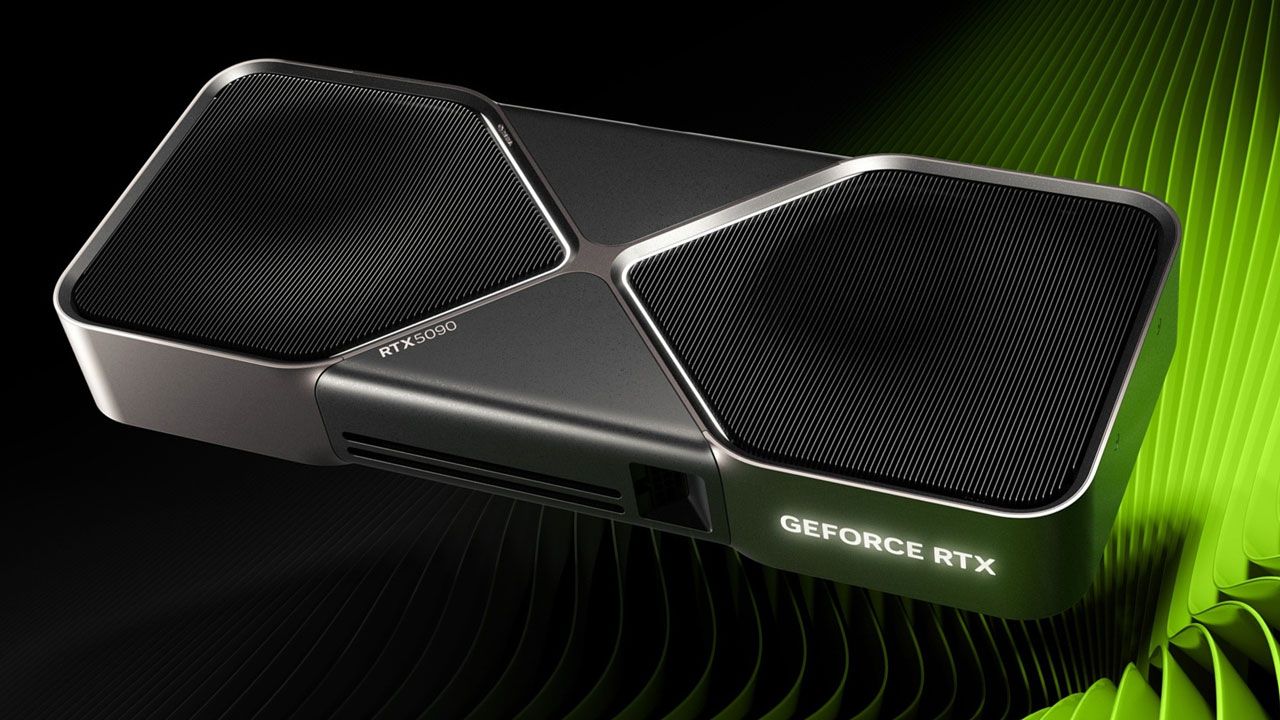
Executive Summary & Market Positioning
The recent high-stakes security breach at Brazil's Guarulhos International Airport—resulting in the disappearance of a $470,000 shipment of Nvidia GeForce RTX 5090 graphics cards—serves as a grim reminder of just how aggressively commoditized consumer silicon has become. When two pallets of flagship hardware vanish from customs custody, it highlights a stark reality: high-end consumer graphics cards now command liquidity profiles comparable to precious metals or cryptographic assets. Initial police reports confirm that the stolen haul, comprising high-end models such as the Zotac Gaming RTX 5090, is already leaking onto secondary online marketplaces like OLX at inflated price points, occasionally exposed by reckless sellers uploading unredacted serial numbers.
From a market positioning standpoint, the RTX 5090 occupies a singular, highly contentious throne. Originally engineered as the definitive pinnacle for ultra-enthusiast PC gaming and ray-tracing telemetry, the architecture has been violently pulled into the enterprise AI and machine learning vacuum. Because global demand for localized deep-learning compute outstrips supply by orders of magnitude, retail channels are perpetually starved. This scarcity has warped standard market pricing, pushing legitimate and black-market valuations alike to astronomical heights, frequently breaching the $6,000 to $10,000 threshold. Consequently, unguarded airport logistics chains have become prime targets for opportunistic organized crime syndicates operating in collusion with compromised logistics personnel.
Core Architectural & Technological Innovations
Beneath the illicit drama of supply-chain heists lies a monumental leap in silicon engineering. The Nvidia GeForce RTX 5090 is built upon the bleeding-edge Blackwell architecture, representing a paradigm shift over the preceding Ada Lovelace generation. Fabricated on a custom, highly optimized TSMC node, the GPU integrates an unprecedented transistor count, packing massive parallel processing power designed to handle complex neural graphics and path-traced game rendering simultaneously. The core logic introduces advanced fourth-generation Tensor Cores and third-generation Ray Tracing Cores, enabling real-time global illumination workloads that would completely choke older hardware.
Furthermore, the memory subsystem has received a generational overhaul. Equipped with ultra-fast GDDR7 memory modules running across an exceptionally wide memory bus, the RTX 5090 shatters historical bandwidth bottlenecks. This immense throughput is critical not just for native 4K and 8K gaming frames, but also for executing local Large Language Model (LLM) inference and large-scale dataset manipulation. Features like expanded L2 cache pools and native support for advanced hardware-level decompression protocols ensure that the Blackwell flagship operates with supreme efficiency, even when saturated with multi-gigabyte asset streams.
Empirical Specifications & Benchmark Matrix
To understand why these stolen units are treated like digital gold, one must look at the raw hardware metrics compared against baseline high-end hardware:
| Specification / Metric | Nvidia GeForce RTX 5090 (Flagship) | Previous-Gen Baseline (RTX 4090) | Market Impact / Delta |
|---|---|---|---|
| Architecture | Blackwell | Ada Lovelace | ~30% IPC & Tensor uplift |
| Memory Type | GDDR7 | GDDR6X | ~60% higher bandwidth ceiling |
| Bus Width | 512-bit | 384-bit | Drastically enhanced memory headroom |
| Target Compute Use | 4K Extreme Gaming / Local AI | 4K Gaming / Prosumer | Heavily targeted by AI gray-market buyers |
| Estimated Street Price | $2,000 (MSRP) / $6,000+ (Resale) | $1,599 (MSRP) | Severe supply-chain inflation |
Thermal, Efficiency & Real-World Ergonomics
Packing this density of compute power into a desktop-form-factor board requires extraordinary thermal engineering. The RTX 5090 pulls a massive Total Graphics Power (TGP) budget, necessitating robust cooling topologies. Partner designs—such as the Zotac units recovered in the Brazilian police investigation—feature triple-slot heatsink configurations, vapor chamber baseplates, and high-static-pressure dual-axial or fan-stack arrays designed to dissipate thermal loads exceeding 450 watts under sustained load.
Real-world ergonomics for such a card demand heavy-duty chassis support and high-wattage, ATX 3.1-compliant power supply units equipped with native 12V-2x6 power connectors. While power efficiency per watt has improved generation-over-generation thanks to node refinements, the absolute power draw remains staggering. Users operating these systems must ensure uncompromised ambient airflow inside their chassis to prevent thermal throttling, particularly during prolonged rendering sessions or continuous local AI model training loops that push all execution units to their absolute thermal limits.
The Definitive Verdict
The Brazilian airport heist is less a simple cargo theft and more a symptom of a broader structural crisis in modern hardware distribution: silicon scarcity breeds criminality. As long as the RTX 5090 remains simultaneously the undisputed king of consumer graphics and a highly sought-after commodity for enterprise AI developers, supply chains will remain vulnerable to insider threats and opportunistic theft. For the end-user and collector, purchasing hardware off secondary marketplaces without verified receipts or with redacted serial numbers is a perilous gamble. Law enforcement agencies are increasingly tracking high-value serial registries, transforming stolen GPUs from illicit bargains into expensive legal liabilities.