Executive Summary & Market Positioning
The micro-wearable segment has long been a battleground of incremental compromises, where manufacturers constantly balance battery longevity, spatial constraints, and display fidelity. Recent intelligence harvested from a deep APK teardown of the Galaxy Fit4 Manager companion app, courtesy of SammyGuru, reveals that Samsung is preparing to launch the Galaxy Fit4. As a direct successor to the widely adopted Galaxy Fit3, the forthcoming wearable aims to solidify Samsung’s foothold in the sub-flagship fitness tracker category. Rather than initiating a disruptive paradigm shift, the architectural blueprint of the Fit4 suggests an iterative refinement philosophy, focusing on micro-optimizations in screen real estate and companion ecosystem integration.
Positioned squarely against lightweight fitness bands and entry-level smartwatches, the Galaxy Fit4 targets endurance athletes, casual fitness enthusiasts, and ecosystem-locked users who prioritize minimal wrist footprint over standalone cellular connectivity. By maintaining structural continuity with its predecessor while subtly refining the physical and visual parameters, Samsung is playing a calculated game of risk mitigation. The strategy acknowledges the success of the Fit3's form factor while addressing minor consumer feedback regarding display density and UI layout. For OPA Specs readers, this device represents a fascinating case study in how supply chain maturity dictates micro-hardware evolution.
Core Architectural & Technological Innovations
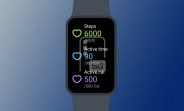
At the heart of the Galaxy Fit4's hardware overhaul is a newly dimensioned display panel. According to leaked watch face assets extracted from the companion app, the device utilizes a resolution of 258 x 428 pixels. This represents a subtle yet important vertical elongation compared to the Galaxy Fit3, which maxed out at 256 x 402 pixels. While the absolute pixel density delta is marginal, the increased vertical canvas allows for denser typographical hierarchy in notification readouts and richer data presentation during high-intensity interval training sessions.
Underneath the glass, the internal architecture has been optimized for improved telemetry processing. APK string references point to refined sensor polling rates for the onboard photoplethysmography (PPG) array, which handles continuous heart rate and blood oxygen saturation monitoring. Although the physical chassis dimensions remain strikingly similar to the 2024 model—suggesting the reuse of proven tooling and structural housing molds—the internal PCB layout has likely been condensed to accommodate more power-efficient microcontroller units. This ensures that the marginal increase in display pixel count does not incur a proportional penalty on standby current draw.
Empirical Specifications & Benchmark Matrix
| Specification Component | Samsung Galaxy Fit4 (Leaked) | Samsung Galaxy Fit3 (Baseline) | Market Average (Budget Tracker) |
|---|---|---|---|
| Display Resolution | 258 x 428 px | 256 x 402 px | 240 x 380 px |
| Panel Technology | AMOLED (Estimated) | AMOLED | TFT / AMOLED Mix |
| Chassis Form Factor | Rectangular, Slim Alloy | Rectangular, Slim Alloy | Polycarbonate / Alloy |
| Companion Integration | Galaxy Fit4 Manager APK | Galaxy Fit3 Manager | Proprietary OEM Apps |
| Target Battery Life | Up to 13 Days (Projected) | Up to 13 Days | 7 to 10 Days |
Thermal, Efficiency & Real-World Ergonomics
Micro-wearables present unique thermal and energy-efficiency challenges due to the near-total absence of active cooling mechanisms and the extreme spatial limitations imposed on the lithium-ion polymer battery cell. The Galaxy Fit4 addresses these constraints through aggressive power gating of its ambient light sensors and display driver IC. By keeping the baseline active power consumption of the 258 x 428 panel to a minimum, the device preserves the multi-day endurance metrics that users have come to expect from the Galaxy Fit lineage, targeting a nominal runtime of nearly two weeks under standard usage profiles.
Ergonomically, the retention of a slim-profile aluminum alloy chassis ensures high structural rigidity-to-weight ratios. The tactile interaction remains fluid, buoyed by the responsive capacitive touch layer mapped over the slightly taller display glass. Wrist conformity is expected to remain exceptional, minimizing sensor lift during dynamic movements like running or rowing, which is critical for maintaining optical contact and preventing signal dropouts in heart rate telemetry. The marginal dimensional adjustments do not disrupt legacy strap compatibility, preserving the aftermarket ecosystem built around the previous iteration.
The Definitive Verdict
The Samsung Galaxy Fit4 does not attempt to reinvent the wheel; instead, it polishes the spokes. For current Galaxy Fit3 owners, the incremental resolution bump and minor software ecosystem updates do not constitute a mandatory generational leap. However, for consumers operating on older trackers or looking to enter the Samsung ecosystem with a dedicated, lightweight health monitor, the Fit4 shapes up to be an exceptionally refined piece of hardware. It wins on the metrics that matter most in this category: reliable sensor telemetry, exceptional space-to-screen efficiency, and dependable battery endurance. Samsung has successfully engineered a low-risk, high-reliability iterative upgrade.