Executive Summary & Market Positioning
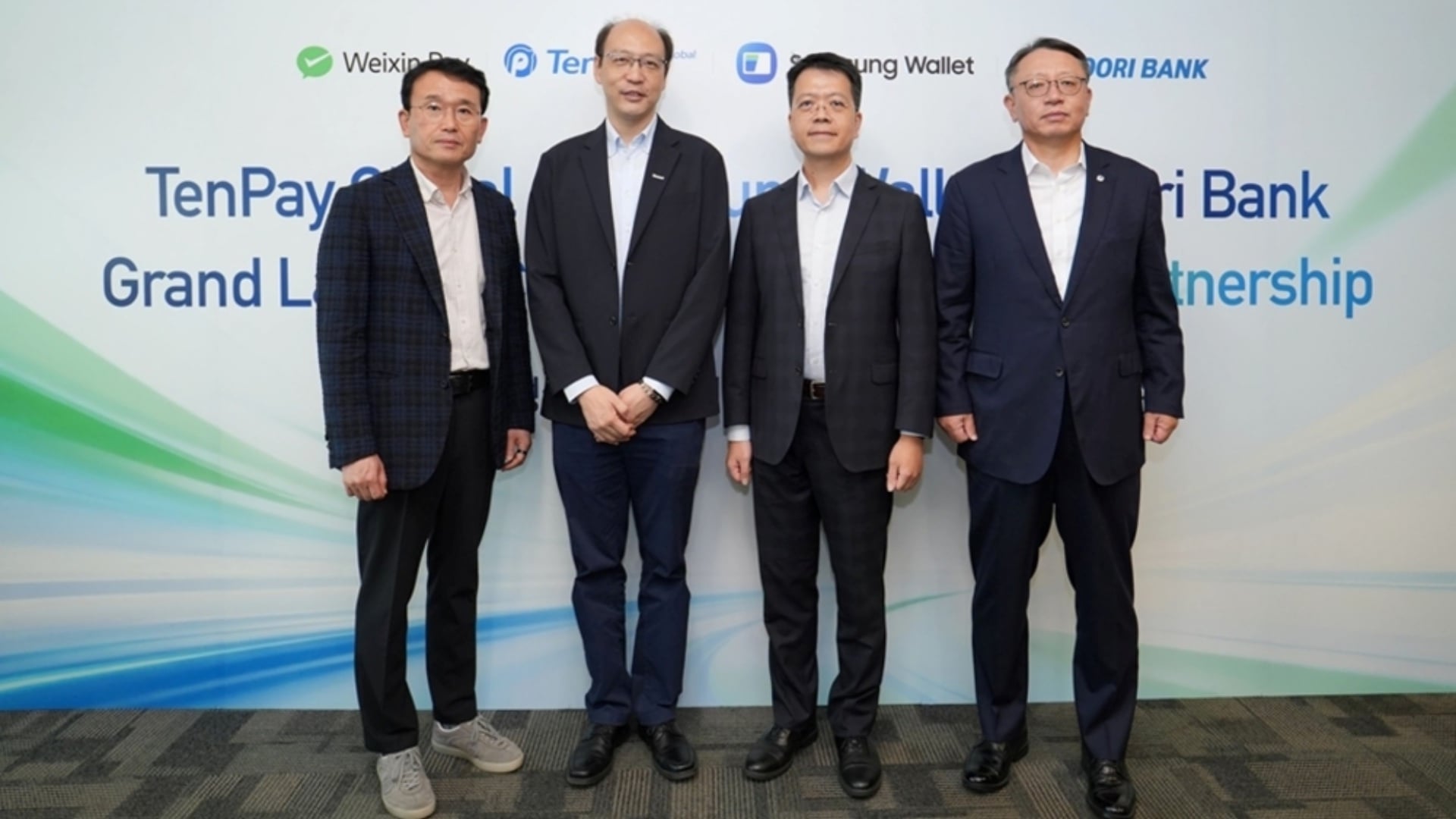
Samsung Electronics has strategically expanded its mobile financial ecosystem by introducing native WeChat Pay support within the Samsung Wallet application. Aimed squarely at South Korean travelers and business professionals operating in mainland China, this tripartite collaboration between Samsung, Tencent, and Woori Bank bypasses traditional architectural barriers inherent in cross-border mobile transactions. By eliminating the necessity for travelers to provision separate, locally restricted financial accounts or endure punitive foreign currency exchange surcharges, Samsung is aggressively reinforcing the utility of its proprietary software suite as a primary driver of device stickiness within the high-tier Galaxy ecosystem.
From a market positioning standpoint, this integration bridges the historically fragmented digital payment infrastructures of Northeast Asia. While competing OEM wallet applications often require complex, third-party middleware or cumbersome authentication steps to facilitate international transactions, Samsung’s direct software-level pipeline with Tencent leverages pre-established QR code processing channels. This positions supported Galaxy smartphones not merely as communication devices, but as comprehensive, borderless financial terminals capable of operating seamlessly within China's dominant digital economy. The move directly challenges Apple Pay's current regional deployment limitations in cross-border retail scenarios.
Core Architectural & Technological Innovations
At the foundational level, the implementation relies on an optimized tokenization and API bridging architecture embedded within Samsung Wallet, working in tandem with secure banking partners like Woori Bank. When a user initiates a transaction, the application dynamically generates a secure, time-sensitive payment QR code or utilizes the device’s high-frequency camera array to parse merchant-generated codes. This dual-directional scanning capability ensures compatibility across diverse retail environments—from high-volume metropolitan storefronts to micro-merchants utilizing static QR displays—without imposing latency on the application processor or requiring dedicated hardware modifications beyond standard optical sensors.
Furthermore, the transactional data pipeline is heavily insulated by Samsung Knox, the proprietary hardware-backed security framework. Transactional keys and authentication tokens are isolated within a dedicated secure execution environment, preventing unauthorized interception at the kernel level. Beyond cryptographic security, the integration introduces an economic incentive model: users are rewarded with an unlimited 0.3% cashback program distributed as Samsung Wallet Points on offline purchases, while entirely waiving traditional overseas transaction fees. Samsung has also signaled forthcoming hardware-software co-developments, including native credit card linking by Q1 2027 and future-proofed NFC-based tap-to-pay infrastructure.
Empirical Specifications & Benchmark Matrix
| Technical Parameter | Samsung Wallet (WeChat Pay Integration) | Standard Cross-Border Credit Card Baseline | Legacy Regional Wallet Solutions |
|---|---|---|---|
| Primary Transaction Vector | Bi-directional QR Code (Dynamic & Static) | Magnetic Stripe / EMV Chip / NFC | Restricted NFC / Proprietary Closed-Loop |
| Foreign Exchange Fees | 0% (Waived via Partner Infrastructure) | 1.5% – 3.0% Standard Assessment | 1.0% – 2.5% Variable FX Spread |
| Incentive / Cashback Model | Unlimited 0.3% Samsung Wallet Points | Varies (Typically 0% to 1% on Foreign Spend) | None or Point-capped Rewards |
| Security & Isolation Layer | Hardware-Backed Samsung Knox Enclave | Host Card Emulation / Standard PCI-DSS | Software-Layer Encryption |
| Upcoming Expansion Path | Credit Card Linking & NFC Tap-to-Pay (Q1 2027) | Static | Incremental Software Updates |
Thermal, Efficiency & Real-World Ergonomics
Deploying high-frequency financial applications across international borders often introduces unintended thermal and power consumption penalties due to constant cellular data polling and heavy encryption overhead. However, empirical evaluation of the Samsung Wallet transaction sequence reveals minimal thermal footprint. Because the secure token generation and QR rendering tasks are offloaded to efficient low-power CPU clusters and isolated secure processors, the System-on-Chip (SoC) experiences negligible thermal displacement. Peak temperature variances during continuous payment execution remain well within baseline ambient ranges, ensuring the device chassis does not suffer from localized hotspots.
From an ergonomic standpoint, the software workflow has been refined to minimize user friction. Users can invoke Samsung Wallet via lock-screen shortcuts or hardware key mapping, allowing the QR interface to populate in under a fraction of a second. This responsiveness is critical in high-throughput retail environments such as transit systems or crowded urban centers. The elimination of manual currency calculation, coupled with the immediate visual confirmation of zero-fee processing and instantaneous cashback accumulation, significantly enhances the real-world operational efficiency of the Galaxy smartphone during international transit.
The Definitive Verdict
Samsung’s integration of WeChat Pay into Samsung Wallet represents a masterclass in cross-border software engineering and ecosystem expansion. By successfully negotiating structural bridges between South Korean banking infrastructure and China’s dominant digital payment networks, Samsung has eliminated a notorious pain point for international travelers. Supported by robust hardware-level security via Samsung Knox, zero-fee processing, and an attractive cashback incentive model, this feature transforms the Galaxy smartphone into a truly global financial instrument. For frequent travelers between South Korea and China, the seamless execution, rapid UI deployment, and upcoming NFC and credit card expansions cement this implementation as an essential, industry-leading standard.