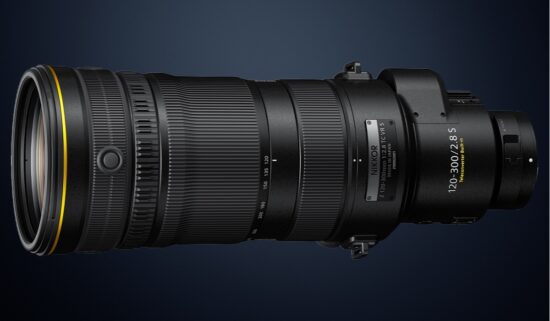
Executive Summary & Market Positioning
The announcement of the Nikon Nikkor Z 120-300mm f/2.8 TC VR S marks a significant milestone in professional optical engineering, designed specifically to satisfy the high-demand requirements of sports, wildlife, and photojournalism professionals. Positioned as the crowning achievement in Nikon’s mirrorless S-line telephoto catalog, this lens combines a fast, constant f/2.8 maximum aperture with an integrated 1.4x teleconverter. By eliminating the need to detach the lens in adverse field conditions to extend reach, Nikon has targeted the exact workflow bottlenecks that professional shooters face on the sidelines of major sporting events.
However, this level of optical sophistication carries a corresponding financial and logistical footprint. Recent industry intelligence pegs the European retail price at an eye-watering 15,499 EUR including VAT, translating to roughly 13,999 USD stateside before local taxes. This pricing strategy places the Nikkor Z 120-300mm firmly in the tier of ultra-exotic professional glass, outstripping standard flagship primes in overall cost. Compounding the investment barrier is a rumored severely constrained initial production run, which guarantees extended backorders and long-term supply scarcity for working professionals aiming to secure pre-orders through high-end retailers like Foto Erhardt and WEX Photo.
Core Architectural & Technological Innovations
At the heart of the Nikkor Z 120-300mm f/2.8 TC VR S is an advanced optical formula tailored to leverage the short flange focal distance of the Z-mount system. The integration of a seamless 1.4x teleconverter mechanism represents a complex mechanical and optical challenge, requiring precision alignment elements that can be engaged via a dedicated exterior switch without introducing dust ingress or structural flex. This internal multiplier scales the native 120-300mm focal range into a 168-420mm f/4 optical configuration on demand, preserving optical resolution across the entire frame without requiring external glass elements that degrade light transmission.
Furthermore, the physical construction of the lens showcases substantial material science advancements over its legacy F-mount predecessor. By transitioning entirely to the mirrorless standard, Nikon’s optical engineers successfully trimmed nearly 700 grams off the total mass while maintaining a robust, weather-sealed magnesium alloy chassis. This design philosophy directly addresses the ergonomic fatigue common in multi-hour sports shooting scenarios, bringing the Z-system variant down to a manageable weight class that mirrors competing flagship offerings from rival ecosystems like Canon.
Empirical Specifications & Benchmark Matrix
| Feature / Metric | Nikon Nikkor Z 120-300mm f/2.8 TC VR S | Canon RF 100-300mm f/2.8 L IS USM | Nikon AF-S 120-300mm f/2.8E FL ED SR VR (F-Mount) |
|---|---|---|---|
| Focal Length Range | 120-300mm (168-420mm w/ built-in 1.4x) | 100-300mm (Supports external TC) | 120-300mm (External TC required) |
| Maximum Aperture | f/2.8 (f/4 with TC engaged) | f/2.8 | f/2.8 |
| Weight | Approx. 2,590g (5.7 lbs) | 2,590g (5.7 lbs) | 3,250g (7.2 lbs) |
| Integrated Teleconverter | Yes (1.4x) | No | No |
| Estimated European MSRP | 15,499 EUR (incl. VAT) | ~11,500 - 12,000 EUR | Discontinued (Launch ~10,500 EUR) |
| Mount Type | Nikon Z-Mount | Canon RF-Mount | Nikon F-Mount |
Thermal, Efficiency & Real-World Ergonomics
Handling an ultra-bright professional telephoto zoom in demanding environmental conditions requires rigorous mechanical stabilization and thermal equilibrium. The Z 120-300mm f/2.8 features advanced Vibration Reduction (VR) architecture integrated with Nikon's latest high-speed linear actuators, ensuring up to several stops of compensation that communicate directly with sensor-shift stabilization in bodies like the Z9 and Z8. In real-world operation, this translates to rock-steady viewfinder imagery and sharp frame rates during high-velocity panning sequences, even when operating at the extended 420mm focal length via the internal teleconverter.
From an endurance standpoint, the chassis layout prioritizes tactile separation for the zoom, focus, and teleconverter toggle rings, allowing operators to make blind adjustments while tracking fast-moving subjects. The thermal management of the lens barrel prevents solar heat absorption issues from shifting focal plane tolerances during prolonged outdoor deployments. Coupled with extensive fluorine coatings on the front element to repel moisture, oils, and particulate matter, the lens is engineered to maintain optical and mechanical integrity under extreme environmental stress.
The Definitive Verdict
The Nikon Nikkor Z 120-300mm f/2.8 TC VR S is an uncompromising engineering masterpiece tailored strictly for elite sports and wildlife professionals. Its combination of a native f/2.8 aperture, massive weight savings over the F-mount era, and an innovative built-in 1.4x teleconverter makes it arguably the most versatile sideline optic ever conceived. However, the steep 15,499 EUR European price tag—bolstered by regional import overheads and constrained production lines—limits its acquisition path to high-volume working agencies and well-funded specialists. For those who can stomach the cost and secure a spot in the lengthy allocation queue, it represents the absolute pinnacle of Z-mount optical utility.