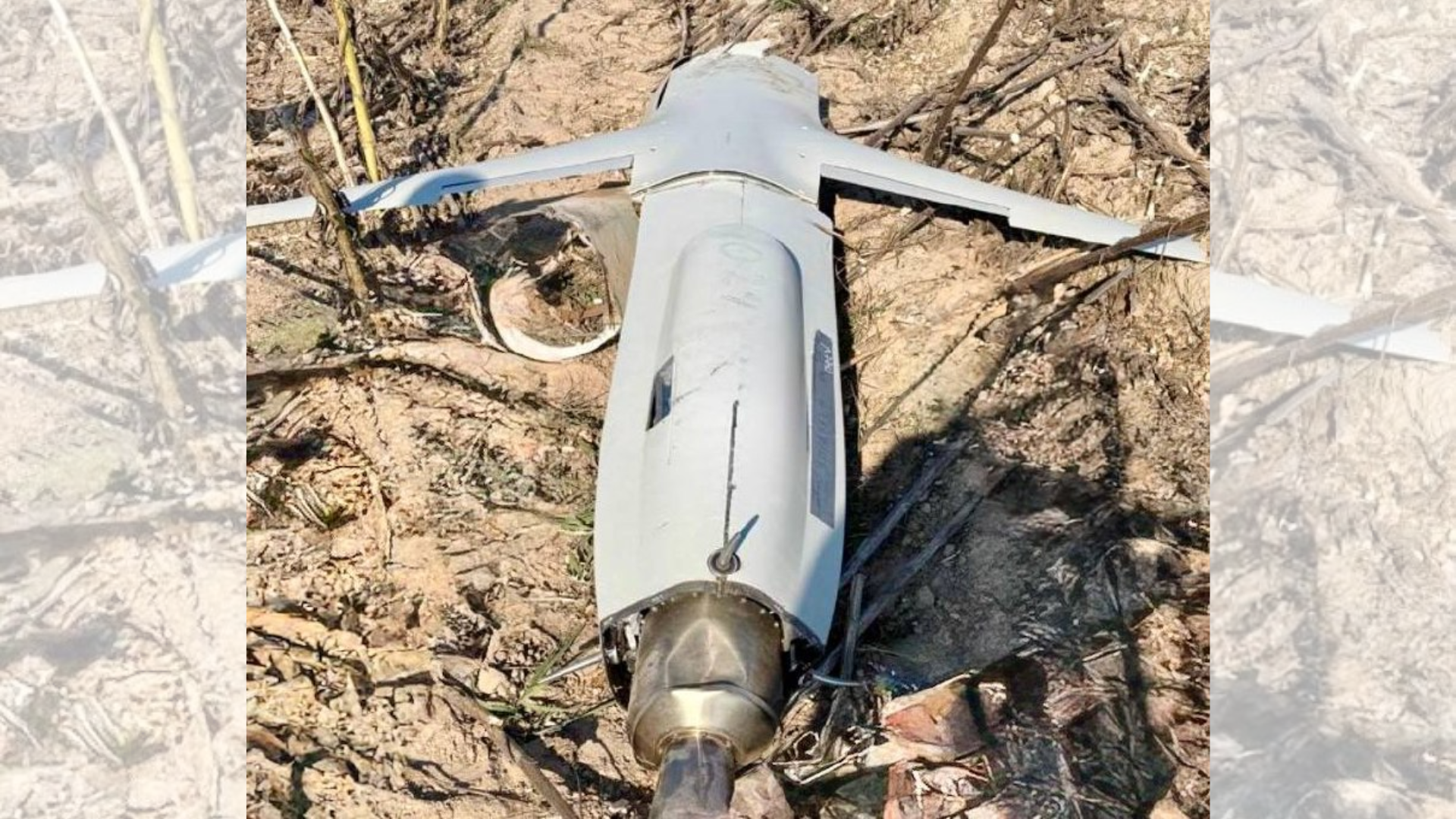
An Empirical Hardware Analysis of Russia’s 'Filin' 3D-Printed Cruise Missile
Executive Summary & Market Positioning
The ongoing conflict in Ukraine has dramatically accelerated an era of asymmetric hardware engineering, forcing defense sectors globally to prioritize rapid iteration and cost-efficiency over traditional, multi-million-dollar procurement lifecycles. Recent military intelligence disclosures from Ukraine's GUR have brought to light a significant development in this domain: the deployment of the Russian "Filin" cruise missile. Positioned as a direct, economically viable alternative to high-end strategic munitions like the $2 million Kh-101, the Filin represents a calculated pivot toward mass-producible, high-attrition hardware designed specifically to overwhelm modern integrated air defense systems (IADS) through volume—a tactic colloquially known in defense circles as "missile spam."
From a hardware market positioning standpoint, the Filin bridges a critical gap in the tactical munitions tier. While traditional long-range cruise missiles offer extreme precision and survivability at prohibitive costs, and low-cost loitering munitions (such as the Iranian-derived Shahed series) offer affordability at the expense of speed and aerodynamic integrity, the Filin strikes an aggressive equilibrium. By leveraging a composite framework and additive manufacturing components, the system achieves a velocity and operational radius typically reserved for substantially more expensive military hardware. OPA Specs analyzes the Filin not merely as an explosive payload delivery mechanism, but as a fascinating case study in modern supply chain circumvention, rapid prototyping, and the democratization of advanced aerospace manufacturing.
Core Architectural & Technological Innovations
The structural integrity and aerodynamic profile of the Filin rely heavily on modern material sciences. According to GUR technical assessments, the missile features a specialized composite fuselage constructed from carbon fiber and fiberglass, augmented by selectively integrated 3D-printed subcomponents. Additive manufacturing, while not universally cheaper than traditional stamping or machining for mass-produced uniform goods, provides an unmatched advantage in fabricating complex, low-volume aerodynamic geometries, internal ducting, and lightweight structural brackets without the multi-week lead times of traditional tooling. This allows the airframe to maintain a high strength-to-weight ratio while keeping baseline production costs tightly controlled.
Beneath the composite skin lies a heterogeneous electronics and propulsion architecture. Unlike many Iranian-designed drones that rely on imported or cloned Chinese turbojet assemblies, the Filin utilizes a domestically produced Russian engine architecture capable of driving the projectile to a staggering 500 mph. More critically, an audit of the onboard electronic suite reveals heavy reliance on globally sourced commercial-off-the-shelf (COTS) components. Intelligence reports indicate that the flight controller, inertial navigation systems (INS), equipment interfaces, and electronic counter-jamming hardware integrate dozens of microchips and passive components sourced directly from Western nations and their allies—specifically cataloging 35 components from the United States, 22 from China, and 13 distributed across Japan, Switzerland, Taiwan, and the Netherlands.
Empirical Specifications & Benchmark Matrix
| Specification Metric | Filin Cruise Missile (New) | Kh-101 Baseline (Traditional) | Geran-5 / Shahed Class (Drone) |
|---|---|---|---|
| Top Operational Speed | ~500 mph (Mach 0.65) | ~540–600 mph | ~270 mph |
| Maximum Operational Range | ~745 miles (1,200 km) | ~2,500+ miles | ~600–1,000 miles |
| Fuselage & Chassis Material | Carbon fiber, fiberglass, 3D-printed elements | High-grade aerospace aluminum & titanium alloys | Composite sandwich, fiberglass, foam core |
| Propulsion Type | Domestic Russian Turbojet | Turbofan | Low-cost Chinese or domestic piston/turbojet |
| Primary Electronic Origin | Global COTS (US, CN, EU silicon) | Mil-Spec proprietary Russian avionics | Mixed commercial microcontrollers |
| Estimated Unit Cost | Low-to-Moderate (Cost-optimized) | > $2,000,000 USD | Extremely Low |
Thermal, Efficiency & Real-World Ergonomics
Operating at speeds approaching 500 mph places severe thermal and aerodynamic stress on composite airframes, particularly along leading edges, nosecones, and exhaust cowlings. The integration of carbon fiber and fiberglass composites enables the Filin to manage these high thermal loads effectively without the structural degradation or warping observed in lower-tier, foam-and-fiberglass loitering munitions like the Geran-5, which have occasionally suffered in-flight structural failures due to shoddy manufacturing. The resin systems and reinforcement matrices chosen for the Filin's fuselage ensure that structural rigidity is maintained throughout the aggressive g-forces experienced during high-speed low-altitude terrain-following flight.
From an operational efficiency perspective, the decision to utilize an indigenous Russian engine paired with globally sourced Western and allied microelectronics yields a high-thrust, highly responsive guidance package. However, this reliance on distributed commercial supply chains introduces a distinct logistical vulnerability. While COTS hardware allows for rapid scalability and lower unit costs compared to mil-spec hardened silicon, the presence of US, Japanese, and European semiconductor components underscores the ongoing challenge of dual-use export controls. The thermal dissipation requirements of these high-density, commercial-grade navigation controllers also necessitate efficient internal airflow management within the composite chassis to prevent avionics thermal throttle or total system lockup mid-flight.
The Definitive Verdict
The Filin cruise missile represents a profound evolution in modern conflict economics, successfully marrying the speed and range of traditional cruise missiles with the cost-cutting supply chain tactics of consumer-grade drone manufacturing. By utilizing a carbon-fiberglass composite airframe augmented by 3D-printed geometries and powered by a domestic turbojet, Russia has engineered a pragmatic threat designed explicitly to strain air defense capacity through sheer volume. Despite relying heavily on commercial-grade Western silicon for its navigation and counter-jamming suites, its performance envelope outclasses conventional loitering munitions by a wide margin. Ultimately, the Filin serves as a stark warning to defense analysts: additive manufacturing and globalized commercial silicon have permanently lowered the barrier to entry for high-speed strategic strike capabilities.