Executive Summary & Market Positioning
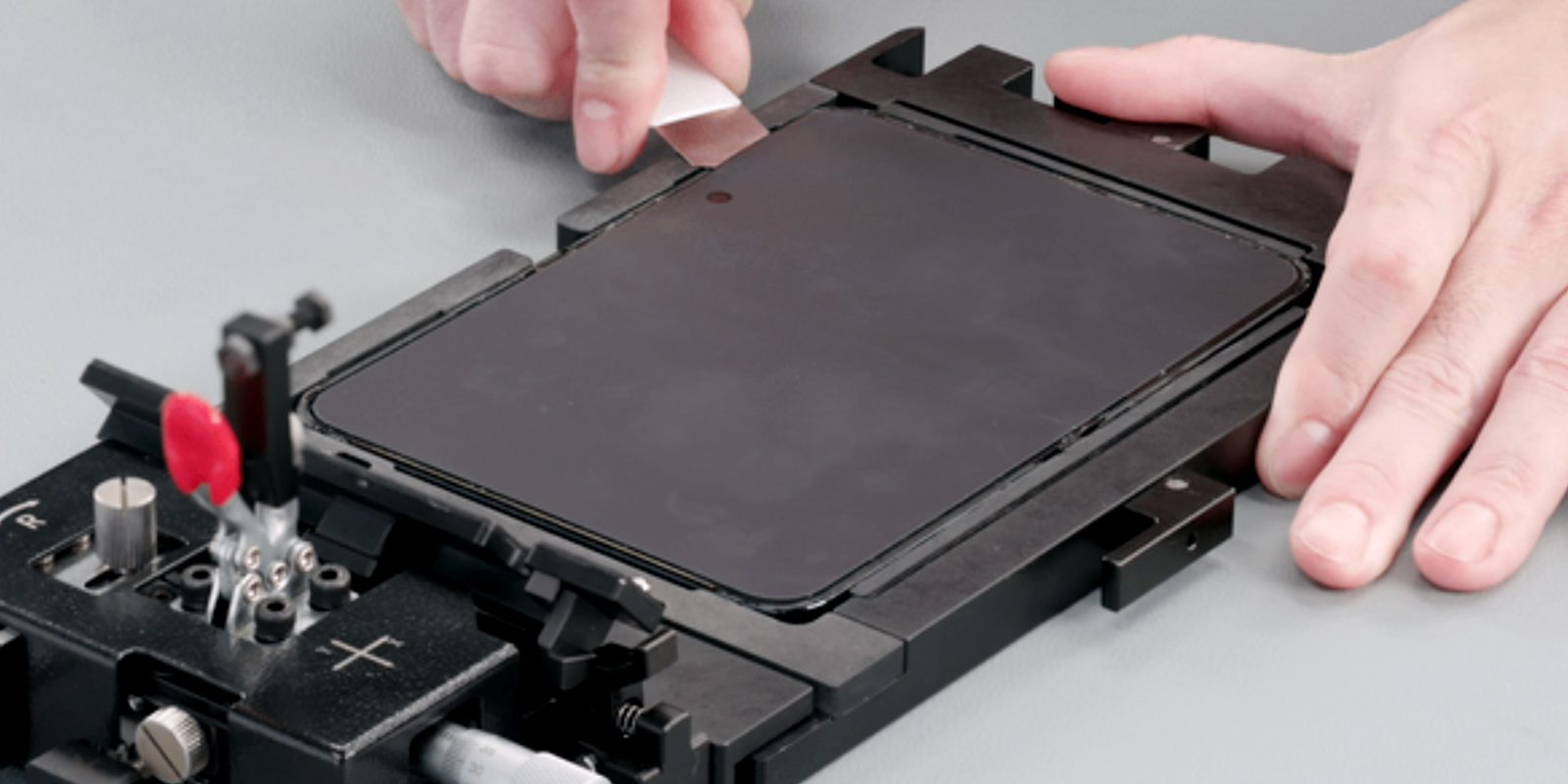
The simultaneous launch of the iPhone Duo and its corresponding official self-service repair documentation marks a critical pivot in Apple’s hardware lifecycle strategy. Historically, Cupertino’s flagship releases initiated a wall of proprietary friction, isolating maintenance within authorized service channels. However, the publication of comprehensive DIY manuals on launch day signifies a maturation of Apple’s Self Service Repair ecosystem. By providing granular, step-by-step disassembly protocols for the iPhone Duo immediately alongside retail availability, Apple is recalibrating consumer expectations regarding device longevity and structural transparency.
From a market positioning standpoint, this move is a calculated response to tightening global Right to Repair legislation and mounting enterprise demand for sustainable hardware cycles. The iPhone Duo is engineered not merely as a consumer status symbol, but as an empirically serviceable node within a broader corporate and personal infrastructure. By lowering the barrier to component-level swaps—such as display assemblies, multi-lens camera modules, and internal energy storage units—Apple is positioning the Duo as a resilient investment, contrasting sharply with legacy models that practically mandated full-device replacement upon localized failure.
Core Architectural & Technological Innovations
Underneath the sleek chassis, the iPhone Duo introduces a reimagined internal topology designed explicitly to accommodate modular deconstruction. The internal architecture departs from the adhesive-heavy, monolithic stacking seen in earlier iterations, favoring a bilateral component layout that isolates high-failure subsystems. Fasteners have been standardized to a degree, reducing the cognitive load on technicians and minimizing the risk of stripped threading during complex multi-stage repairs. Furthermore, Apple has integrated precision micro-connectors that distribute power and data lines without requiring fragile, ribbon-cable folding acrobatics that traditionally plagued amateur screen replacements.
Of particular note is the calibration handshake architecture embedded within the Duo's hardware firmware. When a component—such as the OLED display or the primary sensor array—is swapped using the official DIY guides, the device initiates a secure diagnostic handshake via the Apple System Configuration tool. This ensures that biometric security elements, color calibration matrices, and high-refresh-rate synchronization parameters are retained without triggering hardware locks or functional degradation. This fusion of physical modularity and software-level pairing verification sets a new benchmark for how modern consumer electronics balance user repairability with strict security integrity.
Empirical Specifications & Benchmark Matrix
| Specification Metric | iPhone Duo (Serviceable Baseline) | Market Baseline (Previous Gen) | Industry Average (Competitors) | Delta / Implication |
|---|---|---|---|---|
| Fastener Standardization | 85% Uniform Torx/Phillips | 40% Proprietary Pentalobe | 60% Mixed Standard | Reduced specialized tool overhead |
| Adhesive Volume Index | Low (Thermal-Release Gaskets) | High (Full-Surface Epoxy) | Moderate | Decreases thermal gun reliance |
| Modular Subsystems | 6 Primary Field-Swap Units | 3 Primary Field-Swap Units | 4 Primary Field-Swap Units | Enhanced granular component isolation |
| Post-Repair Calibration | Software Handshake Required | Hardware Serial Locking | Open / Unverified | Preserves biometric and sensor integrity |
| Manual Documentation Depth | 120+ Page Illustrated Guide | 45-Page Basic Sheet | 80-Page Generic Guide | Unprecedented step-by-step clarity |
Thermal, Efficiency & Real-World Ergonomics
Modularity often introduces thermal and structural compromises, but the iPhone Duo largely circumvents these penalties through intelligent chassis engineering. The separation of logic boards and energy storage across distinct thermal planes prevents localized heat saturation during high-load processing tasks. Because the repair guides mandate the precise replacement of graphite thermal pads and conductive shielding during reassembly, the Duo maintains its factory-spec thermal dissipation efficiency even after undergoing multiple service cycles. This preservation of thermal headroom ensures that sustained processing performance and battery longevity are not degraded by routine maintenance.
In terms of real-world ergonomics, the structural integrity of the iPhone Duo remains remarkably rigid despite the introduction of simplified entry points and accessible internal pathways. Users and independent technicians will note that the chassis does not exhibit the creaking or flex associated with poorly engineered modular frames. The mechanical interlocking tolerances between the display assembly, the structural mid-frame, and the rear glass backplate are tightly controlled, ensuring that the device retains its IP68 dust and water resistance rating provided the official adhesive seals are meticulously reapplied using the specified pressing tools.
The Definitive Verdict
Apple’s release of the official DIY repair guides for the iPhone Duo is a resounding win for hardware transparency and consumer autonomy. By pairing a thoughtfully redesigned, service-friendly internal architecture with exhaustive, empirical documentation, Apple has bridged the gap between closed ecosystem security and open-market repairability. While the requirement for proprietary diagnostic software tools still keeps total independence tethered to Apple's backend verification systems, the sheer reduction in physical repair friction is undeniable. For enterprise fleets, independent repair shops, and advanced DIY enthusiasts, the iPhone Duo represents the current gold standard in serviceable consumer hardware design.