Executive Summary & Market Positioning
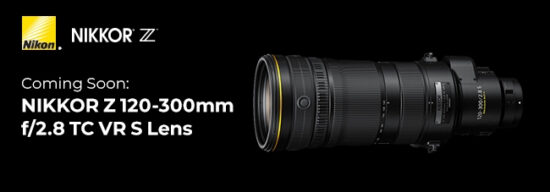
The forthcoming release of the Nikon Nikkor Z 120-300mm f/2.8 TC VR S marks a monumental milestone in professional optical engineering. Positioned at the absolute apex of Nikon’s native mirrorless ecosystem, this specialized telephoto zoom is slated to make its official debut at the end of October. Designed explicitly for elite sports, wildlife, and photojournalism professionals, the optic bridges the critical gap between versatile zoom flexibility and uncompromising prime-level optical performance. By incorporating a seamlessly integrated teleconverter into the Z-mount architecture, Nikon is addressing the rigorous demands of high-speed field operations where lens changes are both impractical and detrimental to sensor hygiene.
Industry intelligence indicates that this masterclass in glass design will claim the title of the most expensive lens in Nikon's contemporary lineup, with rumored pricing reaching upwards of $16,000 USD and Euros. This valuation places the 120-300mm f/2.8 firmly in the ultra-luxury tier of professional hardware, surpassing even the formidable Nikkor Z 400mm f/2.8 TC VR S. Coupled with anticipated limited production runs and extended delivery wait times, this optic is engineered not merely as a high-volume consumer product, but as an exclusive flagship statement piece that showcases the absolute limits of Nikon’s manufacturing precision and optical capabilities.
Core Architectural & Technological Innovations
The optical layout of the Nikkor Z 120-300mm f/2.8 TC VR S is built around a sophisticated integration of advanced glass elements and a built-in 1.4x teleconverter. Activating the internal teleconverter shifts the focal reach to a maximum of 420mm while maintaining an exceptionally bright maximum aperture, significantly expanding framing versatility on the fly without sacrificing peripheral sharpness or contrast. This internal mechanism minimizes dust and moisture ingress, a vital design consideration for outdoor shooters operating in hostile environmental conditions such as rain-swept soccer pitches or dusty safari reserves.
Compared to its F-mount predecessor—the hefty Nikkor AF-S 120-300mm f/2.8E FL ED SR VR—the new Z-mount iteration achieves a remarkable weight reduction, coming in line with modern mirrorless expectations at approximately 5.7 lbs (2,590g). This mass optimization is largely driven by the short flange focal distance of the Z mount, allowing optical designers to optimize the rear element placement and reduce the overall physical footprint of the barrel. Advanced coatings, including Nano Crystal and Meso Amorphous coats, work in tandem to suppress ghosting and flare caused by oblique light sources typical of stadium lighting and harsh overhead sun.
Empirical Specifications & Benchmark Matrix
| Specification Feature | Nikkor Z 120-300mm f/2.8 TC VR S | Canon RF 100-300mm f/2.8 L IS USM | Nikkor AF-S 120-300mm f/2.8E (F-Mount) |
|---|---|---|---|
| Focal Range | 120-300mm (168-420mm w/ TC) | 100-300mm | 120-300mm |
| Maximum Aperture | f/2.8 (constant) | f/2.8 (constant) | f/2.8 (constant) |
| Teleconverter | Built-in 1.4x | External TC compatible | None (Standalone) |
| Weight | ~2,590g (5.7 lbs) | 2,590g (5.7 lbs) | 3,250g (7.2 lbs) |
| Estimated Price | ~$16,000+ USD | ~$9,499 USD | ~$9,499 USD (At launch) |
Thermal, Efficiency & Real-World Ergonomics
Handling a constant f/2.8 telephoto zoom requires meticulous weight distribution, and Nikon’s engineers have successfully managed the center of gravity to reduce fatigue during extended handheld or monopod-mounted tracking sessions. The reduction of over 600 grams compared to the legacy F-mount variant radically transforms the physical burden on the operator, allowing for faster pan speeds and more fluid tracking of erratic subjects. Tactile controls, including customizable L-Fn buttons and a dedicated teleconverter engagement switch, are logically positioned along the magnesium alloy barrel for seamless tactile identification while keeping the user’s eye glued to the electronic viewfinder.
From a thermal and structural standpoint, the robust weather-sealing gaskets prevent mechanical deformation under extreme temperature shifts, ensuring that internal optical alignments remain pristine whether operating in sub-zero alpine environments or high-humidity tropical latitudes. The Vibration Reduction (VR) system communicates natively with high-speed sensor-shift stabilization algorithms inside bodies like the Z9 and Z8, delivering up to an estimated 5.5 to 6 stops of compensation. This synergy minimizes motion blur during slow shutter pans and stabilizes the viewfinder feed for pinpoint AF-C tracking precision.
The Definitive Verdict
The Nikon Nikkor Z 120-300mm f/2.8 TC VR S is an uncompromising engineering triumph tailored for the elite tier of visual content creators. While its prohibitive price tag and restricted production availability will relegate its acquisition to high-end rental houses and heavily capitalized agencies, the technological payoff is undeniable. By merging a flexible professional zoom range, a flawless internal 1.4x teleconverter, and a significantly lightened mirrorless footprint, Nikon has delivered a definitive benchmark optic. For working professionals whose livelihoods depend on uncompromised optical excellence and absolute operational reliability, this lens represents the ultimate institutional investment.