Executive Summary & Market Positioning
The global semiconductor landscape is entering a prolonged period of structural constraint. Recent briefings from Micron CEO Sanjay Mehrotra and executive counterparts at Samsung have made it unequivocally clear: the acute memory supply deficit currently strangling the electronics ecosystem will not abate anytime soon. Industry leadership expects demand for high-performance memory architectures to aggressively outpace wafer fabrication output through at least 2028. For hardware analysts and procurement strategists, this signals a fundamental paradigm shift away from traditional consumer-led supply chains toward enterprise-dominated, high-margin silicon allocation.
While industry giants like Micron have strategically pivoted away from direct-to-consumer retail channels—such as the recent wind-down of the Crucial consumer RAM division—the downstream shockwaves of this strategic realignment are felt universally. Fab capacity is being aggressively redirected toward enterprise-grade High-Bandwidth Memory (HBM) and high-density server DRAM required to fuel hyper-scale artificial intelligence data centers. Consequently, consumer-facing markets face an unprecedented squeeze, where shrinking node allocations threaten to elevate component pricing, stall memory capacity upgrades, and constrain the overall velocity of PC and mobile hardware evolution.
Core Architectural & Technological Innovations
The root cause of this structural shortage lies in the immense physical complexity of manufacturing modern memory silicon. The transition from legacy DDR5 nodes to ultra-dense, multi-tier architectures like HBM3E and nascent HBM4 requires revolutionary packaging techniques, including advanced 2.5D and 3D silicon interposers, through-silicon vias (TSVs), and ultra-precise thermal-compression bonding. These methodologies drastically increase fab cycle times and reduce total raw wafer throughput compared to monolithic DRAM production lines, compounding the supply crisis.
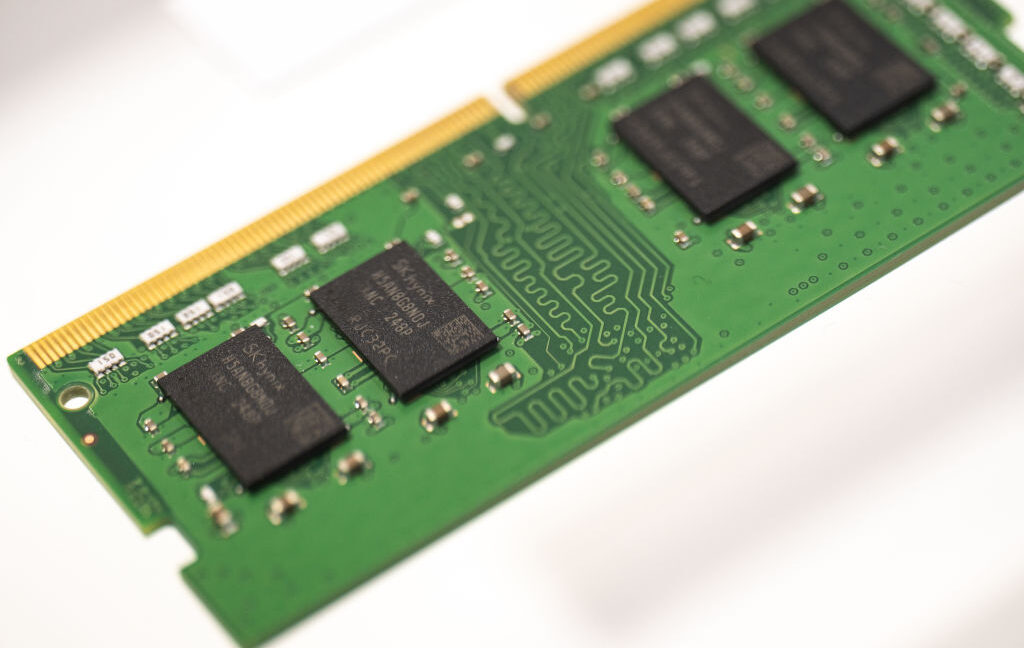
Simultaneously, the voracious bandwidth demands of AI accelerators necessitate vast arrays of memory stacks sitting in close proximity to massive processing units. As hyperscalers bid aggressively for prioritized fab allocations, semiconductor foundries are structurally incentivized to maximize silicon yield for enterprise contracts. This dynamic leaves consumer-grade memory technologies—such as standard desktop UDIMMs and mobile LPDDR5X modules—fighting for the remaining fractional capacity of mature and transition-phase manufacturing nodes, ultimately delaying the democratization of higher memory ceilings for everyday workloads.
Empirical Specifications & Benchmark Matrix
| Memory Architecture | Target Application | Typical Bandwidth | Die Density Scaling | Market Availability Impact |
|---|---|---|---|---|
| HBM3E / HBM4 | AI Accelerators & Data Centers | 1.2 to 2.0+ TB/s | Ultra-High (Multi-tier TSV) | Extreme Priority / Severe Shortage |
| Server RDIMM (DDR5) | Enterprise Cloud & Virtualization | 64 to 128+ GB/s | High (32Gb monolithic die) | High Priority / Constrained |
| Consumer UDIMM (DDR5) | DIY Desktops & Gaming Rigs | 48 to 96 GB/s | Moderate (16Gb/24Gb die) | Low Priority / High Price Volatility |
| Mobile LPDDR5X | Ultrabooks & Smartphones | 8533 MT/s baseline | Moderate-High | Restricted Allocations |
Thermal, Efficiency & Real-World Ergonomics
As enterprise memory pushes past traditional frequency boundaries, thermal management has transformed from a secondary concern into a primary engineering bottleneck. HBM stacks and high-density server modules operate under intense thermal loads, requiring sophisticated liquid-cooling integrations and advanced phase-change thermal interface materials within the data center. The sheer density of thermal energy generated by stacked DRAM dies necessitates rigorous power-delivery monitoring to prevent thermal throttling and maintain signal integrity under sustained, multi-petabyte training workloads.
For the consumer space, the enterprise-driven shortage introduces a different set of real-world compromises. With manufacturers prioritizing yield on high-margin server nodes, consumer memory modules are seeing slower integration of lower-voltage, higher-efficiency PMICs (Power Management Integrated Circuits). Enthusiasts and system builders must now carefully navigate a market where high-capacity kits carry heavy financial premiums, forcing compromises between memory density, thermal headroom, and total system cost for upcoming PC builds.
The Definitive Verdict
The forecast delivered by Micron and Samsung leadership confirms that the silicon shortage is not a temporary supply chain hiccup, but a multi-year structural realignment lasting through 2028. For enterprise buyers, securing long-term supply agreements and designing around HBM constraints is paramount. For consumers and system integrators, the directive is clear: memory will remain a volatile, premium-priced commodity. Strategic hardware planning must account for extended upgrade cycles, higher component costs, and a market permanently altered by the insatiable demands of enterprise AI infrastructure.