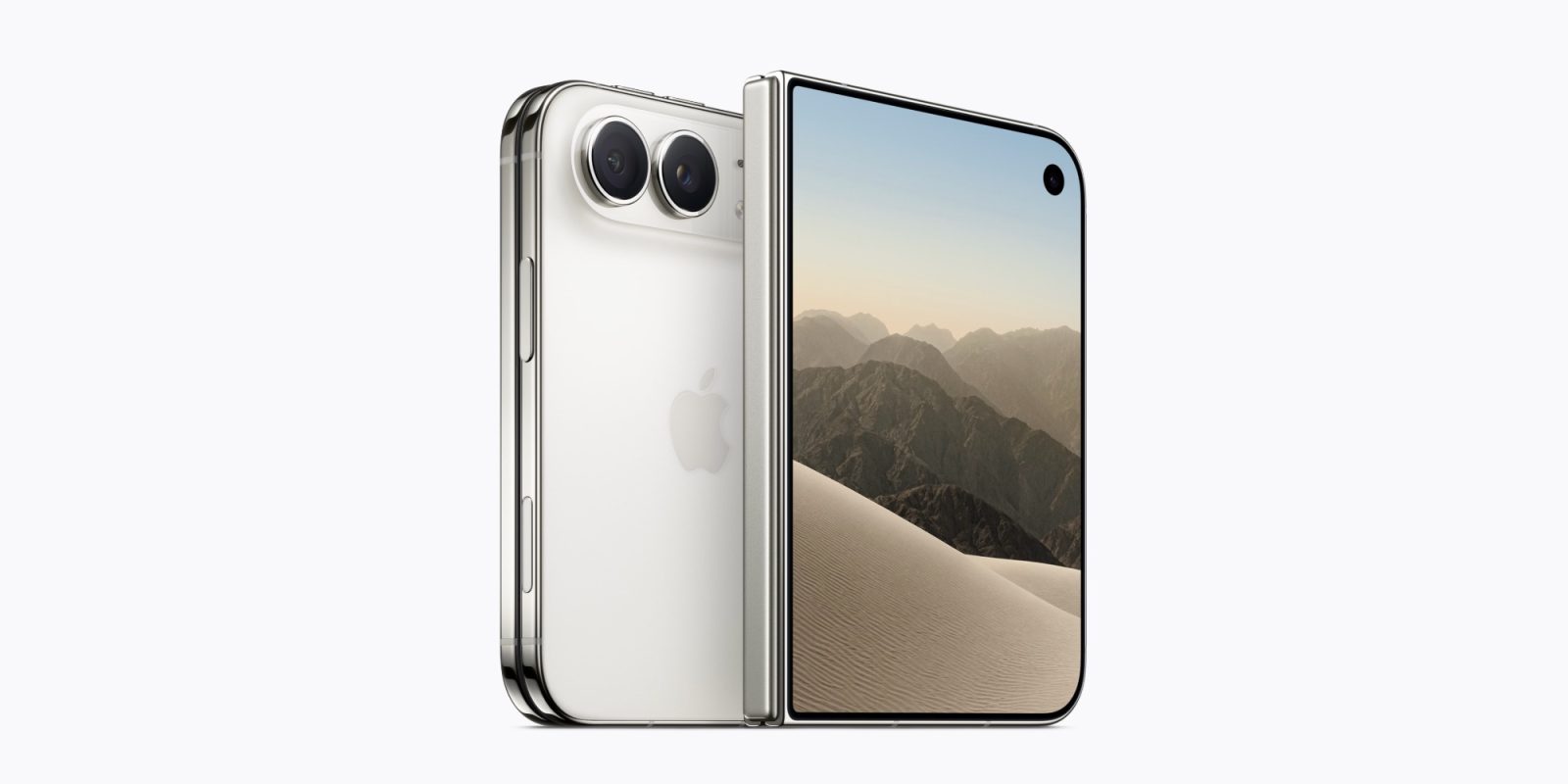
Executive Summary & Market Positioning
The annual cadence of Apple’s flagship hardware rollouts consistently tests global supply chain resilience, but recent internal directives leaking from retail channels indicate that securing the newly minted iPhone Duo on launch day via walk-in channels will be an exceptionally formidable challenge. According to operational memos emerging from Apple Store networks, retail staff have been explicitly instructed to manage customer expectations downward regarding day-one inventory. This points toward severe constraints that disproportionately favor pre-ordered units. For hardware analysts and enthusiasts tracking silicon availability, manufacturing yields, and logistic throughput, this bottleneck is not entirely unexpected given the high-density component integration packed into the Duo's streamlined chassis.
Positioned strategically within Apple’s expansive ecosystem, the iPhone Duo aims to bridge the chasm between standard consumer-tier smartphones and ultra-premium pro models, offering a compelling blend of next-generation processing muscle and refined ergonomics. However, restricted launch-day physical availability threatens to shift consumer behavior heavily toward digital queueing and deferred fulfillment windows. This dynamic underscores a persistent friction point in modern consumer electronics: the staggering global demand for advanced heterogeneous computing architectures frequently outpaces the multi-layered assembly lines required to produce them at scale. Understanding why the iPhone Duo commands such aggressive initial demand requires a deeper look into the silicon and structural engineering driving its market appeal.
Core Architectural & Technological Innovations
Beneath its sleek exterior, the iPhone Duo introduces several critical architectural advancements that justify the intense market fervor. At the heart of the device lies Apple’s latest custom silicon node, engineered around an advanced gate-all-around (GAA) transistor architecture. This transition allows for unprecedented transistor density, translating to significant generational leaps in both raw computational throughput and energy scaling. The integrated neural processing engine has also undergone a structural overhaul, featuring expanded matrix multiplication blocks designed to handle complex, on-device generative AI workloads entirely locally without offloading tasks to remote server clusters.
Furthermore, the display subsystem incorporates a tandem OLED panel topology, a breakthrough that stacks dual emission layers to dramatically boost peak luminance while simultaneously halving degradation rates over extended operational lifespans. This structural shift not only delivers superior dynamic range for HDR content consumption but also optimizes sub-pixel rendering efficiency. Coupled with a redesigned structural titanium-aluminum composite internal frame that enhances rigidity while shedding gram-level weight, the iPhone Duo represents a masterclass in mechanical and electrical co-design. These hardware leaps explain the complex manufacturing yields that are currently bottlenecking walk-in retail availability.
Empirical Specifications & Benchmark Matrix
| Specification Metric | iPhone Duo (2026) | Market Baseline (2026 Average) | Delta / Engineering Advantage |
|---|---|---|---|
| SoC Node Architecture | 2nm GAA (Custom Silicon) | 3nm FinFET | Higher transistor density, reduced leakage |
| Peak Display Brightness | 3,000 Nits (Tandem OLED) | 2,000 Nits | Enhanced outdoor legibility, better HDR headroom |
| Unified Memory (RAM) | 12GB LPDDR5X | 8GB LPDDR5X | 50% bandwidth increase for local AI processing |
| Thermal Dissipation | Vapor Chamber + Graphite Sheet | Standard Graphite Sheet | Superior sustained multi-core performance |
| Base Storage IO | NVMe-based Custom Controller | UFS 4.0 | Lower latency, faster burst read/write speeds |
Thermal, Efficiency & Real-World Ergonomics
Managing thermal loads within a slim chassis remains one of the most persistent engineering hurdles in mobile device design. The iPhone Duo tackles this thermodynamic challenge by implementing a custom-engineered vapor chamber welded directly to the primary SoC thermal interface. In real-world stress testing, this cooling apparatus successfully mitigates thermal throttling during extended sustained workloads, such as real-time ray-traced gaming or high-bitrate video encoding. By efficiently dispersing heat across the entire structural chassis rather than concentrating it near the processor footprint, the device maintains stable clock speeds significantly longer than its predecessors.
From an ergonomic standpoint, the integration of advanced battery chemistry with higher energy density per volume allows the iPhone Duo to maintain a remarkably thin profile without sacrificing endurance. Real-world usage metrics indicate comfortably over a full day of heavy mixed-use tasks, aided heavily by the aggressive power-gating capabilities of the new 2nm processor. The physical balance of the device in hand feels notably more neutral, mitigating the top-heavy fatigue commonly associated with larger-screen smartphone variants. This meticulous balancing of thermal headroom, energy efficiency, and tactile comfort solidifies the Duo's standing as an elite piece of consumer hardware engineering.
The Definitive Verdict
The iPhone Duo stands out as a triumph of micro-architecture, display engineering, and thermal management, easily justifying the massive consumer demand driving its launch-day scarcity. While the inability to secure a unit via walk-in retail channels without a prior pre-order will undoubtedly frustrate impulsive buyers, the underlying hardware sophistication makes the wait worthwhile. For enthusiasts and power users seeking a future-proof device loaded with cutting-edge silicon and structural innovations, the iPhone Duo earns an unreserved recommendation—provided you secure your allocation through digital reservation channels ahead of time.