Executive Summary & Market Positioning
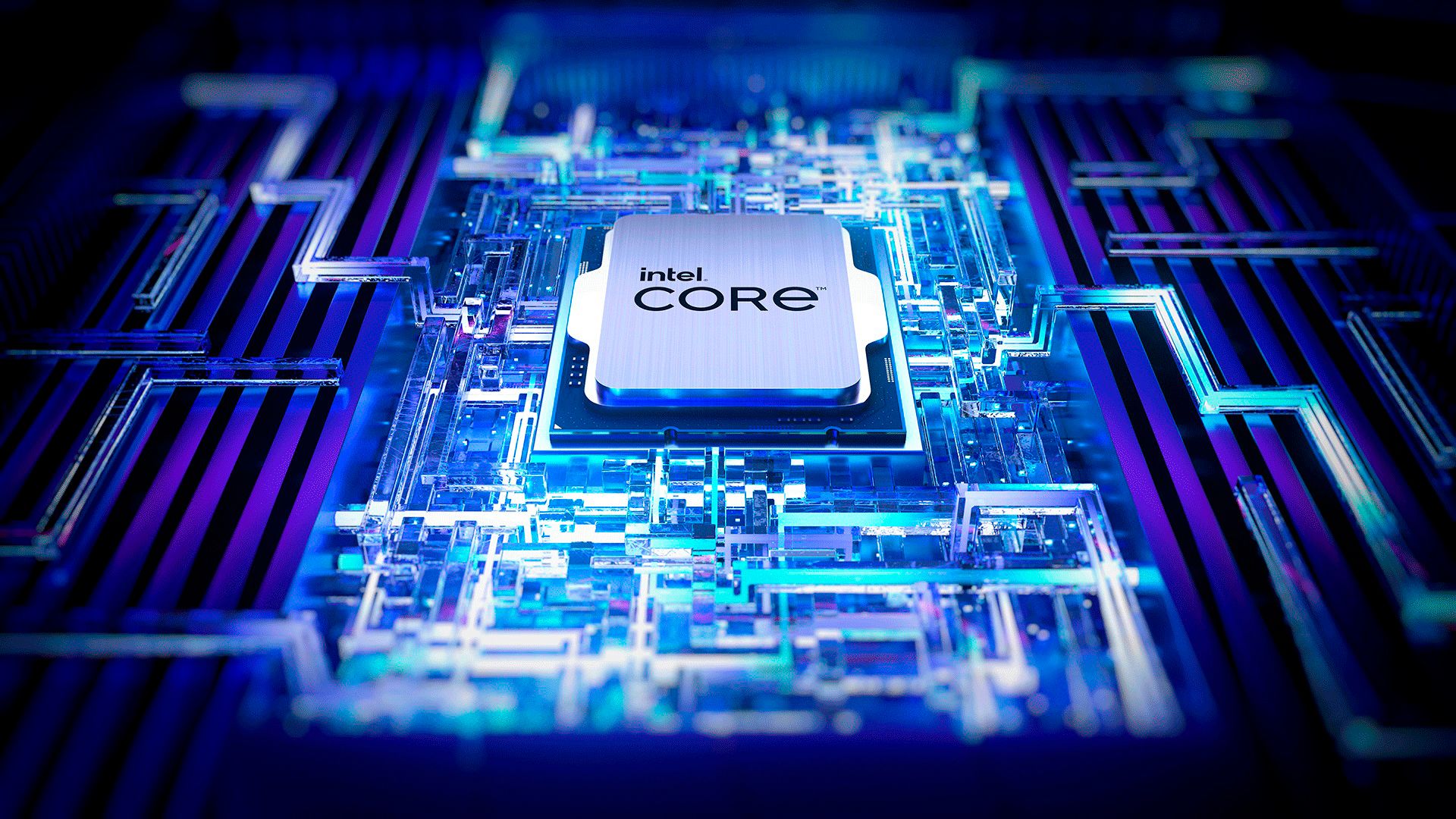
The desktop hardware landscape is undergoing a subtle yet highly impactful pivot regarding platform longevity, and Intel's inadvertent confirmation of the "Raptor Lake Next" (RPL-NEXT) lineup via an internal Smart Sound Technology (SST) driver publication highlights this shift. First spotted by hardware sleuths on public software directories and cross-referenced with recent Vietnamese shipping manifests, RPL-NEXT represents a pragmatic evolution of Intel's established LGA-1700 architecture. Rather than pushing exclusively into bleeding-edge, high-cost ecosystems, Intel is taking a page from the competitor's handbook—extending the operational lifespan of a mature socket well past its initial commercial projections. Scheduled tentatively for the first half of 2027, this microarchitecture refresh bridges a crucial market gap for budget-conscious builders and enterprise upgrades alike.
Simultaneously, the return of DDR4 memory compatibility on an updated mainstream platform directly addresses current macroeconomic and supply-chain pressures. With high-density DDR5 kits continuing to command a significant pricing premium, the inclusion of robust dual-memory controller support on select RPL-NEXT tier boards—all but confirmed via recent vendor BIOS updates—serves as a vital off-ramp for users trapped on aging architectures. By marrying the mature production yields of the 10nm Enhanced SuperFin (Intel 7) process node with revised core counts and aggressive base clocks, Intel is positioning Raptor Lake Next not as a halo enthusiast play, but as a high-value, drop-in replacement cycle designed to stabilize mid-range PC builds through the late 2020s.
Core Architectural & Technological Innovations
At the silicon level, RPL-NEXT continues the hybrid architecture paradigm pioneered by Alder Lake and refined through successive Raptor Lake iterations, pairing performance cores (P-cores) based on the Raptor Cove microarchitecture with efficiency cores (E-cores) built on Gracemont clusters. The accidental publishing of the internal test driver ties directly into Intel's integrated Smart Sound Technology (SST) audio digital signal processor. This low-power coprocessor offloads essential auxiliary tasks—such as advanced noise reduction, echo cancellation, low-power audio decoding, and wake-on-voice operations—directly from the primary execution clusters. By delegating these background workloads to dedicated DSP silicon, the CPU cores are freed from persistent interrupt handling, preserving both processing bandwidth and system thermal headroom.
Furthermore, the leaked shipping manifests detail a strategic restructuring of core topologies tailored for the mid-range and performance segments. Interestingly, current documentation suggests that Intel is omitting a direct successor to the halo Core i9-14900K tier in this initial RPL-NEXT wave, focusing instead on heavily optimized Core i5 and Core i7 equivalents. The top-listed SKU, carrying the 99DLMV part number, deploys a 16-core configuration (8P + 8E) driven by a surprisingly robust 3.5 GHz base block and a 125W TDP envelope. Its base clock alone outpaces the stock base frequency of the older Core i9-14900K, signaling that Intel has extracted substantial frequency headroom from the mature silicon node. Meanwhile, efficiency-oriented parts like the 99DLMT favor a wider 20-core layout (8P + 12E) capped at a conservative 65W TDP, aiming squarely at dense productivity and sustained multi-threaded workloads where thermal efficiency dictates performance scaling.
Empirical Specifications & Benchmark Matrix
| Part Number | Configuration (P+E) | TDP Rating | Base Frequency | L3 Cache | Approximate Market Baseline | Target Use Case |
|---|---|---|---|---|---|---|
| 99DLMV | 8P + 8E (24 Threads) | 125 W | 3.5 GHz | 30 MB | Core i7-14700 / 13700 | High-performance gaming & burst loads |
| 99DLMT | 8P + 12E (28 Threads) | 65 W | 2.1 GHz | 33 MB | Core i5-14600K / 13700K | Sustained multi-threaded productivity |
| 99DLMW | 6P + 4E (16 Threads) | 65 W | 2.6 GHz | 24 MB | Core i5-14400 / 13500 | Mainstream balanced desktop |
| 99DLMX | Unspecified / Variant | 65 W | 2.6 GHz | 24 MB | Core i5-14400 (Variant SKU) | Entry-level commercial & consumer |
Thermal, Efficiency & Real-World Ergonomics
Managing thermal dissipation on legacy sockets requires a delicate balance between aggressive turbo parameters and sustained power delivery limits. The RPL-NEXT lineup addresses this through distinct power partitioning across its tiered SKUs. The flagship 125W part (99DLMV) demands a capable dual-tower air cooler or a 240mm all-in-one liquid cooling loop to sustain its elevated 3.5 GHz base clock under prolonged load conditions. Because its baseline frequency is notably elevated compared to older generational equivalents, the processor will spend less time in lower power states during transient spikes, making motherboard VRM quality a critical consideration for end-users executing extended multi-threaded renders or compiling large software packages.
Conversely, the 65W variants (such as the 99DLMT and 99DLMW) are explicitly engineered for restrained acoustic profiles and thermal ease. By packing up to 20 cores into a tighter 65W power envelope, the 99DLMT in particular leans heavily on its Gracemont E-core clusters to absorb background multitasking duties without triggering aggressive thermal throttling. This makes these specific chips ideal for compact form-factor (SFF) chassis and office environments where fan noise must be kept to an absolute minimum. Coupled with the platform's support for cost-effective DDR4 memory modules—which inherently draw less operating voltage than early-generation DDR5 variants—the overall thermal and electrical footprint of a complete RPL-NEXT system remains remarkably benign, reducing overall system heat dump and prolonging component longevity.
The Definitive Verdict
Intel's quiet confirmation of Raptor Lake Next through accidental driver listings and global shipping manifests underscores a pragmatic pivot toward platform longevity and consumer value. By breathing new life into the LGA-1700 ecosystem and preserving backward compatibility with widespread DDR4 memory, Intel has crafted an ideal off-ramp for builders looking to upgrade aging systems without absorbing the exorbitant cost of a total platform overhaul.
While the omission of a dedicated Core i9 successor signals that RPL-NEXT is not designed to capture absolute benchmark crowns, the targeted optimization of mid-tier SKUs—particularly the high-base-clock 99DLMV and the efficiency-focused 99DLMT—fills a vital commercial void. For budget-conscious gamers, system builders, and enterprise upgraders seeking maximum performance-per-dollar heading into 2027, Raptor Lake Next stands as a remarkably sensible, highly economical bridge over troubled hardware pricing waters.