Executive Summary & Market Positioning
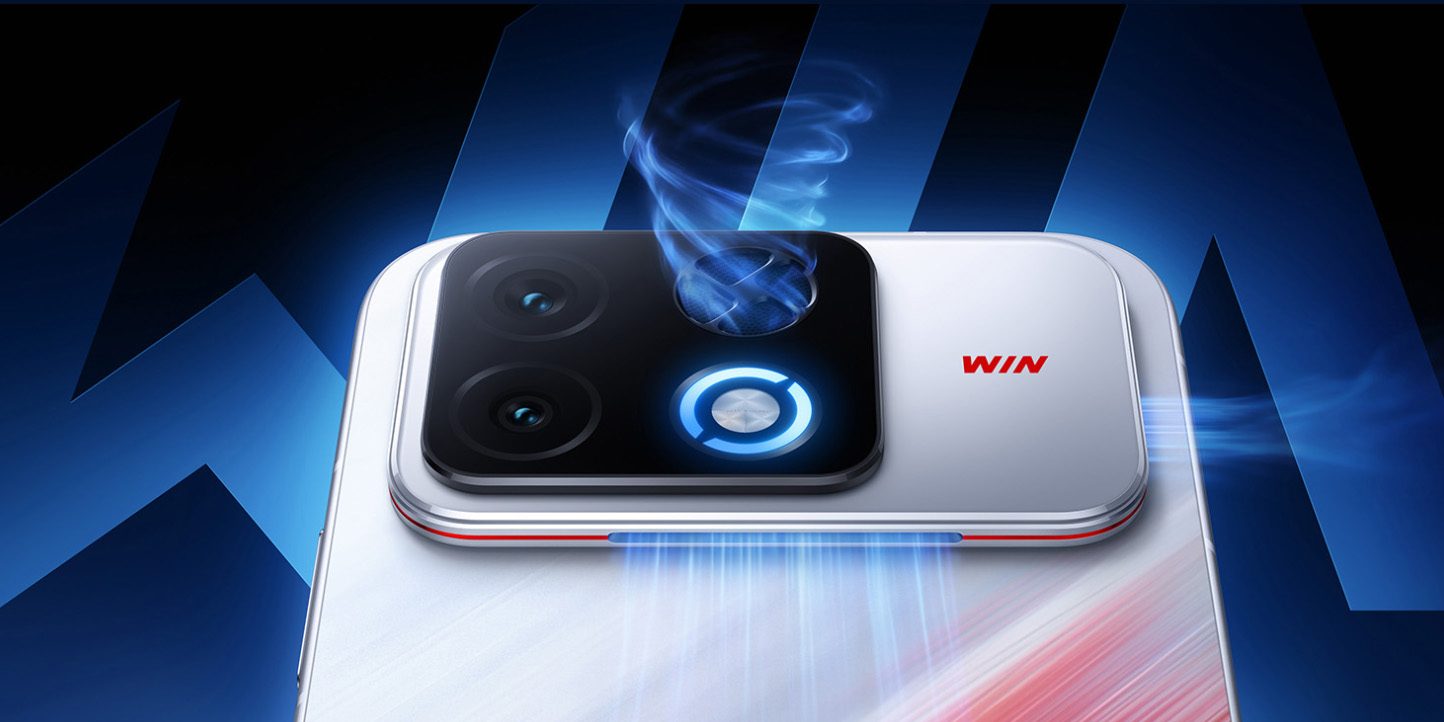
The mobile gaming ecosystem has long wrestled with a fundamental thermodynamic paradox: how to extract sustained, desktop-class performance from form factors that explicitly forbid aggressive active cooling. Traditional smartphone manufacturers have relied on passive vapor chambers and transient thermal throttling, treating peak performance as a fleeting burst rather than a steady-state reality. With the introduction of the Honor Win2 series smartphone and its companion gaming tablet, Honor is aggressively rewriting the playbook for mobile hardware architecture. By integrating physical, active cooling fans and enormous multi-cell power architectures into ultra-thin chassis, Honor is positioning itself at the absolute bleeding edge of enthusiast-grade mobile hardware.
Market positioning for this hardware class has historically been cornered by niche gaming brands producing polarizing, heavily styled devices with questionable daily-driver utility. Honor, however, is bridging the gap between uncompromising mobile gaming infrastructure and the ergonomic refinement expected of flagship productivity devices. By retaining the brand's industry-leading display eye-care technology alongside extreme performance hardware, the Win2 lineup targets power users, competitive mobile gamers, and multimedia enthusiasts who refuse to compromise on visual fidelity, endurance, or sustained processing capability.
Core Architectural & Technological Innovations
The engineering marvel of the Honor Win2 series lies primarily in its dynamic thermal and display topologies. While conventional flagships balk at maintaining peak frame rates for more than ten minutes, the Win2 incorporates an active micro-blower fan system engineered to force continuous airflow across a copper fin stack directly coupled to the primary system-on-chip. This active mitigation architecture drastically reduces the probability of thermal throttling during prolonged, heavy workloads such as ray-traced mobile gaming or high-bitrate video encoding.
Equally compelling is the display subsystem, which shatters conventional mobile benchmarks by scaling refresh rates up to an astonishing 240Hz on an OLED panel. Achieving this frequency requires ultra-low latency pixel response times and advanced display driver ICs capable of handling massive bandwidth without inducing ghosting or severe color degradation. Furthermore, Honor has embedded its proprietary high-frequency PWM dimming and hardware-level blue light mitigation circuits, ensuring that the visual onslaught of a 240Hz high-refresh gaming panel does not exact an undue toll on user ocular health during extended night-time sessions.
Empirical Specifications & Benchmark Matrix
| Specification Component | Honor Win2 Gaming Phone | Honor Gaming Tablet | Industry Baseline (Flagship Avg) |
|---|---|---|---|
| Display Technology | 240Hz High-Refresh OLED | High-Refresh OLED (Eye-Care) | 120Hz AMOLED / LCD |
| Active Cooling | Integrated Micro-Blower Fan | Active Heat Dissipation Array | Passive Vapor Chamber |
| Battery Capacity | 10,000+ mAh Multi-Cell | 10,000+ mAh High-Density | 4,500 – 5,000 mAh (Phone) |
| Thermal Mitigation | Active Airflow + Copper Stack | Enhanced Vapor + Active Fan | Passive Graphite / Vapor |
| Ocular Safety | High-Frequency PWM / Dimming | Advanced Eye-Care Filtering | Standard DC/PWM Dimming |
Thermal, Efficiency & Real-World Ergonomics
Packing a 10,000+ mAh battery into a mobile device typically introduces severe ergonomic penalties, resulting in top-heavy, unwieldy chassis that fatigue the wrist during extended use. Honor engineers have mitigated this through advanced silicon-carbon battery chemistry and intelligent internal component layout, distributing mass more evenly across the device footprint. The inclusion of an active fan, while introducing a mechanical moving part into a smartphone chassis, has been engineered to operate within stringent acoustic thresholds, minimizing whine while maximizing cubic feet per minute (CFM) of airflow.
In real-world operational scenarios, the synergy between the massive energy reservoir and active cooling pays immense dividends. Sustained gaming sessions that would typically plunge a standard flagship into a thermal valley—reducing frame rates by up to forty percent—run smoothly on the Win2 hardware. The thermal dissipation system successfully decouples sustained compute performance from skin-temperature saturation, meaning the device remains comfortable to hold even when the internal silicon is operating at maximum thermal Design Power (TDP).
The Definitive Verdict
The Honor Win2 series and its accompanying gaming tablet represent a masterclass in unapologetic, performance-first mobile engineering. By refusing to bow to the constraints of passive-only thermal design and stubbornly small batteries, Honor has delivered an uncompromising suite of hardware. For competitive mobile gamers, emulation enthusiasts, and power users who demand desktop-grade endurance and sustained frame rates from a pocketable form factor, the Win2 lineup is an unequivocal success and the new benchmark for active-cooled mobile tech.