Executive Summary & Market Positioning
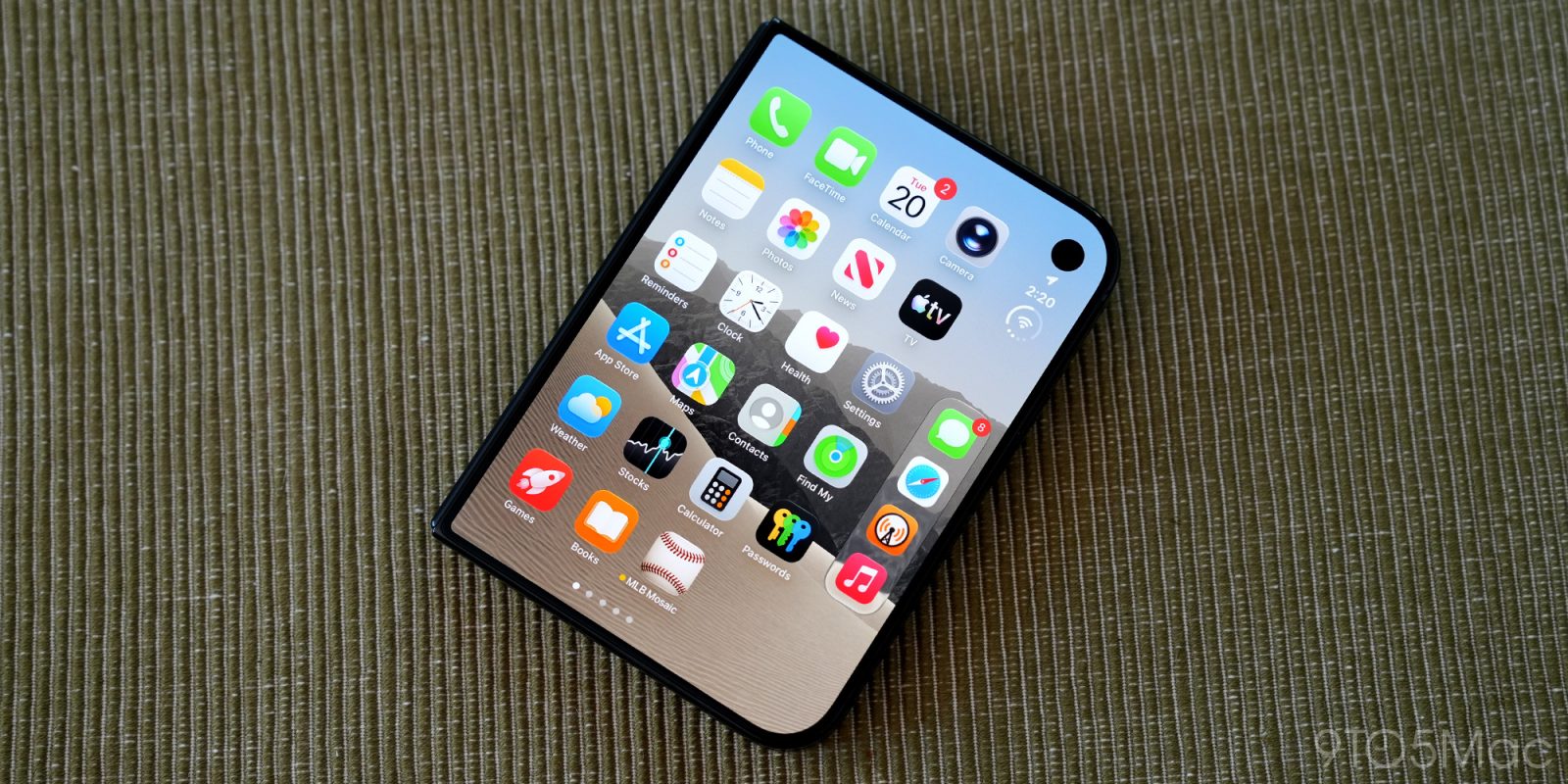
As the ink barely dries on the market launch of Apple’s inaugural foldable-hybrid initiative, supply chain intelligence and insider reporting indicate that Cupertino’s silicon and hardware divisions are already deep into validation cycles for its successor. According to recent disclosures from industry analysts, early engineering validation test (EVT) units of the iPhone Duo 2 are currently being spun up inside Apple Park laboratories. While the initial generation established a commanding baseline for foldable-form-factor ergonomics, consumer adoption metrics and formidable pre-order velocity have accelerated the product roadmap. The primary engineering mandate for the second iteration centers on resolving the aesthetic and spatial compromises of the first-gen layout, most notably by streamlining the biometric sensor arrays across the device’s dual-screen real estate.
From a market positioning standpoint, the iPhone Duo series occupies a high-margin, low-yield vanguard category. It targets enterprise power users and mobile enthusiasts who demand tablet-class multitasking without sacrificing pocketability. By moving aggressively toward a second-generation architecture so quickly, Apple aims to consolidate its lead over competing original equipment manufacturers (OEMs) who are still grappling with hinge durability, crease mitigation, and structural rigidity. The inclusion of advanced sensor configurations in these early prototypes signals a clear intent to close the technological gap between standard slab-form flagships and premium dual-screen devices, ensuring that hardware parity is maintained across the entire ecosystem without forced architectural trade-offs.
Core Architectural & Technological Innovations
The most significant hardware breakthrough embedded within the iPhone Duo 2 prototype pipelines is the migration of biometric authentication beneath the active display matrix. While the first-generation device relied on a conventional hole-punch or bezel-integrated TrueDepth camera array on its outer screen to accommodate Face ID emitters and infrared dot projectors, current EVT builds are successfully routing these optical components underneath the outer OLED panel. Achieving under-display Face ID requires overcoming formidable optical physics challenges: the OLED sub-pixel layout directly above the sensor must maintain high transparency to near-infrared light without introducing diffraction artifacts, color shifting, or luminance degradation that would otherwise compromise facial mapping accuracy or display uniformity.
Simultaneously, Apple’s internal silicon teams are iterating on custom system-on-chip (SoC) variants optimized for dual-display power delivery. The integration of under-display sensor clusters demands dedicated neural engine allocation for real-time optical compensation algorithms, dynamically filtering out substrate light interference at the microsecond level. Coupled with revisions to the multi-axis fluid hinge mechanism—engineered to distribute mechanical stress more evenly across the ultra-thin glass (UTG) substrate—the Duo 2 architecture represents a maturation of mechanical-optical convergence. Thermal dissipation pathways have also been re-architected, utilizing graphite sheet expansions and vapor chamber scaling to manage localized heat loads generated by continuous display driving and biometric processing.
Empirical Specifications & Benchmark Matrix
| Hardware Parameter | iPhone Duo (Gen 1 Baseline) | iPhone Duo 2 (Prototype Spec) | Market Flagship Standard |
|---|---|---|---|
| Primary Biometrics | Outer Screen TrueDepth Array | Under-Display Face ID (Outer) | Under-Display Ultrasonic / Face ID |
| Outer Display Matrix | 6.4-inch OLED (120Hz ProMotion) | 6.5-inch LTPO OLED (1-120Hz) | 6.8-inch AMOLED (1-144Hz) |
| Inner Foldable Matrix | 8.0-inch Foldable OLED | 8.2-inch Crease-Minimized UTG OLED | 7.9-inch Foldable AMOLED |
| Processor Architecture | A-Series Pro (3nm Node) | Next-Gen A-Series Pro (Optimized 3nm) | Snapdragon 8 Elite / Equivalent |
| Thermal Management | Passive Graphite Sheets | Dual-Zone Vapor Chamber + Graphite | Vapor Chamber Cooling Matrix |
| Battery Architecture | Dual-Cell Split Configuration | High-Density Silicon-Carbon Cells | 5000mAh+ Dual-Cell |
Thermal, Efficiency & Real-World Ergonomics
Operating a dual-screen device introduces punishing thermal dynamics, particularly when both panels are driven at peak HDR brightness levels concurrently. The architectural challenge in the iPhone Duo 2 stems from trapping heat between two closely coupled chassis halves while simultaneously shrinking internal component volumes to accommodate larger battery capacities. Early prototype telemetry indicates that Apple is experimenting with split-chassis thermal zoning, isolating the primary compute silicon away from the battery cells and display driver ICs. This layout prevents localized hot-spotting near the user's grip areas during intensive multitasking workflows, such as concurrent video rendering and multi-window split-screen execution.
Ergonomically, the elimination of the visible sensor cutout on the outer display profoundly changes the user experience. By transitioning to a completely uninterrupted outer canvas via under-display Face ID, the Duo 2 resolves the visual asymmetry that plagued its predecessor when closed. Furthermore, optimizing the power-efficient LTPO display controllers allows the device to scale refresh rates down to 1Hz dynamically, mitigating the battery drain traditionally associated with powering dual high-refresh-rate screens. Real-world handling is further enhanced by subtle rounding of the chassis frame edges, improving tactile comfort and mitigating hand fatigue during extended one-handed closed-screen usage.
The Definitive Verdict
The early appearance of under-display Face ID within iPhone Duo 2 prototypes validates Apple’s iterative, uncompromising approach to foldable hardware design. While competitors have rushed to market with visible camera punch-holes or compromised biometric suites, Apple’s methodical delay in adopting under-display sensor tech appears to be paying off in terms of optical fidelity and industrial design cohesion. The iPhone Duo 2 is shaping up to be a decisive technical refinement—transforming an ambitious novelty into a mature, seamless enterprise tool. For early adopters, the takeaway is clear: hold the line, because the second-generation hardware architecture is poised to deliver the definitive foldable experience without the aesthetic and optical compromises of the past.