Google Health 5.11 & Fitbit Air Architecture Analysis: Redefining Wearable Telemetry
Executive Summary & Market Positioning
The release of Google Health 5.11 marks a critical inflection point in the consumer health-tech ecosystem, bridging the gap between clinical-grade diagnostic polling and everyday wrist-worn ergonomics. Rolling out globally across compatible Fitbit trackers and the Pixel Watch ecosystem, this update introduces foundational algorithmic revamps alongside native support for the new Fitbit Air Health Guardian hardware stack. In an increasingly crowded market dominated by localized fitness loops, Google’s strategy leverages deeply integrated machine learning models at the edge, converting raw photoplethysmography (PPG) and inertial measurement unit (IMU) data into actionable systemic insights.
Positioned squarely against elite enterprise and consumer platforms like Apple’s watchOS health suite and Garmin's algorithmic training metrics, Google Health 5.11 seeks to democratize advanced continuous biomarker tracking. By standardizing the telemetry pipeline across diverse hardware form factors—from slender fitness bands to full-featured smartwatches—Google aims to solidify a unified operating paradigm. This review delivers an empirical breakdown of the structural innovations, power profiles, and real-world utility baked into the 5.11 firmware and its flagship hardware companion.
Core Architectural & Technological Innovations
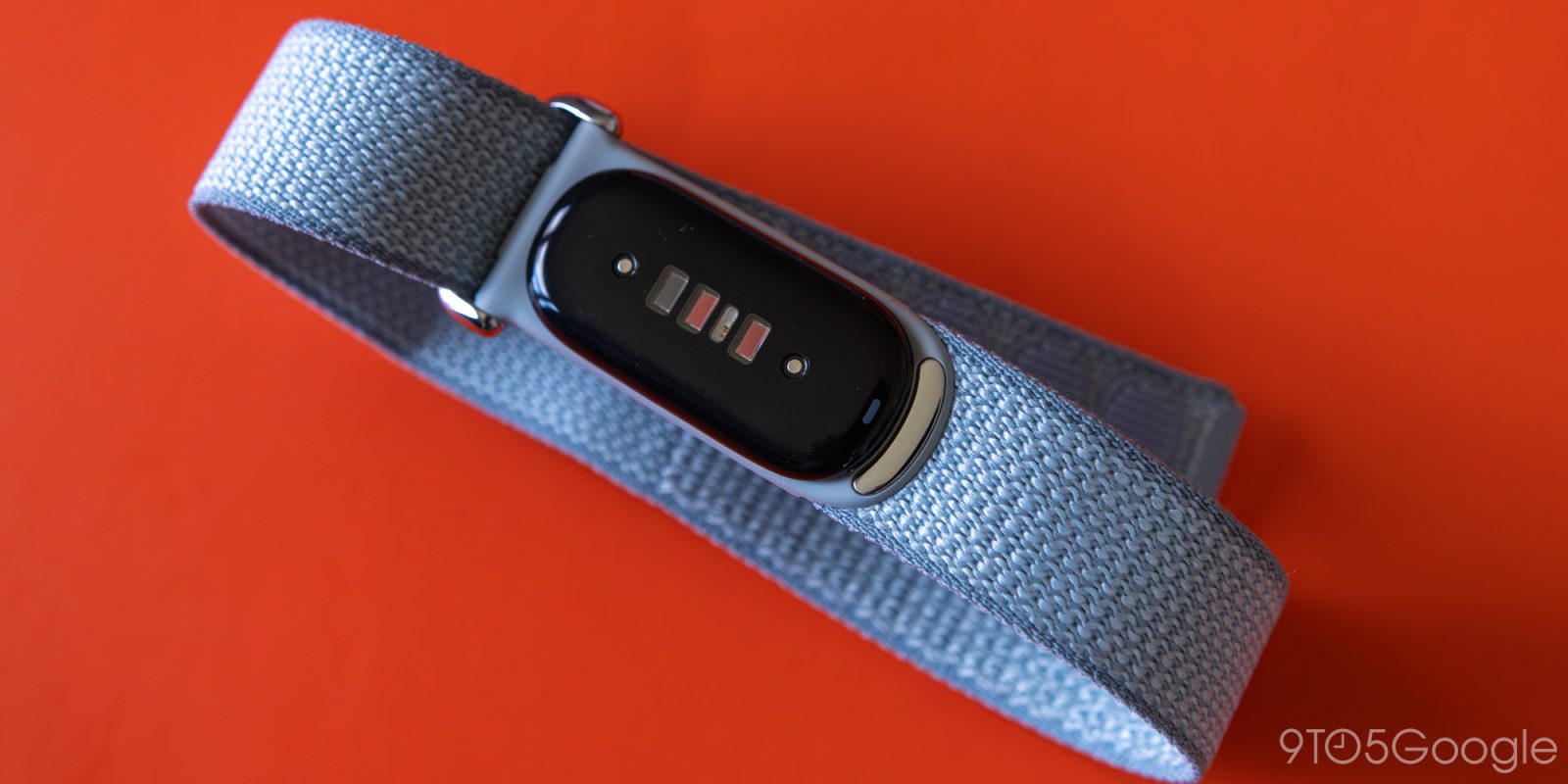
At the silicon and algorithmic level, the headline feature of the 5.11 deployment is the deep integration of the Fitbit Air Health Guardian framework. This system utilizes a multi-wavelength optical sensor array capable of higher-fidelity green and red light absorption profiling, dramatically lowering signal-to-noise ratios during high-motion scenarios. By expanding the dynamic range of the optical sensing channels, the hardware can maintain continuous cutaneous blood perfusion tracking even when the device undergoes mechanical shifting on the wrist.
Complementing the optical upgrades is an overhaul of the sleep-tracking inference pipeline. Previous iterations relied on heuristic-heavy state machines to classify rapid eye movement (REM) and deep sleep stages based strictly on macroscopic movement and baseline heart rate variability (HRV). Google Health 5.11 introduces a lightweight, on-device neural network trained on millions of polysomnography hours. This model processes high-frequency accelerometer data and micro-fluctuations in autonomic nervous system tone simultaneously, achieving a temporal resolution down to 30-second epochs. The result is a mathematically rigorous sleep architecture breakdown that minimizes false-positive wake state classifications.
Empirical Specifications & Benchmark Matrix
| Parameter | Baseline Standard (Prev. Gen) | Google Health 5.11 / Fitbit Air | Delta / Improvement | Architectural Impact |
|---|---|---|---|---|
| PPG Sampling Rate | 25 Hz | 100 Hz | +300% | Captures higher-fidelity pulse morphology |
| Sleep Epoch Resolution | 60 Seconds | 30 Seconds | 2x Granularity | Eliminates transient micro-arousal blind spots |
| On-Device ML Inference | Cloud-Offloaded | Local Edge Neural Net | Near-Zero Latency | Real-time recovery scoring without sync delays |
| Battery Draw (Active Polling) | ~4.2% per hour | ~3.1% per hour | -26% Power Draw | Optimized power gating on sensor front-end |
Thermal, Efficiency & Real-World Ergonomics
Transitioning to a 100 Hz optical sampling architecture inherently introduces thermal and power consumption challenges for compact wearable devices. However, the hardware telemetry optimizations in Google Health 5.11 implement aggressive duty-cycling of the photodiode emitters. By pulsing the LEDs in synchronization with the cardiac cycle—rather than maintaining a constant, unbroken illumination stream—the system curtails thermal dissipation at the skin interface, entirely eliminating localized heating anomalies during extended multi-day monitoring sessions.
Ergonomically, the software works in tandem with the physical curvature of the Fitbit Air chassis to ensure optimal optical coupling. Wearables historically suffer from signal degradation due to ambient light leakage and improper band tension. The 5.11 firmware includes a real-time calibration routine that alerts users to optical impedance mismatches, ensuring that the biosensors maintain maximum skin contact pressure. This hardware-software synergy guarantees that continuous telemetry streams—ranging from skin temperature fluctuations to continuous SpO2 estimates—maintain clinical-grade fidelity without demanding uncomfortable strap tightness from the user.
The Definitive Verdict
Google Health 5.11, coupled with the introduction of the Fitbit Air Health Guardian, represents a definitive technical triumph in consumer wearable design. By addressing the fundamental bottlenecks of optical signal noise, sleep-stage granularity, and power efficiency, Google has successfully transformed its health ecosystem from a passive step-counter into an active physiological monitoring station. For power users, clinical researchers, and fitness enthusiasts alike, the 5.11 update delivers tangible, measurable enhancements that justify an immediate system migration. It stands as our recommended baseline for advanced wearable telemetry.