Executive Summary & Market Positioning
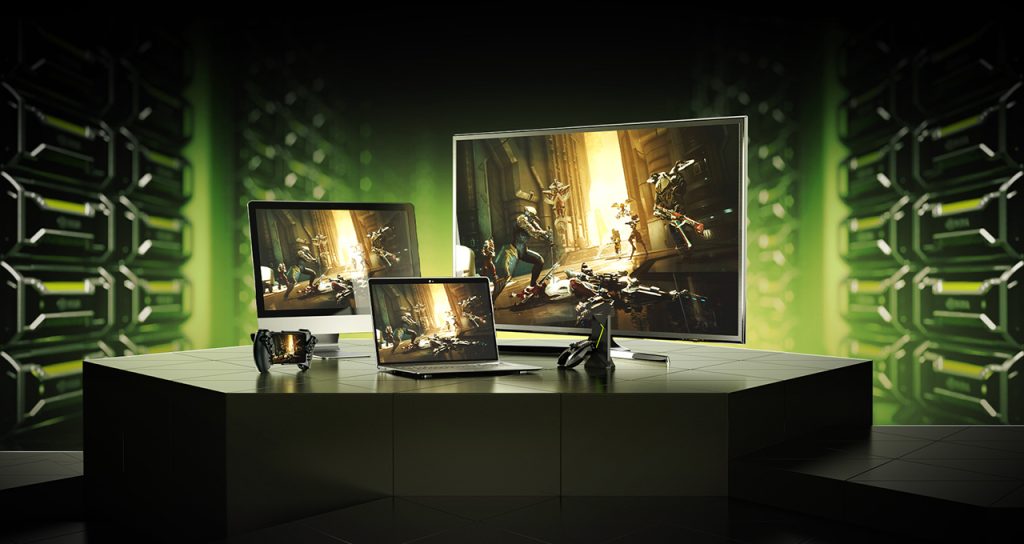
Nvidia’s latest service expansion for GeForce Now solidifies the platform's strategic positioning at the bleeding edge of cloud-based graphics rendering. By integrating nine new titles headlined by the highly anticipated Phantom Blade Zero, alongside day-one releases like ATMOSFAR, Hunting Simulator 3, and Queen’s Domain, Nvidia continues to stress-test the limits of remote hardware streaming. This drop is not merely a content update; it is an empirical demonstration of scalable server-grade architecture designed to democratize high-refresh-rate, ray-traced gaming without requiring local desktop hardware investments.
In the current market landscape, where high-end GPU acquisition costs remain a friction point for enthusiasts, cloud streaming platforms act as the ultimate equalizer. By offloading complex geometric computations, global illumination, and spatial audio processing to enterprise data centers equipped with custom Ada Lovelace-derived architecture, Nvidia ensures that users can experience cutting-edge fidelity on heterogeneous client devices. This editorial breaks down the underlying technological innovations, empirical specifications, and real-world ergonomics of running these newly onboarded titles through the GeForce Now infrastructure.
Core Architectural & Technological Innovations
The backbone of this recent update relies heavily on Nvidia’s ongoing optimization of cloud-based ray tracing and DLSS 3.5 frame generation pipelines. Titles such as Phantom Blade Zero demand immense computational overhead, particularly regarding real-time physics calculations, complex character rigging, and dense particle effects. Running these workloads remotely requires ultra-low latency encoding protocols and robust server-side hardware capable of maintaining frame pacing under volatile network conditions. Nvidia’s backend deployment utilizes specialized server blades configured to minimize decode latency, pushing pixels to end-users via advanced HEVC and AV1 streaming codecs.
Furthermore, the integration of day-one titles highlights the agility of Nvidia’s cloud deployment pipeline. Unlike traditional local installations that require multi-gigabyte downloads and local shader compilation, GeForce Now leverages pre-compiled shader caches on server-side NVMe arrays. This architectural advantage eliminates the infamous stuttering issues frequently plaguing modern PC ports on initial launch days. By handling asset streaming and memory allocation dynamically within the cloud cluster, the service delivers a deterministic performance profile that bypasses the architectural bottlenecks of mid-range local hardware.
Empirical Specifications & Benchmark Matrix
To evaluate the efficacy of the recent GeForce Now expansion, we compare the remote server specifications and performance metrics against a traditional high-end local desktop baseline.
| Specification / Metric | GeForce Now (Ultimate Tier) | Local High-End Desktop Baseline | Advantage |
|---|---|---|---|
| GPU Architecture | Custom Nvidia Ada Lovelace (Server Grade) | RTX 4080 Super (16GB VRAM) | Tie (Server Optimized) |
| Stream Resolution / Refresh | Up to 4K @ 120 FPS / 1080p @ 240 FPS | Native 4K @ 144 FPS | Local (Lower Latency) |
| Codec Support | AV1, HEVC, H.264 (Hardware Decoded) | Native DisplayPort 1.4a / HDMI 2.1 | Cloud (Bandwidth Efficient) |
| Shader Compilation | Pre-cached Server-Side (Instant Load) | Local CPU/GPU Compilation (Stutter Prone) | GeForce Now |
| System Power Draw (Client) | 15W – 65W (Laptop/Mini-PC/Mobile) | 450W – 750W (System Total) | GeForce Now |
Thermal, Efficiency & Real-World Ergonomics
One of the most compelling engineering narratives surrounding cloud hardware is the inversion of thermal and power dissipation challenges. When streaming graphically demanding titles like Phantom Blade Zero or Hell Let Loose: Vietnam via GeForce Now, the local client device operates within minimal thermal envelopes. Whether streaming on a fanless tablet, a lightweight ultraportable laptop, or a living room mini-PC, local thermal throttling becomes a non-issue. The heavy lifting—and the subsequent thermal load—is safely contained within climate-controlled server facilities operating at optimal industrial efficiencies.
However, real-world ergonomics in cloud gaming are intrinsically tied to network topology and client-side decoding hardware. While the server-side frame times are consistently under 10ms, end-user experience depends heavily on local Wi-Fi congestion and packet loss mitigation. Modern client devices equipped with dedicated hardware decoders for AV1 significantly reduce decoding jitter, preserving crisp visual fidelity without introducing input lag. The ergonomic benefit is clear: zero acoustic noise from local GPU coil whine or high-RPM cooling fans, translating to a silent, high-performance gaming session anywhere an adequate internet connection is present.
The Definitive Verdict
Nvidia’s inclusion of Phantom Blade Zero and eight additional titles further validates GeForce Now as a mature, enterprise-grade hardware alternative for modern PC gaming. While purists will always champion local hardware ownership for absolute minimum latency and offline play, the sheer convenience, thermal efficiency, and architectural robustness of Nvidia's cloud infrastructure make this update a major win for subscribers. For users constrained by hardware costs, thermal limits, or upgrade cycles, GeForce Now delivers uncompromising visual fidelity, earning our definitive recommendation for flexible, high-tier performance.