Executive Summary & Market Positioning
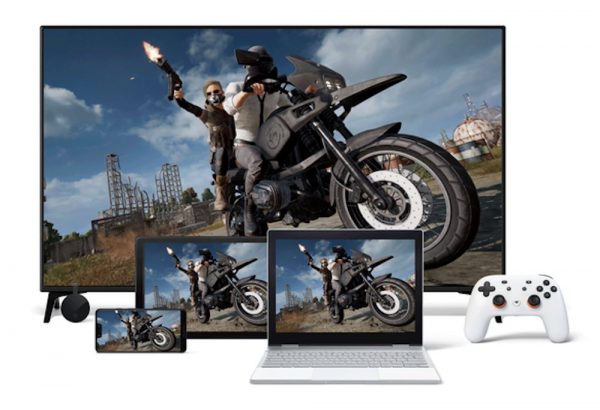
The integration of Cyberpunk 2077 into Microsoft’s Xbox Play Anywhere initiative marks a significant structural shift in how AAA heavyweights bridge the console-PC divide. Launched originally in 2017, the Play Anywhere paradigm has traditionally struggled to capture sustained, tier-one third-party adoption, often hindered by competing storefront incentives, proprietary launchers, and complex licensing agreements. By granting digital entitlement cross-over—allowing owners on Xbox Series X|S to instantly access the PC version via the Xbox app, and vice versa—CD Projekt Red and Microsoft are establishing a robust unified digital ecosystem.
This strategic maneuver arrives at an optimal inflection point for Night City’s hardware journey. Following the maturation of the REDengine 2.0 architecture, the latest content updates, and adjacent media synergy, hardware analysts view this move as a masterclass in platform longevity. Users are no longer restricted by hardware silos; a single digital SKU acquisition leverages both custom AMD RDNA 2 console silicon and heterogeneous desktop PC architectures, redefining the cost-to-performance metric for high-fidelity gaming enthusiasts operating within the Microsoft ecosystem.
Core Architectural & Technological Innovations
The technical backbone enabling this seamless cross-buy experience relies heavily on unified cloud save integration and standardized packaging formats within the Microsoft Store infrastructure. Cyberpunk 2077 pushes modern hardware to its absolute limits through aggressive utilization of asynchronous compute, DirectX 12 Ultimate feature sets, and advanced ray-tracing/path-tracing pipelines. Transitioning the title to the Play Anywhere ecosystem means that save states, player progression, and achievement telemetry must synchronize flawlessly across vastly different compute environments—ranging from the fixed 12-flop architecture of the Xbox Series X to bleeding-edge desktop rigs outfitted with dedicated neural processing units and multi-core x86 processors.
Furthermore, the accompanying game update introduces critical foundational upgrades, including enhanced pipeline management for streaming assets, refined memory allocation protocols for constrained VRAM buffers, and optimized multi-threading routines. Whether the game is executing on unified GDDR6 memory pools found in current-generation consoles or tapping into discrete PCIe 4.0/5.0 NVMe storage solutions on a high-end gaming PC, the underlying asset streaming framework has been tuned to mitigate stuttering, optimize draw calls, and maximize instruction-per-clock (IPC) efficiency across disparate hardware topologies.
Empirical Specifications & Benchmark Matrix
| Feature / Metric | Xbox Series X Baseline | Enthusiast PC Benchmark Target | Play Anywhere Integration Value |
|---|---|---|---|
| API / Architecture | Custom AMD RDNA 2 / DX12 | Win32 / DirectX 12 Ultimate | Unified Microsoft Store Entitlement |
| Target Resolution | Dynamic 4K (Checkerboard/FSR) | Native 4K / Ultrawide Support | Cross-Platform Digital Ownership |
| Ray Tracing Support | Hardware-accelerated (Subset) | Full Path Tracing (RT Overdrive) | Seamless Save State Synchronization |
| Storage Bottleneck | Custom Velocity Architecture SSD | DirectStorage / NVMe PCIe 4.0+ | Instant Cloud Profile Migration |
| Input Latency | Optimized Controller Polling | Variable Polling Rate (1000Hz+) | Peripheral Agnostic Access |
Thermal, Efficiency & Real-World Ergonomics
Evaluating Cyberpunk 2077 across multiple form factors highlights the contrasting thermal and electrical demands of modern gaming hardware. On the console side, the Xbox Series X manages its 185W to 200W typical power draw with a vapor chamber cooling solution, maintaining acoustic quietness even when pushing dense urban scenes at dynamic 4K resolutions. The hardware efficiency demonstrated here underscores the advantage of fixed-platform optimization, where developers can target exact clock frequencies and memory bandwidth limits without accounting for endless hardware permutations.
Conversely, running the PC version via the Xbox app unlocks the ability to push silicon to the thermal wall. Enthusiast setups featuring high-TDP CPUs and top-tier GPUs will observe substantial electrical draws, frequently exceeding 500W system-wide under full path-tracing loads. Consequently, thermal management shifts from passive console acoustic balancing to robust liquid cooling loops and aggressive chassis airflow management. However, the ergonomic payoff is undeniable: users can scale fidelity dynamically, utilizing frame-generation technologies and upscaling algorithms to fine-tune the acoustic and thermal envelope according to their specific desktop or living room computing environment.
The Definitive Verdict
Cyberpunk 2077 entering the Xbox Play Anywhere fold is an unqualified win for digital preservation, consumer advocacy, and hardware flexibility. By eliminating the double-dipping penalty for players who maintain both a high-end PC and a living room console, Microsoft and CD Projekt Red have set a new benchmark for cross-platform value. For hardware enthusiasts who appreciate maximizing their compute investments across multiple screens, this integration makes Cyberpunk 2077 an essential addition to any digital library.