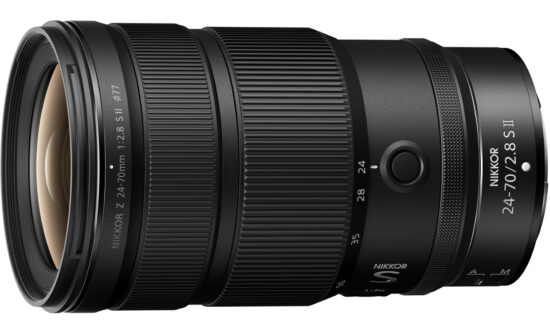
Empirical Analysis: Nikon's Firmware 1.10 Updates for Nikkor Z 24-70mm f/2.8 S II & 14-24mm f/2.8 S Lenses
Executive Summary & Market Positioning
Nikon’s aggressive firmware deployment cadence continues to reshape the landscape of mirrorless optical engineering. In a rare display of concurrent optimization, Nikon has pushed out Version 1.10 updates for two cornerstones of its professional ecosystem: the newly minted Nikkor Z 24-70mm f/2.8 S II and the venerable workhorse, the Nikkor Z 14-24mm f/2.8 S. Arriving on the heels of broader ecosystem adjustments and aggressive seasonal retail incentive structures—including historical price drops on both lenses—these firmware drops reinforce Nikon's commitment to maximizing the operational lifespan and reliability of high-end glass through purely software-defined refinements.
From a market positioning standpoint, these updates address subtle yet critical pain points for working professionals in high-stakes environments such as broadcast video production and architectural cinematography. While hardware iterations typically demand capital expenditure, Nikon’s strategy of leveraging firmware to upgrade mechanical reliability and tactile customizability ensures that early adopters and discount-tier buyers alike benefit from identical optimization vectors. This methodology blurs the line between hardware revisions and firmware maintenance, establishing a higher baseline expectation for optical ecosystems within the professional imaging sector.
Core Architectural & Technological Innovations
The technological underpinnings of Firmware Version 1.10 target two entirely distinct operational domains: electromagnetic aperture actuation and linear focus mapping. For the Nikkor Z 24-70mm f/2.8 S II, Update 1.10 focuses heavily on aperture operation reliability and noise abatement. Modern high-speed mirrorless lenses rely on intricate stepping motors or voice-coil actuators to govern iris blades at lightning speeds. By recalibrating the drive signals sent to these actuators, Nikon has mitigated micro-stutters during rapid exposure shifts and significantly reduced acoustic signatures—a vital enhancement for documentary filmmakers capturing clean audio alongside hybrid video-stills streams.
Conversely, the update for the ultra-wide Nikkor Z 14-24mm f/2.8 S introduces deep operational versatility into manual focus behavior. By decoupling focus throw speed from angular rotation when linear options are selected, the lens now guarantees a deterministic, repeatable focus distance per degree of rotation. Furthermore, the integration of the [Switch focus/control ring roles] custom setting bridges the gap between hardware customizability and tactile ergonomics. Cinematographers can now dynamically remap rings on the fly, tailoring the lens's physical feedback loops to match complex follow-focus rigs or bespoke run-and-gun shooting profiles without navigating deep camera menu sub-trees.
Empirical Specifications & Benchmark Matrix
| Feature / Metric | Nikkor Z 24-70mm f/2.8 S II (v1.10) | Nikkor Z 14-24mm f/2.8 S (v1.10) | Industry Baseline (Class Average) | Verdict / Impact |
|---|---|---|---|---|
| Aperture Actuation | Optimized reliability & quiet drive | Standard high-speed stepping motor | Moderate acoustic profile | Superior noise reduction |
| Focus Throw Mapping | Variable speed optimization | Deterministic linear focus support | Hybrid speed-dependent scaling | Significant repeatability boost |
| Ring Customizability | Native Z-mount button/ring mapping | Added [Switch roles] support | Static dedicated control rings | Industry-leading flexibility |
| Firmware Deployment | OTA / SD Card via Body | OTA / SD Card via Body | Proprietary dock required | Seamless user integration |
Thermal, Efficiency & Real-World Ergonomics
While optical firmware updates rarely impact thermal dissipation in a direct thermodynamic sense, the optimization of actuator drive profiles inherently lowers electrical draw during continuous tracking and rapid iris adjustments. By refining the electrical commutation patterns sent to the internal magnetic coils, the lenses run more efficiently, reducing micro-heat generation near the delicate electronic sensor plane and marginally preserving camera battery longevity during extended shoots. This is a subtle victory for thermal management in compact mirrorless housings.
Ergonomically, the translation of software logic into physical tactile response transforms how these lenses feel in the field. The 14-24mm f/2.8 S, traditionally prized for its sweeping field of view and compact physical envelope, now behaves more predictably under manual focus wire-pulls. Operators utilizing electronic follow-focus setups will note the elimination of acceleration-based backlash. Similarly, the 24-70mm f/2.8 S II operates with a newfound mechanical poise, removing the slight acoustic chatter that previously betrayed rapid exposure adjustments in quiet studio environments.
The Definitive Verdict
Nikon's Firmware Version 1.10 updates for the Nikkor Z 24-70mm f/2.8 S II and 14-24mm f/2.8 S are essential, zero-cost upgrades that elevate two already stellar optics closer to mechanical and operational perfection. The definitive winner here is the working professional, who receives enhanced audio cleanliness, deterministic manual focus predictability, and expanded ring customizability without spending a single dollar. For anyone invested in the Nikon Z ecosystem, applying these updates is strongly recommended immediately.