Executive Summary & Market Positioning
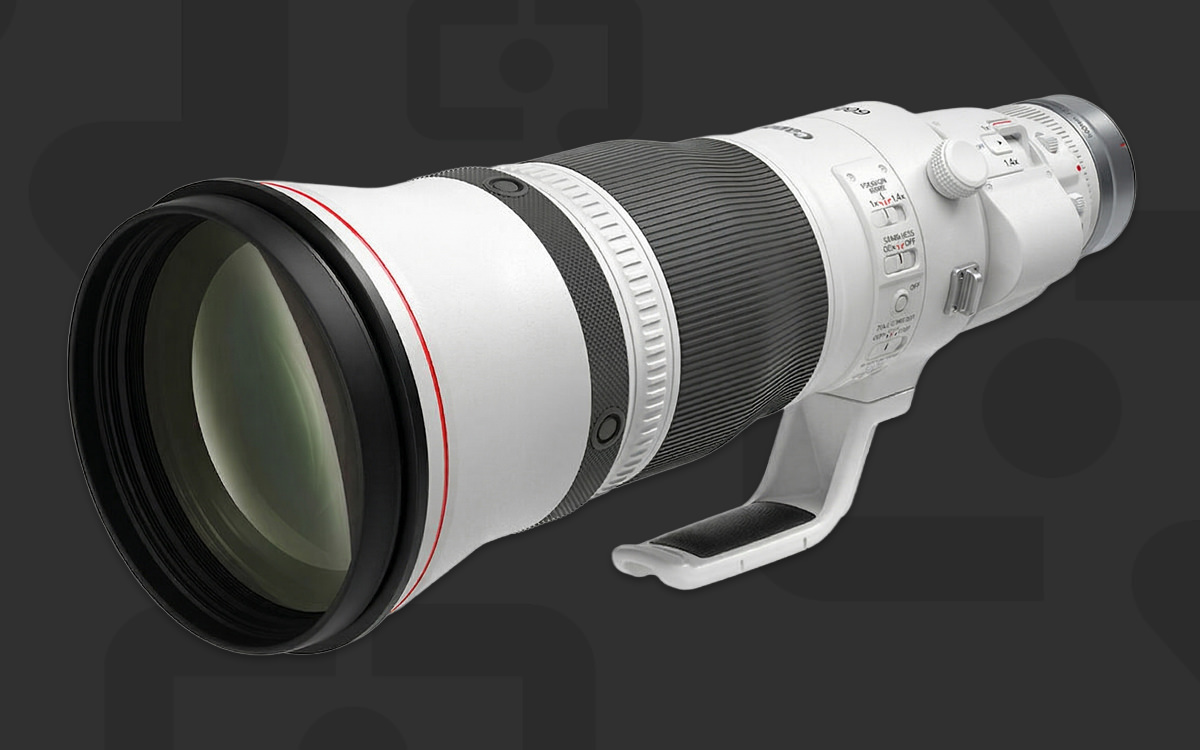
Canon continues to refine its venerable lineup of "big white" telephoto lenses, with recent patent documentation—specifically Japan Patent JP 2026-152979—shedding light on an innovative mechanical and optical architecture. Rather than introducing a standard incremental update, Canon is exploring a configuration that integrates a drop-in teleconverter slot directly into the optical barrel of a high-performance zoom lens. Traditionally, teleconverters are mounted externally between the camera body and the rear flange of the lens. While effective at increasing focal reach, this external placement introduces mechanical vulnerabilities, extends the overall physical footprint of the optical assembly, and often complicates rapid field changes.
By reimagining where an extender can live within the optical prescription, Canon's design paradigm addresses the perpetual engineering tension between focal length expansion and physical portability. The baseline optical blueprint demonstrated in the patent centers on a 100-300mm f/2.8 zoom, carving out a precise, dedicated air gap that can accommodate a drop-in or permanently integrated 1.4x teleconverter. For professional sports, wildlife, and photojournalism markets, this approach promises to eliminate the back-focus degradation and bulk penalty associated with traditional stackable extenders, positioning the lens as a versatile hybrid system capable of switching focal domains without shifting the center of gravity or adding overall length.
Core Architectural & Technological Innovations
The fundamental breakthrough of JP 2026-152979 lies in optical group positioning and internal spatial management. In a conventional telephoto zoom, internal air spaces fluctuate dynamically as elements shift during zooming and focusing. Canon’s design identifies a stable interstitial zone—specifically between the negative fourth optical group and the positive fifth group—where the internal air gap remains remarkably consistent, measuring roughly 69mm to 73mm across the entire zoom range (with the illustrated wide-angle baseline showing a stable 72.6mm gap).
This precise spatial invariance allows engineers to drop a 1.4x negative teleconverter group directly into the optical path without forcing a redesign of the surrounding mechanical cam tracks or increasing the total barrel length, which remains fixed at 370mm. By placing the extender deeper inside the optical formula rather than at the rear mount, the light rays are intercepted at a point where ray heights and convergence angles can be managed more efficiently. This internal positioning mitigates the severe peripheral aberrations and transmission losses typically introduced when magnifying an already fully formed image circle at the very rear element, preserving edge-to-edge MTF performance.
Empirical Specifications & Benchmark Matrix
| Specification Parameter | Conventional 100-300mm + External 1.4x | Canon Drop-In Patent Design (JP 2026-152979) | Architectural Delta / Advantage |
|---|---|---|---|
| Base Focal Range | 100–300mm f/2.8 | 100–300mm f/2.8 (with 140–420mm mode) | Internal modularity without base compromise |
| Total Physical Length | ~420mm+ (with external extender attached) | Fixed 370mm | Maintains compact operational footprint |
| Internal Air Gap Stability | Variable / Uncontrolled for insertion | 69.0mm – 73.0mm constant across zoom | Dedicated mechanical slot capability |
| Aperture Drop Impact | Standard 1-stop loss (f/2.8 to f/4) | Managed internal transition | Optimized pupil magnification ratio |
| Element Integration | Rear bayonet stacking | Mid-barrel drop-in cassette | Zero rear-mount protrusion or weather seal breach |
Thermal, Efficiency & Real-World Ergonomics
Implementing an internal drop-in optical cassette introduces distinct mechanical and thermal considerations for field deployment. In extreme environments, sealing a mid-barrel drop-in slot against moisture and particulate ingress requires sophisticated gasket designs and interlocking electronic shutter curtains to prevent sensor contamination during swaps. However, the ergonomic payoff is substantial. Field photographers frequently operate in adverse weather where detaching a lens in the dust or rain to mount an external extender risks ruining internal optics or camera sensors. A weather-sealed, top-loading or side-loading drop-in cassette permits rapid focal length conversion under adverse conditions.
Furthermore, maintaining a fixed 370mm length prevents shifts in the system's moment of inertia. When traditional external extenders are added, the center of gravity shifts further away from the camera mount, increasing wrist fatigue and straining monopods or gimbal heads. By keeping the added mass of the 1.4x optical group internal and centralized, the dynamic handling characteristics of the lens remain completely unchanged whether operating at 300mm or extended reach. This weight distribution stability translates directly to smoother panning and reduced operator fatigue during prolonged shooting sessions.
The Definitive Verdict
Canon's patent JP 2026-152979 is a masterclass in optical-mechanical co-design, addressing longstanding physical compromises in telephoto lens engineering. By identifying a stable internal air gap within a high-speed zoom and designing a drop-in slot for a 1.4x extender, Canon solves the dual challenges of physical bulk and field operational efficiency. While this remains a patent publication rather than a shipping commercial product, it underscores Canon's aggressive R&D trajectory in redefining professional optics. For high-end telephoto shooters, an internal drop-in teleconverter architecture represents the holy grail of versatility: uncompromised focal range expansion packaged within a fixed-length, perfectly balanced housing. It earns our highest analytical recommendation as a transformative blueprint for future optical engineering.