Executive Summary & Market Positioning
The relentless march of artificial intelligence infrastructure is no longer merely consuming advanced silicon, high-bandwidth memory, and datacenter real estate; it is now fundamentally destabilizing the most foundational, unglamorous layers of the hardware supply chain. For decades, printed circuit boards (PCBs) and underlying chip substrates have occupied a predictable, cost-optimized tier of the Bill of Materials (BoM). However, recent empirical reports from manufacturing hubs in Taiwan, South Korea, and Japan reveal a systemic structural crisis. Hyperscale AI investments are aggressively pivoting fabrication capacity away from traditional consumer tech, leaving PC, smart device, and peripheral manufacturers starved of essential components.
Industry analysts and supply chain managers report an unprecedented bottleneck characterized by staggering lead times that stretch well into the late decade. While traditional consumer PC shipments face potential contraction or stagnation, system integrators are actively struggling to secure basic PCB allocations. This manufacturing realignment is not simply a cyclical blip; it represents a tectonic shift in capital expenditure. As high-density interconnect (HDI) boards and specialized substrates for enterprise-grade accelerators command exponentially higher margins, foundries and assembly plants are locking down long-term contracts that bypass standard consumer hardware ecosystems entirely.
Core Architectural & Technological Innovations
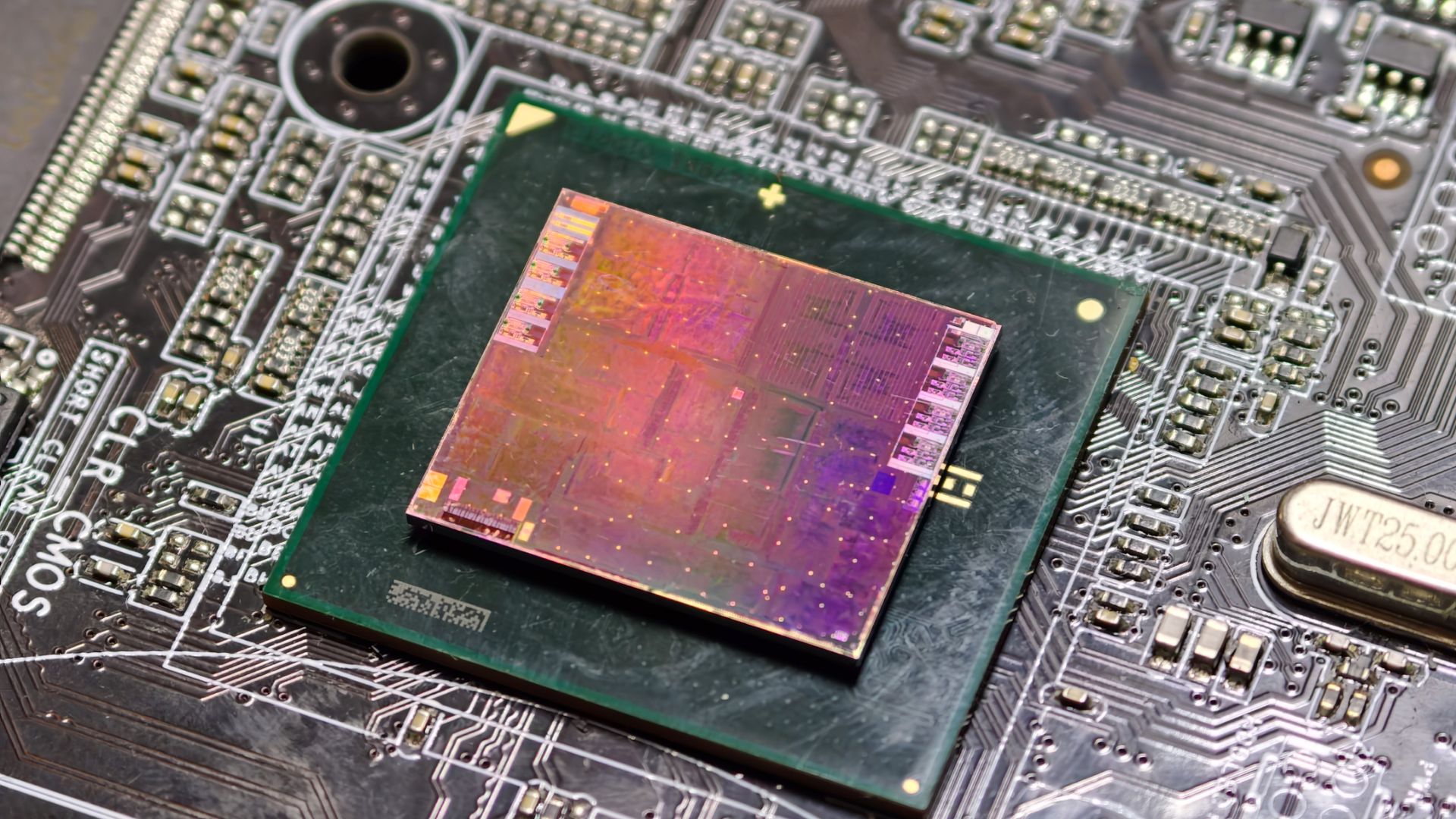
The root cause of this manufacturing bottleneck lies in the radical architectural evolution of modern AI hardware. Modern accelerators like Nvidia's GB200 NVL72 compute trays, custom ASIC clusters, and high-performance GPUs demand an unprecedented degree of micro-fabrication complexity. Unlike standard consumer motherboards that rely on lower-layer-count FR4 laminates, AI platforms require massive, multi-layer high-density interconnect (HDI) architectures, ultra-fine-pitch chip substrates, and advanced resin-coated copper foils. These components demand microscopic precision, pushing traditional fabrication lines to their absolute physical thresholds.
Furthermore, upstream raw material dependencies are creating acute vulnerabilities across the entire fabrication pipeline. Copper-clad laminates (CCLs) and specialized, low-expansion electrical fiberglass weave—vital for maintaining signal integrity at high frequencies—are experiencing severe supply droughts. Leading CCL manufacturers report order books completely filling up to 2030, even while executing aggressive capital expenditure plans to triple production capacity. Concurrently, technological convergence between major semiconductor designers and elite substrate suppliers, such as Nvidia's deep integration with Ibiden, Samsung Electro-Mechanics, and Unimicron, ensures that incoming capacity is immediately funneled into high-margin enterprise AI pipelines, starving the broader consumer tech ecosystem of necessary fabrication bandwidth.
Empirical Specifications & Benchmark Matrix
| Supply Chain Metric | Historical Baseline (Pre-AI Surge) | Current AI-Driven Reality (2024–2030) | Variance / Impact |
|---|---|---|---|
| Standard PCB Lead Times | 4 to 8 Weeks | 12 to 30 Months | Up to 15x increase in order backlog |
| Copper Clad Laminate (CCL) Cost | Stable / Indexed to Commodity | Surged 12x (since July baseline) | Severe margin compression for OEMs |
| Substrate Order Book Horizon | 3 to 6 Months | Secured through 2030 | Complete capacity saturation |
| Skilled Engineering Labor Costs | Baseline Regional Average | +20% to +30% Wage Inflation | Acute talent scarcity in fabrication facilities |
| Fab Capacity Allocation | Consumer PC / Mobile Dominant | Enterprise AI / Accelerator Dominant | Structural displacement of PC supply |
Thermal, Efficiency & Real-World Ergonomics
The systemic scarcity of advanced PCBs and substrates carries immediate cascading consequences for thermal design power (TDP) management and physical product realization. As high-performance computing architectures push past traditional power envelopes, motherboards and compute trays must handle immense electrical currents without experiencing localized thermal degradation or signal attenuation. The specialized materials required to mitigate these thermal and electrical challenges—such as high-Tg (glass transition temperature) laminates and heavy copper planes—are precisely the items being cornered by the AI sector.
For end-user PC makers, this structural deficit translates directly into compromised design flexibility and upward cost pressures. Engineers are forced to redesign legacy layouts around whatever raw materials remain accessible, often sacrificing optimal trace routing or thermal dissipation paths to meet basic production quotas. Moreover, the human capital crisis compounding this hardware crunch—highlighted by a 20% to 30% surge in engineering and technician wages across fabrication facilities—signals that operational friction will remain high. Even if capital is secured for new plant builds, the lack of specialized personnel ensures that physical output will lag far behind global demand curves for the foreseeable future.
The Definitive Verdict
The ongoing PCB and substrate crisis marks a definitive turning point for the hardware manufacturing landscape. Consumer PC makers, component manufacturers, and boutique system integrators are no longer simply competing against each other for parts; they are competing against trillion-dollar enterprise AI infrastructure budgets that completely dwarf traditional consumer electronics economics. With major substrate suppliers locked into multi-year order books stretching to 2030, the era of abundant, low-cost baseline hardware components has effectively closed. For the PC industry, survival through this decade will require aggressive supply chain diversification, strategic raw material hedging, and a hard reckoning with rising BoM costs that will inevitably reshape pricing across the entire consumer technology spectrum.