Executive Summary & Market Positioning
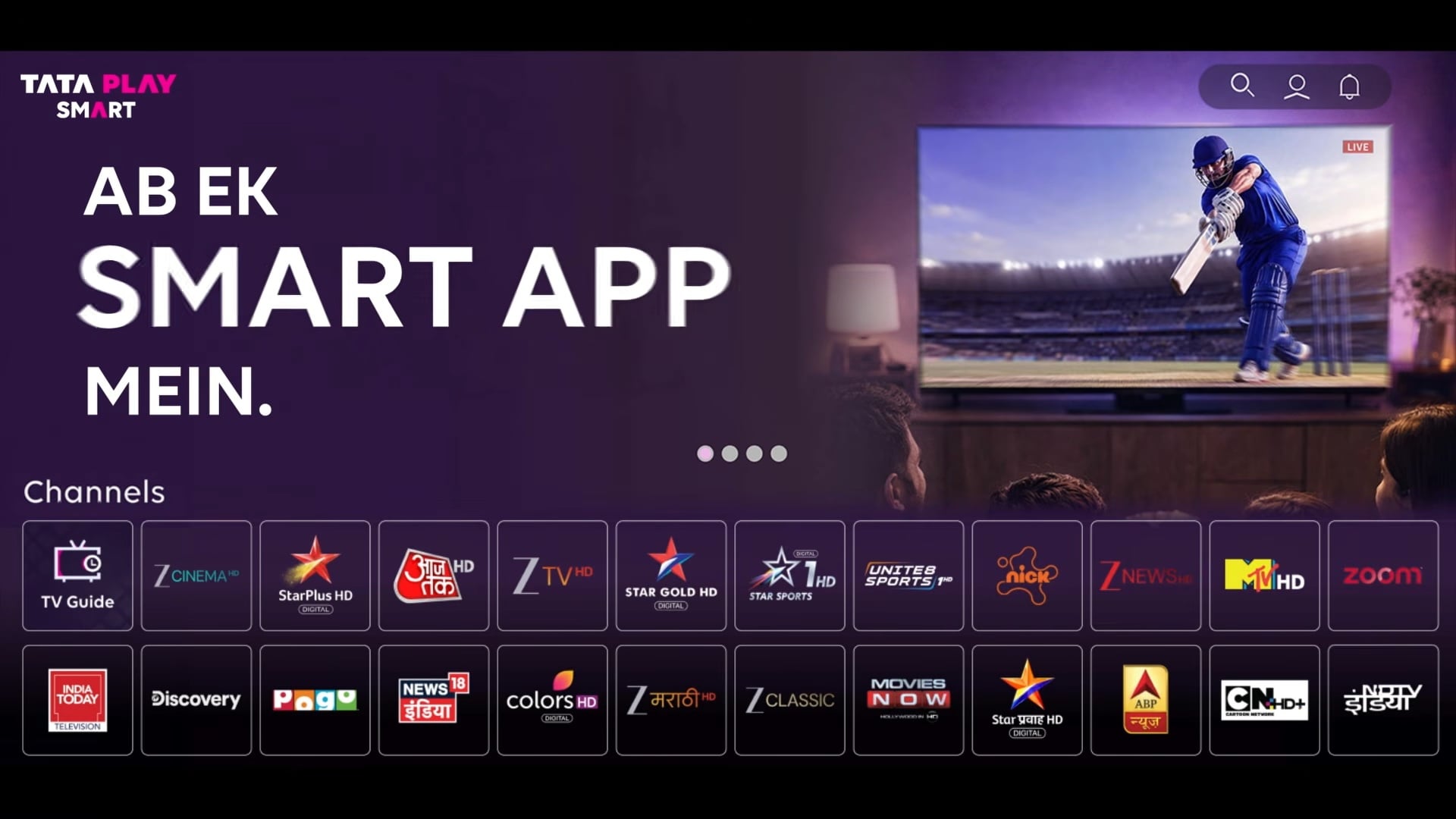
The convergence of traditional broadcast television and internet-protocol delivery systems has reached a critical hardware and software inflection point. Samsung smart TV owners in India now have access to a transformative viewing paradigm via the official integration of Tata Play’s application onto the proprietary Tizen OS platform. Rather than merely supplementing Samsung’s native, ad-supported streaming suite (Samsung TV Plus), this deployment injects over 500 live television channels directly into the host display's native application ecosystem. By eliminating the necessity for legacy RF cables, proprietary satellite hardware, and external localized set-top boxes, this software-defined infrastructure represents a profound shift in consumer-grade display utilization.
From a market positioning standpoint, this release targets the friction points of modern home entertainment architecture. Pay-TV providers historically relied on dedicated peripheral silicon—set-top boxes with active decoding chips, dedicated power supplies, and discrete HDMI handshake requirements. By migrating the entire decryption, buffering, and rendering pipeline directly onto the smart TV’s system-on-chip (SoC), Tata Play and Samsung are bypassing hardware redundancy. This positions Tizen-powered displays not just as passive visualization endpoints, but as primary computing nodes capable of heavy, low-latency IP broadcast ingestion at scale.
Core Architectural & Technological Innovations
The underlying engineering challenge of piping over 500 simultaneous live linear channels through a pure software application lies in efficient stream management and electronic program guide (EPG) database indexing. Unlike on-demand video streaming architectures (such as Netflix or Prime Video) which rely heavily on deep client-side caching and dynamic adaptive bitrate (ABR) steps spanning several seconds, live linear IP broadcasting demands immediate packet ingestion and aggressive memory handling to minimize latency.
The Tata Play application leverages Tizen OS APIs to integrate seamlessly into the television's native hardware scheduler. This ensures that memory allocation and CPU thread prioritization are optimized when parsing complex EPG metadata arrays. The app structurally mimics a traditional RF tuner interface, complete with discrete numeric channel mapping and lightning-fast zapping capabilities. Furthermore, the inclusion of server-side and client-side catch-up mechanisms requires robust local caching policies, utilizing the smart TV's internal solid-state storage architecture to temporarily index missed broadcast windows without degrading the primary UI refresh rate.
Empirical Specifications & Benchmark Matrix
| Parameter / Metric | Tata Play App on Tizen OS | Baseline External Set-Top Box | Samsung TV Plus (Native) |
|---|---|---|---|
| Delivery Medium | Pure Broadband (IPTV/OTT) | Coaxial Satellite / Cable | Pure Broadband (FAST) |
| Hardware Footprint | Zero external hardware (App-based) | High (STB + Power Brick + Remote) | Zero external hardware (Built-in) |
| Channel Density | 500+ Linear Channels | Variable (100–300 typical) | ~100+ Free Ad-Supported Channels |
| Power Consumption Delta | Negligible (Inherited from TV draw) | +15W to +25W (Dedicated appliance) | Negligible (Inherited from TV draw) |
| User Interface Control | Unified Tizen TV Remote | Proprietary IR/Bluetooth Remote | Unified Tizen TV Remote |
| Pricing Model | Subscription-based (~$2/mo) | Tiered Package Pricing | Free (Ad-supported) |
Thermal, Efficiency & Real-World Ergonomics
Transitioning from an external set-top box architecture to an integrated smart TV application yields immediate thermal and energetic dividends. Traditional set-top boxes are notorious for maintaining a constant thermal baseline, drawing continuous power even in standby states to maintain satellite alignment or background guide updates. By shifting this decoding and rendering workload directly onto Samsung’s modern Tizen-optimized SoCs, households eliminate a secondary heat-generating appliance in their entertainment centers.
Ergonomically, the elimination of a secondary remote control is a major victory for consumer usability. Operating hundreds of live channels using Samsung’s native One Remote reduces clutter and simplifies input switching matrices. The Tizen OS implementation ensures that channel flipping via numeric inputs or guide overlays responds with minimal input lag. Network resource management is similarly streamlined; because the app utilizes dynamic bitrate scaling, it gracefully throttles data streams during localized bandwidth drops, preventing buffer stalls that traditionally plagued older hardware-bound IPTV boxes.
The Definitive Verdict
The integration of the Tata Play application into Samsung’s Tizen ecosystem marks a definitive step toward the complete software virtualization of home entertainment hardware. By collapsing the functions of a dedicated set-top box into an efficient, low-overhead application, Samsung and Tata Play deliver a streamlined, energy-efficient viewing experience that preserves the classic linear TV workflow without the hardware clutter. For modern households equipped with reliable broadband, this setup represents an optimal balance of cost, ecological efficiency, and operational simplicity.