Executive Summary & Market Positioning
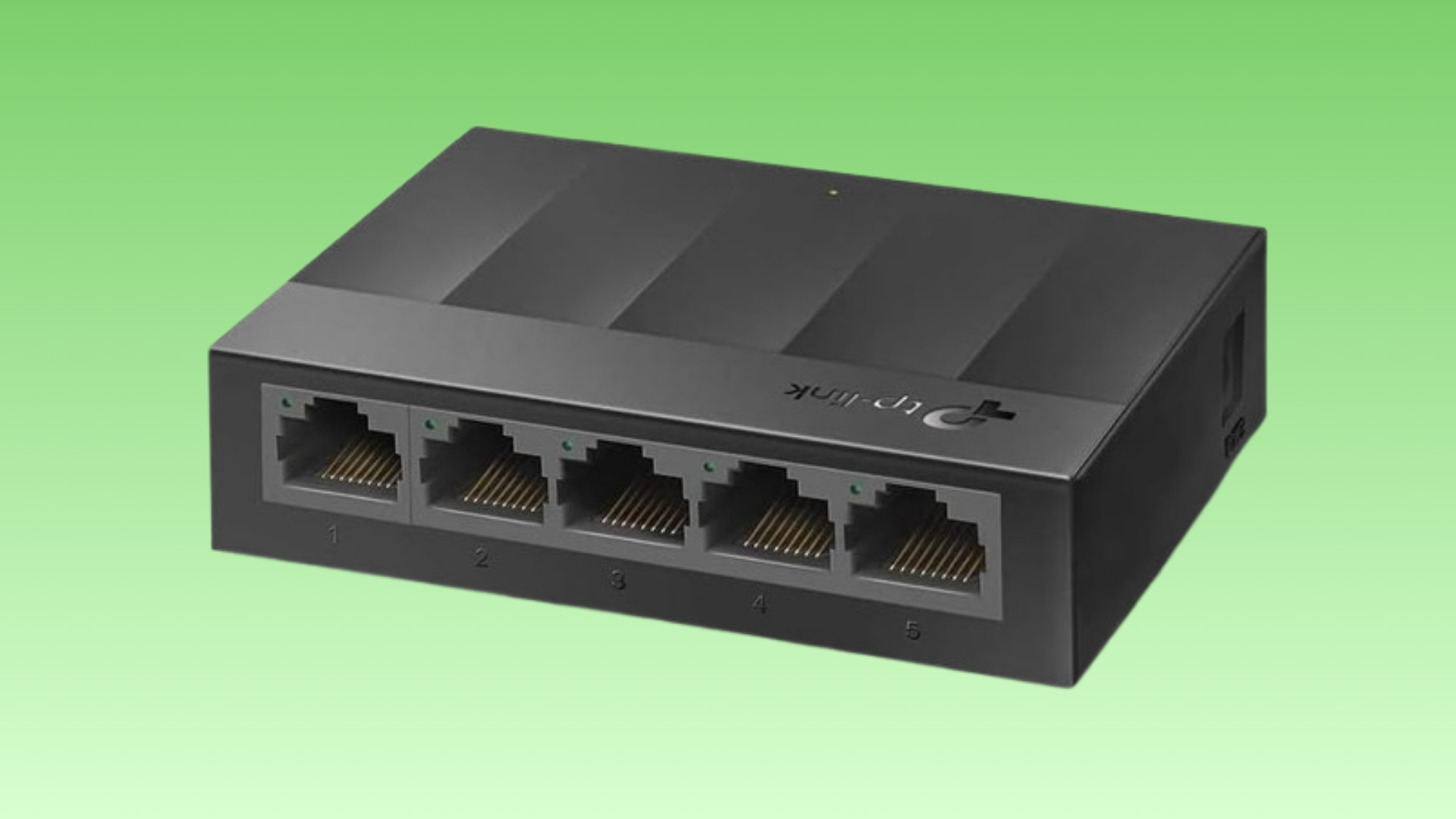
In an era dominated by high-speed Wi-Fi 6E and emerging Wi-Fi 7 protocols, the humble unmanaged gigabit Ethernet switch remains a critical, albeit often overlooked, component of a robust network infrastructure. The current price floor of $7.99 for 5-port gigabit switches—exemplified by the TP-Link LS1005G and the competing Ugreen 35492US—represents an aggressive democratization of wired networking. For the average user or home lab enthusiast, these devices serve as essential port multipliers, bridging the gap between a primary gateway and the increasing density of static, bandwidth-hungry hardware such as smart TVs, NAS arrays, and gaming consoles.
From a market positioning standpoint, these sub-$10 price points are significant. By stripping away complex software overheads, administrative web interfaces, and Power-over-Ethernet (PoE) capabilities, manufacturers have reduced the bill of materials to its absolute functional minimum. This strategy allows the LS1005G to exist as a commodity utility rather than a premium networking accessory, effectively making it a 'no-brainer' purchase for anyone suffering from network congestion or the inherent instability of dense wireless environments.
Core Architectural & Technological Innovations
The architectural design of the TP-Link LS1005G centers on the 'unmanaged' paradigm, emphasizing a plug-and-play user experience through a non-blocking switching fabric. By eschewing administrative overhead, the device leverages a basic ASICs (Application-Specific Integrated Circuit) setup that handles packet forwarding, MAC address learning, and flow control with minimal latency. While these units lack the granular traffic shaping and VLAN tagging capabilities of enterprise hardware, their simplicity acts as an inherent security and stability buffer; there is no firmware to patch, and the device possesses no external attack vector via a web management interface.
Technologically, the utilization of standard 10/100/1000Mbps auto-negotiation allows for seamless integration into legacy environments, ensuring that older peripheral devices can communicate without manual port speed configuration. The switch maintains a wire-speed throughput, meaning that under standard household loads, the hardware will rarely become a bottleneck. By prioritizing a lean internal design, these units successfully circumvent the complexity that often leads to hardware failure in higher-tier, feature-heavy switches.
Empirical Specifications & Benchmark Matrix
| Specification | TP-Link LS1005G | Ugreen 35492US | Market Baseline (Standard) |
|---|---|---|---|
| Port Count | 5x RJ45 | 5x RJ45 | 5x RJ45 |
| Switching Capacity | 10 Gbps | 10 Gbps | 10 Gbps |
| Management | Unmanaged | Unmanaged | Unmanaged |
| Enclosure Material | Plastic | Plastic | Plastic/Metal Hybrid |
| PoE Support | No | No | Optional |
| Thermal Design | Passive (Fanless) | Passive (Fanless) | Passive |
| Price | $7.99 | $7.99 | $15.00 - $25.00 |
Thermal, Efficiency & Real-World Ergonomics
The thermal management of these switches is a testament to the efficiency of modern low-power silicon. Because the switching chips operate at a significantly lower TDP (Thermal Design Power) than consumer routers or firewalls, passive cooling through a well-vented plastic enclosure is more than sufficient. During continuous operation under a full 1Gbps load across multiple ports, the units maintain a chassis temperature that is effectively ambient, ensuring longevity by avoiding the heat degradation common in compact networking equipment.
Ergonomically, the footprint is impressively dense. With dimensions under 3 x 4 inches, these switches can be tucked behind media consoles or integrated into cable management trays without requiring substantial clearance. The silence—due to the complete lack of active cooling—makes them ideal for desktop environments or bedrooms where fan noise is a factor. Users should, however, note the lack of wall-mounting screws or magnets in most budget SKUs, requiring the use of adhesive strips for non-horizontal installations.
The Definitive Verdict
At a record-low price point of $7.99, both the TP-Link LS1005G and the Ugreen 35492US represent an unmatched value proposition. These devices are the ultimate 'utility items' of the hardware world. They provide reliable, low-latency, and zero-configuration networking that outperforms wireless connectivity in every empirical metric—stability, jitter, and throughput.
Recommendation: The TP-Link LS1005G holds a slight edge due to brand ubiquity and mature support, but both units are functionally identical for a standard home setup. At this price, the OPA Specs recommendation is to pick up two—one to expand your primary workstation area and one for your entertainment hub—before these aggressive promotional cycles conclude.