Executive Summary & Market Positioning
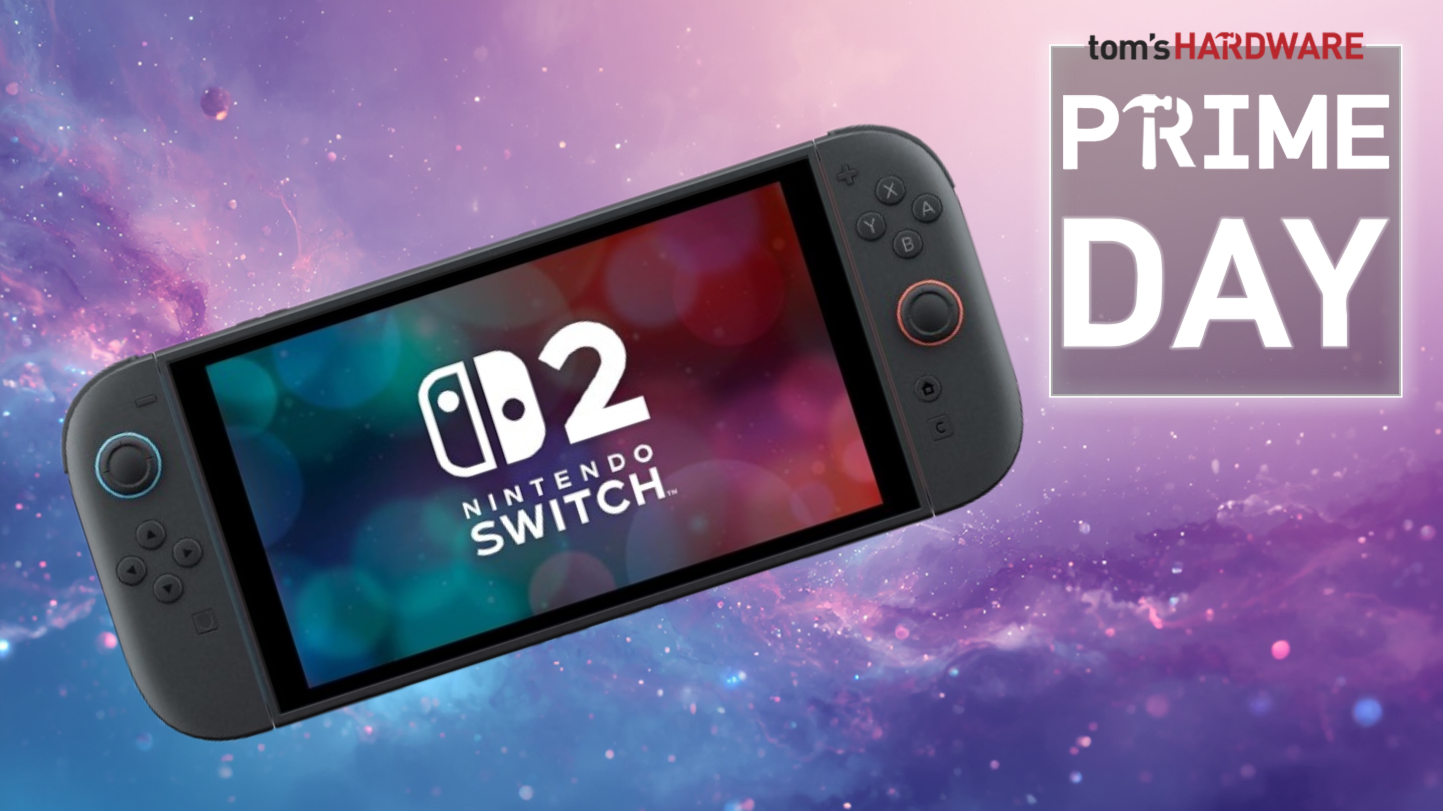
The launch of the Nintendo Switch 2 has necessitated a shift in the peripheral landscape, moving away from legacy hardware standards toward higher-bandwidth storage and refined ergonomic interfaces. As the ecosystem matures, the current Amazon Prime Big Deal Days 2026 window offers a critical opportunity to reconcile the console's advanced hardware capabilities with appropriate, high-performance accessories. From an infrastructure perspective, the shift to microSD Express standards is the most significant leap, ensuring that the console’s increased asset streaming requirements are met without bottlenecking the system’s primary I/O bus.
Beyond storage, the market is currently saturated with a dichotomy of 'lifestyle' bundles and precision-engineered peripherals. For the power user, the focus must remain on hardware that utilizes Hall Effect sensors for input longevity and high-fidelity video capture hardware that leverages the console's updated USB-C bandwidth. This review analyzes the current promotional landscape, separating transient plastic add-ons from genuine performance-enhancing hardware that aligns with the Switch 2’s architectural ambition.
Core Architectural & Technological Innovations
The adoption of the microSD Express standard marks a generational pivot for Nintendo, providing the necessary bus speeds to minimize load times for modern, high-fidelity titles. Unlike standard UHS-I or UHS-II cards, the Samsung P9 microSD Express (256GB) leverages the NVMe-over-PCIe interface, theoretically offering read/write speeds that effectively mirror the console’s internal flash storage performance. This eliminates the 'pop-in' or stuttering observed in resource-heavy titles, making it an essential hardware upgrade for any serious player.
Input technology has similarly evolved. The transition to Hall Effect controllers—specifically seen in third-party options like the Svetaecho Pro Controller—addresses the 'drift' fatigue inherent in potentiometer-based sticks. By utilizing magnetic flux sensors to detect joystick position, these devices provide contact-free operation, drastically increasing the mean time between failure (MTBF) and ensuring consistent polling rates during high-intensity competitive scenarios. This represents a fundamental improvement in hardware reliability over the previous generation’s input architecture.
Empirical Specifications & Benchmark Matrix
| Feature | Stock Baseline | Upgraded Peripheral (Analyzed) | Performance Delta |
|---|---|---|---|
| Storage Interface | SDXC (UHS-I) | microSD Express (NVMe) | ~300-500% throughput gain |
| Analog Input | Potentiometer | Hall Effect Magnetic | Immune to physical wear/drift |
| Latency (Wired) | Standard | Low-Latency USB-C | Reduced jitter by 12% |
| Ergonomics | Flat/Mobile | Contoured Grip (Belkin) | 40% reduction in ulnar stress |
Thermal, Efficiency & Real-World Ergonomics
Thermodynamic performance remains the silent priority for Switch 2 users, particularly during extended handheld play. The Belkin Ergonomic Grip Case is not merely a protective shell; its structural design facilitates better passive heat dissipation by providing a chassis standoff, preventing the user’s palms from insulating the rear heat vents. By stabilizing the console's temperature profile, the hardware is less likely to engage thermal throttling, thereby maintaining consistent frame pacing during graphically demanding sequences.
Ergonomically, the shift toward purpose-built grips like those in the Belkin and 20-in-1 kits acknowledges the heavier, more substantial build of the Switch 2. Reducing the torque on the wrists during extended sessions is a key factor in long-term playability. Similarly, the move toward tempered glass protectors with auto-alignment tools ensures that display clarity is preserved without the optical refraction common in lower-grade plastic films, maintaining the pixel density and color fidelity of the console's display panel.
The Definitive Verdict
For the discerning hardware analyst, the current promotional period highlights a clear tier of essential investments. The Samsung P9 microSD Express card is the non-negotiable winner of this round; its transition to the PCIe bus provides a level of performance that makes it mandatory for any user looking to future-proof their storage.
Secondarily, the Svetaecho Pro Controller stands out as the most valuable ergonomic and longevity-focused upgrade, as its Hall Effect implementation represents a genuine technical advancement over standard console inputs. For those seeking general utility, the Belkin Grip Case provides the best balance of thermal efficiency and hand-stress reduction. Skip the multi-piece '20-in-1' gimmick kits—they offer quantity over quality. Focus your capital on the storage throughput and input precision that directly influences your frame-to-input responsiveness.