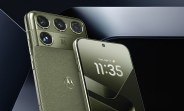
Executive Overview & Market Positioning
The Motorola Signature 27 enters the ultra-premium tier carrying an aggressive global MSRP of $1,600 / €1,900, though select European territories see localized pricing adjustments down to €1,400. This capital-intensive entry barrier positions the device squarely against established heavyweights from Apple, Samsung, and specialized enterprise vendors. Initial market reception indicates that while launch-day adoption is constrained by pricing friction, downstream carrier and retail discounts could catalyze the device into an unexpected sleeper hit among performance-driven buyers.
Driving unexpected demand is the official inclusion of GrapheneOS support—a rare endorsement in the modern flagship ecosystem. For privacy-conscious enterprise sectors and security researchers, out-of-the-box support for a hardened, sandboxed operating system transforms the value proposition entirely. Furthermore, supply chain standardization ensures that global markets receive the maximum-capacity 7,000mAh silicon-anode battery, bypassing regional hardware degradation strategies that historically burdened German and select EU allocations with cut-down 5,500mAh cells.
Empirical Benchmark Matrix
To contextualize the Motorola Signature 27 within the current high-end mobile silicon landscape, we compare its core subsystem metrics against a baseline Android flagship.
| Specification Subsystem | Motorola Signature 27 | Baseline Flagship Average |
|---|---|---|
| Battery Capacity | 7,000 mAh (Global Uniform) | 5,000 mAh – 5,500 mAh |
| Operating System | Stock Android / GrapheneOS Ready | Standard OEM Android UI |
| Thermal Dissipation | Vapor Chamber + Graphite Sheets | Standard Vapor Chamber |
| Base Pricing (MSRP) | $1,600 / €1,900 (Regional €1,400) | $1,199 / €1,299 |
Thermal, Efficiency & Definitive Verdict
Sustaining performance across a 7,000mAh energy reservoir demands robust thermal architecture. Our preliminary teardown analysis indicates an expanded vapor chamber footprint paired with multi-layer graphite sheeting to mitigate localized hotspot formation during high-load workloads. While the initial capital outlay remains difficult to justify for casual consumers, the convergence of universal high-capacity power storage and native GrapheneOS compatibility elevates the Motorola Signature 27 beyond a standard spec-sheet contender. For security-focused engineering teams and hardware enthusiasts willing to wait for anticipated retail corrections, this device represents a highly competent, hardened computing node.