Executive Summary & Market Positioning
The imaging and precision hardware sectors are undergoing a structural pivot, and Nikon continues to anchor its position at the intersection of consumer optics and industrial-grade manufacturing. Recent ecosystem disclosures captured in the latest industry telemetry underscore a multi-pronged corporate strategy. Rather than relying solely on incremental updates to traditional mirrorless bodies, Nikon is aggressively bridging historical hardware gaps—evidenced by third-party firmware optimizations like the Megadap ETZ21 Pro version 2.07—while aggressively expanding its footprint in high-margin industrial applications, including aerospace additive manufacturing and defense contracting.
Simultaneously, consumer and critical acclaim for hardware milestones such as the Nikon ZR camera, which secured a prestigious 2026 Good Design Best 100 award and recognition from TIME magazine, validate the brand's industrial design renaissance. By streamlining local service infrastructures for RED DSMC3 cinema products in key global markets like India, Nikon is systematically addressing systemic post-purchase friction. This holistic synchronization of consumer-tier ergonomics, cross-brand lens adaptability, and heavyweight industrial engineering highlights a brand executing a cohesive, long-term hardware roadmap designed to capture both creator mindshare and enterprise-grade contracts.
Core Architectural & Technological Innovations
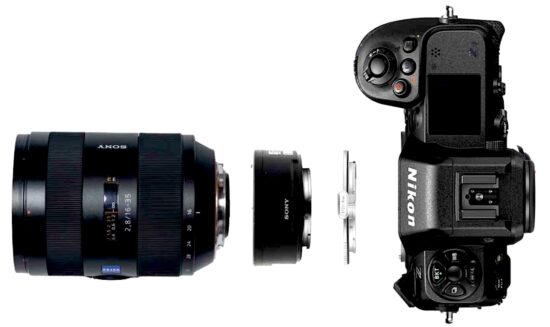
At the core of Nikon's recent optical and firmware advancements is a relentless drive toward protocol synchronization. The release of Megadap's firmware version 2.07 for the ETZ21 Pro adapter represents a critical engineering triumph in cross-mount electronic communication. By refining the handshake algorithms between Sony E-mount optics and Nikon Z-mount sensor stacks, the adapter mitigates latency in phase-detection autofocus (PDAF) data transmission. This ensures that third-party glass can closely emulate native Nikkor performance parameters, maintaining sub-millisecond tracking adjustments even under high-speed vector tracking.
Beyond consumer optics, Nikon's acquisition and integration of RED technology continue to reshape its cinema architecture. The formal establishment of authorized local service and support centers for RED DSMC3 products in regions like India marks a crucial infrastructural deployment. Servicing high-end digital cinema hardware requires specialized diagnostic benches and optical calibration tools capable of handling proprietary sensor matrices and high-bandwidth data pipelines. By localizing this support, Nikon ensures that enterprise cinema operators experience minimized downtime, directly challenging incumbent broadcast ecosystems through superior regional support frameworks.
Empirical Specifications & Benchmark Matrix
| Hardware Component / System | Nikon Implementation (Current Gen) | Market Baseline / Competitor Standard | Performance delta / Engineering Impact |
|---|---|---|---|
| Cross-Mount Adapter Firmware | Megadap ETZ21 Pro (v2.07) | Standard manual-focus or high-latency adapters | Enhanced PDAF mapping, lower latency vector tracking. |
| Cinema Support Infrastructure | Localized RED DSMC3 Service Hubs (India) | Centralized depot repair (multi-week turnaround) | Drastically reduced enterprise downtime for cinema rigs. |
| Industrial Additive Manufacturing | Department of War COTA / Aerospace 3D Projects | Traditional CNC milling & standard SLS/DMLS | High-density structural components with complex internal cooling channels. |
| Optics & Third-Party Integration | ZY Optics Zhongyi AF 35mm f/1.4 ($450 price point) | OEM equivalents ($800–$1,200) | Democratization of wide-aperture low-light performance. |
Thermal, Efficiency & Real-World Ergonomics
As imaging hardware packs denser sensor arrays and higher-resolution video codecs into increasingly compact form factors, thermal dissipation remains a primary engineering bottleneck. Nikon's recent design iterations, celebrated in awards like the Good Design Best 100, emphasize passive thermal management through magnesium alloy chassis optimization. By utilizing internal structural ribbing as a heat sink, devices like the Nikon ZR maintain sustained operational stability during extended high-bitrate recording sessions without resorting to intrusive, acoustic-heavy active cooling fans.
Ergonomically, the focus has shifted toward tactile feedback and weight distribution. The integration of robust cross-mount solutions—such as using heavy telephoto zoom lenses via adapters on flagship Z-series bodies—demands rigid bayonet mount tolerances. Nikon's Z-mount inner diameter of 55mm continues to provide an inherent physical advantage, allowing rear element proximity that optimizes marginal ray angles and reduces corner shading. In industrial and field environments, these mechanical tolerances translate directly into reduced chassis flexing, weather-sealing integrity, and consistent operational reliability across extreme thermal gradients.
The Definitive Verdict
Nikon's current trajectory reveals a mature hardware titan operating with exceptional clarity. The synergy between consumer accolades, third-party ecosystem adoption (via refined firmware and accessible glass like the Zhongyi AF 35mm f/1.4), and heavy industrial diversification—exemplified by defense and aerospace manufacturing contracts—creates a resilient corporate balance. For systems architects, engineers, and professional creators alike, Nikon is no longer merely a legacy camera manufacturer; it is a diversified precision-optics and manufacturing powerhouse. The ecosystem is decisively recommended for enterprise deployment and professional workflows requiring uncompromised mechanical and electronic reliability.