Executive Summary & Market Positioning
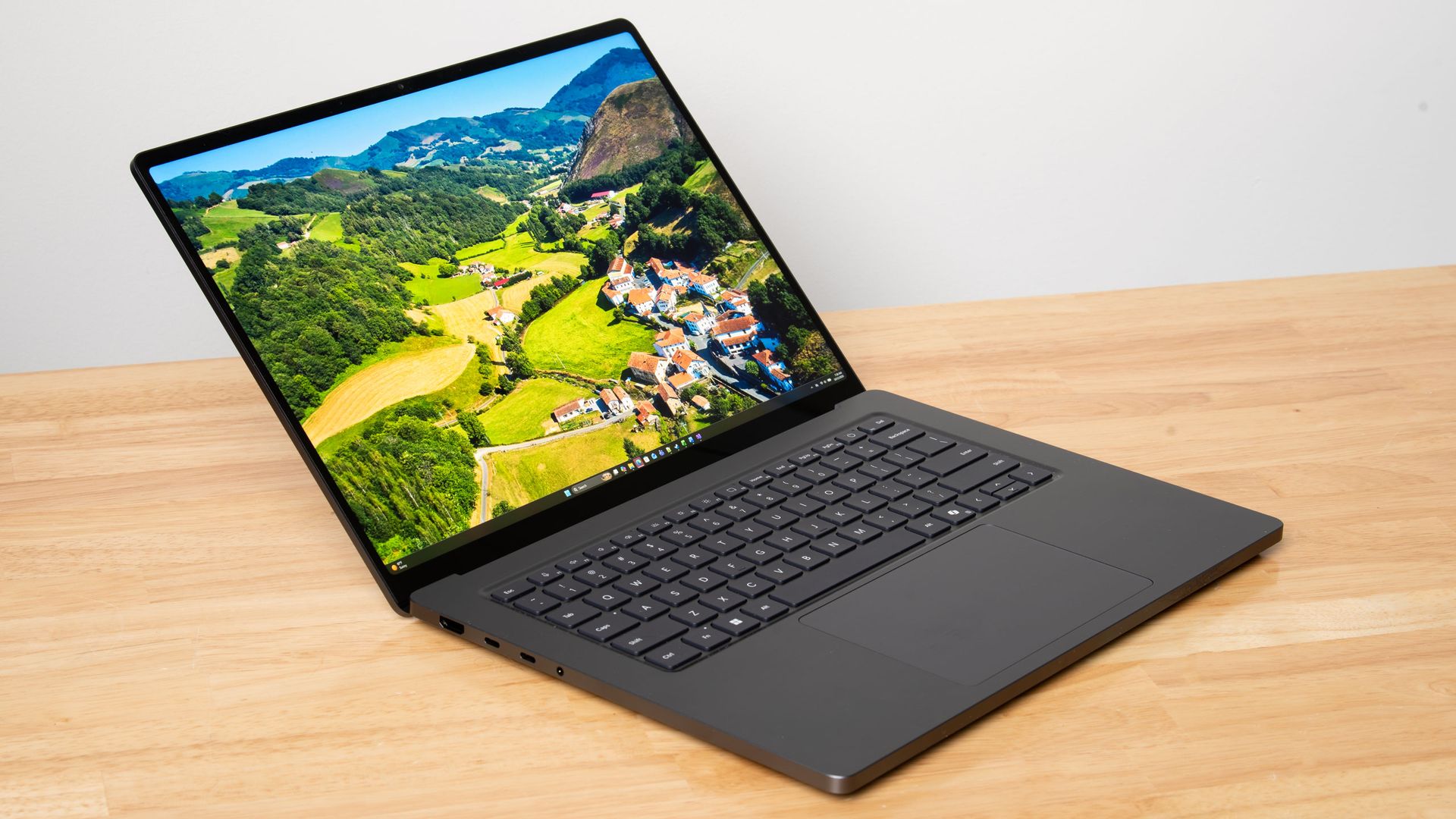
The computing paradigm is shifting rapidly from static software execution to dynamic, autonomous agentic workflows. Nvidia’s introduction of the RTX Spark platform, anchored by the GB10 Superchip, represents a calculated gamble to reinvent the mobile PC architecture. Evaluated inside Microsoft's top-tier Surface Laptop Ultra—equipped with 128GB of LPDDR5X-9400 RAM—this hardware stack targets professional users, enterprise operators, and heavy local AI practitioners. Nvidia’s strategic objective is clear: embed datacenter-grade inference and parallel computing capabilities into a sleek, portable chassis.
However, this ambitions-driven hardware convergence exposes notable generational growing pains. While local AI execution boundaries are thoroughly rewritten by the Spark's massively parallel architecture, traditional localized workloads and software ecosystem maturity tell a more nuanced story. Positioned directly against Apple’s M5 Max silicon and AMD’s Ryzen AI Halo systems, the RTX Spark platform carves out a distinct operational identity. It sacrifices raw CPU throughput and gaming execution pedigree in exchange for unprecedented end-to-end agentic task completion speeds, setting a new benchmark for what local neural hardware can achieve in a mobile footprint.
Core Architectural & Technological Innovations
At the silicon level, the RTX Spark platform relies on a heterogeneous design pairing a 20-core CPU complex (featuring MediaTek-derived Arm architecture cores) with a monstrous 6,144-CUDA-core GPU featuring 48 Streaming Multiprocessors. This layout is specifically optimized for localized transformer execution, speculative decoding schemes like DFlash2, and multi-token prediction (MTP) pipelines. By integrating 128GB of ultra-fast LPDDR5X-9400 memory directly into the unified memory subsystem, Nvidia bypasses traditional PCIe bandwidth bottlenecks that historically crippled large language model (LLM) execution on client-side hardware.
Despite these architectural triumphs, raw CPU performance reveals the platform's current Achilles' heel. In single-core and multi-core Geekbench evaluations, the MediaTek-sourced Arm CPU complex visibly trails Apple’s M5 Max silicon. The Spark does not feel sluggish during routine desktop navigation or basic productivity tasks, but heavy compile workloads and serialized CPU-bound calculations expose a performance deficit compared to mature architectures. Yet, when handed complex localized intelligence models like the dense Qwen 3.8-27B or the Qwen 3.6 35B A3B mixture-of-experts, the CUDA core layout unleashes massive parallel throughput, rendering CPU disparities negligible during agentic tasks.
Empirical Specifications & Benchmark Matrix
| Feature / Metric | Nvidia RTX Spark (Surface Laptop Ultra) | Apple M5 Max (14" MacBook Pro) | AMD Ryzen AI Halo (Strix Halo) | Architectural Advantage / Notes |
|---|---|---|---|---|
| CPU Core Count | 20 Cores (Arm-based) | 18 Cores (Apple Silicon) | Zen 5 + XDNA 2 Engine | Apple leads in single/multi-thread raw CPU IPC. |
| GPU Compute Units | 6,144 CUDA Cores (48 SMs) | 40-Core GPU / Metal | Integrated RDNA 3.5 | Nvidia dominates in raw parallel vector acceleration. |
| System Memory | 128GB LPDDR5X-9400 | 128GB LPDDR5X | Up to 128GB Unified | High bandwidth is essential for MoE and dense LLMs. |
| AgentPerf-local (27B) | Fastest (Approx. 25% faster than Mac) | Competitive, memory-bound | ~40 Minutes (Significantly slower) | Spark architecture minimizes end-to-end agentic latency. |
| AgentPerf-local (35B) | 8 Minutes Completion Time | 10 Minutes Completion Time | 13 Minutes Completion Time | Demonstrates superior token generation throughput. |
Thermal, Efficiency & Real-World Ergonomics
Analyzing the thermal and electrical envelope of the Surface Laptop Ultra reveals the aggressive tuning required to sustain the RTX Spark platform. Pulling power through a hefty 140W power adapter—matching the tier utilized by larger 16-inch MacBooks—this 15-inch chassis leans heavily into thermal dissipation headroom. While comprehensive battery life profiling remains restricted under current launch embargo constraints, the thermal design clearly prioritizes sustained compute delivery over passive, fanless efficiency.
When executing demanding agentic workloads via Artificial Analysis's AgentPerf-local suite, the hardware maintains thermal equilibrium effectively, avoiding aggressive thermal throttling. The system completed the dense Qwen 3.8-27B model inference sweep 25% faster than the 14-inch M5 Max MacBook Pro, a victory partially attributable to the generous power envelope and active cooling design of the Surface chassis. Conversely, AMD’s Ryzen AI Halo desktop-class compact footprint required roughly double the runtime to complete identical agentic workloads, underscoring that raw architectural efficiency and sustained power delivery are non-negotiable for professional AI execution.
The Definitive Verdict
Nvidia’s RTX Spark platform inside the Microsoft Surface Laptop Ultra is a triumph of specialized hardware engineering for the AI era. It decisively captures the crown for local agentic task completion, outperforming Apple's M5 Max and AMD's Strix Halo in complex, multi-turn LLM inference benchmarks like AgentPerf-local. For developers, data scientists, and power users whose daily workflows depend on rapid local model execution and autonomous agent productivity, the Spark architecture justifies its premium hardware positioning.
However, this is not a universal consumer panacea. The platform's MediaTek-derived CPU cores trail competing architectures in raw processing power, and the early software ecosystem surrounding the platform requires continued refinement. Furthermore, despite its heavy RTX branding and massive CUDA core count, traditional gaming performance remains a secondary, underdeveloped strong suit—meaning prospective buyers must evaluate this system through an enterprise productivity lens rather than a consumer entertainment perspective. Ultimately, the RTX Spark successfully reinvents the professional PC workstation, provided your definition of work centers entirely on artificial intelligence.