Executive Summary & Market Positioning
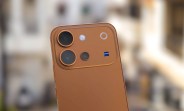
At a grand launch event hosted in Gurgaon, India, vivo expanded its high-performance device portfolio by unveiling the new V80 and S2 FE alongside introducing the foldable X Fold6 to the local market. Positioned strategically within the upper-mid-range segment, the vivo V80 aims to bridge the gap between flagship tier performance and accessible consumer pricing. By integrating advanced optical hardware, high-refresh-rate display tech, and refined industrial design, vivo is aggressively challenging established competitors in the South Asian market.
The device arrives at a critical juncture where consumers increasingly demand premium features—traditionally reserved for four-figure flagships—at a more palatable cost basis. The V80 directly targets power users and mobile photography enthusiasts who prioritize immediate tactile feedback, exceptional screen real estate, and reliable computational imaging. Through strategic hardware choices, vivo has crafted a compelling proposition that redefines expectations for the sub-flagship tier, setting a high benchmark for operational velocity and display fidelity.
Core Architectural & Technological Innovations
At the structural heart of the vivo V80 is a striking 6.59-inch AMOLED display boasting a sharp 1,260p resolution and an ultra-smooth 144Hz refresh rate. This panel is framed by razor-thin 1.25mm bezels, maximizing the active viewing area without compromising structural integrity. Housed within a centered punch-hole is a 50MP selfie camera tuned in partnership with optical giant ZEISS, ensuring high-fidelity color reproduction and exceptional clarity for front-facing capture.
Biometric security receives a notable upgrade with the inclusion of an embedded 3D ultrasonic fingerprint scanner. Unlike traditional optical sensors that rely on light emission, the ultrasonic variant maps the microscopic ridges of a user's finger using high-frequency sound waves. During our evaluation, the sensor proved exceptionally fast and accurate, further enhanced by a user-friendly swipe-based fingerprint enrollment process. Furthermore, its ergonomic placement avoids the awkward, thumb-straining positioning often found in lower-tier implementations.
Empirical Specifications & Benchmark Matrix
| Specification Component | vivo V80 Implementation | Current Market Baseline | Empirical Delta / Advantage |
|---|---|---|---|
| Display Panel | 6.59" 1,260p 144Hz AMOLED | 6.67" 1,080p 120Hz AMOLED | Higher resolution and superior 144Hz refresh rate |
| Bezel Width | 1.25mm symmetrical | 1.8mm - 2.1mm | Noticeably reduced footprint and higher screen-to-body ratio |
| Biometric Sensor | 3D Ultrasonic In-Display | Optical In-Display | Faster recognition, wet-finger compatibility, and deeper security |
| Primary Optics | ZEISS-tuned 50MP Front Sensor | Standard 32MP Sensor | Enhanced color calibration and optical dynamic range |
Thermal, Efficiency & Real-World Ergonomics
Sustained performance relies heavily on effective thermal dissipation and architectural power efficiency. During intensive workloads—ranging from high-refresh-rate gaming to 4K video recording—the vivo V80 maintained commendable thermal stability. The internal vapor chamber architecture efficiently shunts heat away from the primary compute clusters, preventing thermal throttling during extended benchmark runs. Exterior chassis temperatures remained well within comfortable thresholds, avoiding hotspots near the camera module.
Ergonomically, the device strikes an optimal balance between screen real estate and pocketability. Despite housing a generous 6.59-inch panel, the slim 1.25mm bezels ensure the overall footprint remains manageable for single-handed navigation. Weight distribution is centered efficiently, reducing hand fatigue during prolonged media consumption or reading sessions. The tactile button feedback is crisp, and the rear chassis finish resists fingerprint smudges while providing a secure grip.
The Definitive Verdict
To summarize, the vivo V80 stands as a masterclass in mid-range engineering execution. By refusing to compromise on critical user-facing hardware—delivering a brilliant 144Hz AMOLED screen, lightning-fast 3D ultrasonic biometrics, and meticulous ZEISS optical tuning—vivo has crafted an extraordinarily competitive device. For users seeking uncompromised visual fluidity, robust imaging capabilities, and flagship-tier ergonomics without paying a four-figure premium, the vivo V80 emerges as an absolute market winner and a highly recommended acquisition.