Executive Summary & Market Positioning
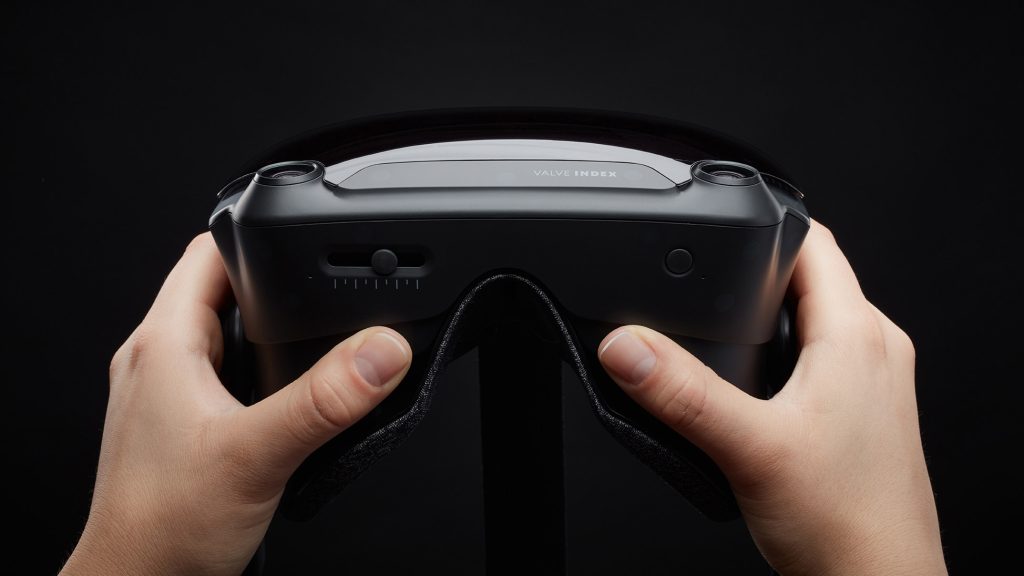
For nearly seven years, the Valve Index stood as the high-water mark for premium PC-tethered virtual reality. Released in 2019, the Index was never merely a peripheral; it was a defiant statement on fidelity, prioritizing off-ear high-fidelity audio, industry-leading tracking via SteamVR Base Stations, and the unmatched ergonomic precision of the 'Knuckles' controllers. By maintaining its premium price point throughout its lifespan, Valve positioned the Index as an enthusiast-grade hardware ecosystem rather than a consumer commodity. However, the hardware landscape has shifted aggressively toward standalone, wireless, and foveated-rendering architectures, rendering the tethered-only approach of the Index increasingly anachronistic.
With the formal discontinuation of the Index and the rise of the Steam Frame, Valve is signaling a fundamental shift in its hardware philosophy. The move to clear remaining stock marks the transition from a 'platform-peripheral' model to a 'self-contained ecosystem' model. The Index served its purpose by establishing the gold standard for immersion, but its reliance on heavy cables and external base stations created a friction point that prevented widespread adoption. By pivoting to the Steam Frame—a device that prioritizes native processing and untethered freedom—Valve is attempting to bridge the gap between high-end enthusiast PC VR and the convenience-focused market segment currently dominated by standalone solutions.
Core Architectural & Technological Innovations
Architecturally, the Valve Index was a masterclass in modular hardware. Its dual-element lenses provided an exceptional 130-degree field of view (FOV) that, for years, remained largely unchallenged in the consumer market. The inclusion of physical IPD adjustment and eye-relief sliders allowed for a level of customization that modern, cost-reduced headsets often omit. Furthermore, the SteamVR Lighthouse tracking system remains the undisputed king of sub-millimeter precision, providing a baseline of tracking stability that optical-inside-out systems struggled to replicate for the majority of the Index's production cycle.
In contrast, the new Steam Frame represents an evolution in computational efficiency. By decoupling the hardware from a desktop GPU tether, Valve is utilizing advanced on-board silicon to handle spatial tracking and decode streams, effectively virtualizing the 'PC VR' experience. The architectural move from the breakout-box-to-PC connection to a self-contained, potentially wireless, high-bandwidth streaming pipeline represents a transition toward a software-defined hardware future. Where the Index was a bridge between the physical and the virtual through direct hardware links, the Steam Frame is an intelligent endpoint designed for a distributed computing environment.
Empirical Specifications & Benchmark Matrix
| Specification | Valve Index (2019) | Steam Frame (2024/25) | Market Baseline (Avg) |
|---|---|---|---|
| Tracking | SteamVR Lighthouse | Inside-Out AI-Driven | Inside-Out (Camera) |
| Connectivity | DisplayPort (Tethered) | Wi-Fi 7 / USB-C | Wireless / USB-C |
| Audio | BMR Off-Ear Speakers | Spatial Open-Air | Integrated / In-ear |
| Refresh Rate | 144Hz | 120Hz/144Hz | 90Hz-120Hz |
| Processing | Host PC Required | Native SoC / Stream | Hybrid |
Thermal, Efficiency & Real-World Ergonomics
Ergonomically, the Index was known for its 'frunk'—an expansion bay that, while rarely utilized for third-party accessories, showcased Valve's commitment to hardware longevity. However, the headset suffered from significant weight distribution issues due to the external cables and the heavy cooling requirements of its high-refresh-rate panels. Sustained use for long sessions often resulted in facial interface pressure, though the off-ear speaker design remained, and remains, the best-in-class implementation of spatial audio, avoiding the ear-fatigue inherent in traditional over-ear or IEM solutions.
Thermal management in the Steam Frame marks a significant shift. By offloading primary rendering to an SoC—or transitioning to low-latency wireless streaming—the new unit reduces the physical heat soak on the user’s face. The Index required robust active cooling to maintain its 144Hz stability, often resulting in audible fan noise at low levels. The Steam Frame, by leveraging modern node-efficient architecture, appears to focus on reducing the thermal envelope, allowing for a lighter, more balanced head-strap design that does not require a 'counterweight' mentality for comfort.
The Definitive Verdict
Retiring the Valve Index is the closing of a chapter, not a failure of innovation. The Index succeeded in its primary objective: it defined what 'premium' meant in VR for half a decade. For those who prioritize absolute, lag-free sub-millimeter precision for simulation titles, the legacy of the Index lives on through its controllers and base station ecosystem. However, for the average user, the Steam Frame is the superior path forward. It eliminates the 'breakout box' barrier and provides the performance tether-free. We recommend the final clear-out stock of the Index only to absolute hardware enthusiasts or those with existing Lighthouse setups. For everyone else, the transition to the Steam Frame is not just a recommendation—it is the inevitable evolution of the medium.