Executive Summary & Market Positioning
The relentless scaling of artificial intelligence and high-performance computing (HPC) infrastructure has triggered an unprecedented hardware buildout, colliding head-on with global decarbonization targets. Recent empirical estimates from environmental organizations like the Sierra Club indicate that by 2030, U.S. data center expansions will pump an estimated 2.1 billion metric tons of $\text{CO}_2$ equivalents into the atmosphere. This staggering output—rivaling the annual carbon emissions of the entire nation of Mexico—effectively threatens to erase 15 years of hard-fought progress in greenhouse gas emissions reductions within the U.S. power sector.
At the heart of this environmental friction is the hyper-aggressive deployment of next-generation AI accelerators, custom ASICs, and dense server racks by hyperscale operators. As silicon manufacturers push thermal design power (TDP) thresholds to unprecedented limits, facility designers are scrambling for reliable base-load power. Because renewable energy integration timelines simply cannot match the breakneck velocity of modern AI cluster deployments, the industry is increasingly turning to fossil-fuel-driven generation. This creates a critical paradox where advancements in semiconductor efficiency are functionally offset by a massive net increase in gross grid consumption.
Core Architectural & Technological Innovations
The root driver of this power crisis lies in the architectural evolution of modern enterprise silicon. Modern AI training and inference workloads demand unprecedented ratios of GPU-to-CPU compute, alongside massive memory bandwidth arrays and custom accelerators. To sustain these multi-megawatt training runs, data centers are shifting away from air-cooled perimeter systems toward direct-to-silicon liquid cooling and immersive immersion topologies. While these thermal solutions maintain optimal junction temperatures ($\text{T}_j$) for silicon reliability, they concentrate colossal heat loads into hyper-dense footprints.
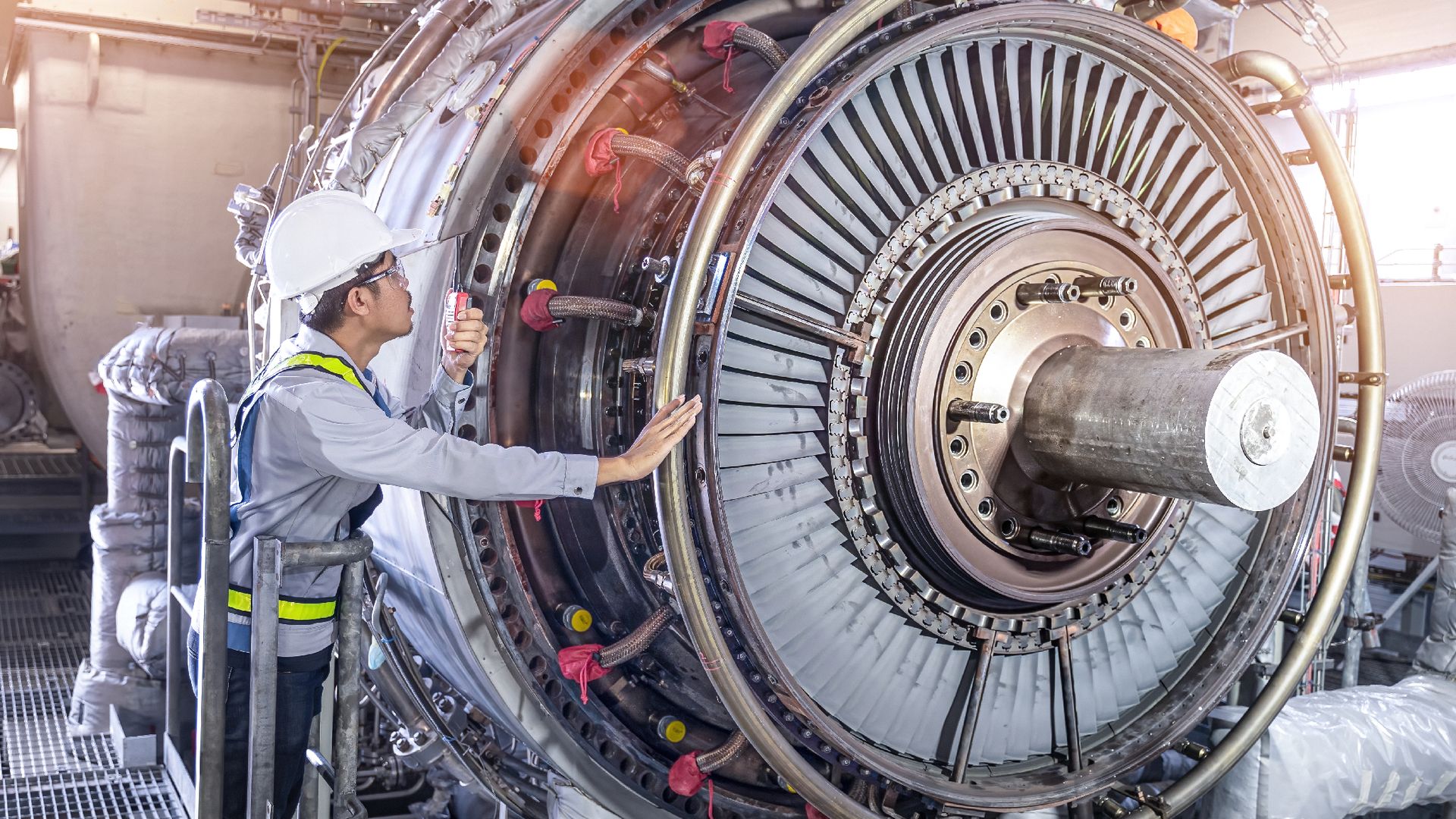
Simultaneously, the supply chain for supporting infrastructure has reached a breaking point. With approximately 40% of U.S. data centers relying directly on natural gas turbines to bypass sluggish municipal grid queues, industrial gas turbine manufacturers are facing unprecedented backlogs. Booking slots for critical power-generation hardware now extend well into 2032, accompanied by a 50% surge in baseline equipment costs. Consequently, hyperscalers are caught in a race condition: hardware deployment speeds are outstripping both electrical grid transmission upgrades and the commercial availability of green-energy generation arrays.
Empirical Specifications & Benchmark Matrix
| Parameter / Metric | Legacy Enterprise Facility (2020) | Modern AI Hyperscale Campus (2026/2030 Projections) | Variance / Growth Factor |
|---|---|---|---|
| Average Rack Density | $5 \text{ kW} - 8 \text{ kW}$ | $40 \text{ kW} - 100+\text{ kW}$ | $+500% \text{ to } 1200%$ |
| Primary Power Source | Grid (Mixed Fossil/Renewable) | Grid + On-Site Natural Gas Turbines | $+42% \text{ U.S. Power Sector } \text{CO}_2$ |
| Cooling Topology | Air-Cooled (CRAC/CRAH) | Direct-to-Silicon Liquid / Immersion | Mandatory for $\text{TDP} > 1000\text{W}$ |
| Turbine Equipment Lead Time | $12 - 18 \text{ Months}$ | Extended into 2032 | $+300%$ Lead Time Expansion |
| Projected Sector Emission | Baseline Declining Trend | $2.1 \text{ Billion Metric Tons } (\text{2030})$ | Erases 15 Years of Reduction |
Thermal, Efficiency & Real-World Ergonomics
Managing the sheer thermal output of modern AI hardware has transformed data center engineering from a facilities afterthought into a primary architectural bottleneck. With individual accelerator packages regularly exceeding 1,000 watts of thermal design power, traditional air-moving systems are physically incapable of maintaining safe operational envelopes without incurring catastrophic Power Usage Effectiveness (PUE) penalties. The industry-wide transition to direct-to-silicon cold plates and dielectric fluid immersion aims to mitigate internal thermal resistance, yet these systems demand vastly increased pumping power and specialized auxiliary infrastructure.
Furthermore, regulatory friction is intensifying on a global scale. While select jurisdictions (such as Ireland) have introduced mandates requiring new facilities to eventually integrate up to 80% renewable power sources, these laws typically incorporate lengthy phase-in periods or fail to apply retroactively. Because speed-to-market dictates financial survival in the current generative AI landscape, hyperscalers routinely absorb regulatory fines or rely on bridging fossil-fuel contracts, further widening the gap between corporate sustainability pledges and empirical emissions realities.
The Definitive Verdict
The trajectory of U.S. data center expansion exposes a severe structural misalignment between exponential AI hardware demand and planetary ecological limits. While market analysts note that grid interconnection bottlenecks, equipment shortages, and local community opposition may naturally throttle a fraction of proposed builds, the baseline environmental cost remains dangerously high. Ultimately, the industry faces an unyielding reality: unless next-generation silicon achieves radical improvements in computational joule-efficiency—coupled with rapid, unconstrained scaling of nuclear and renewable energy infrastructure—the relentless march of artificial intelligence will leave an indelible, highly carbon-intensive footprint on the global power grid.