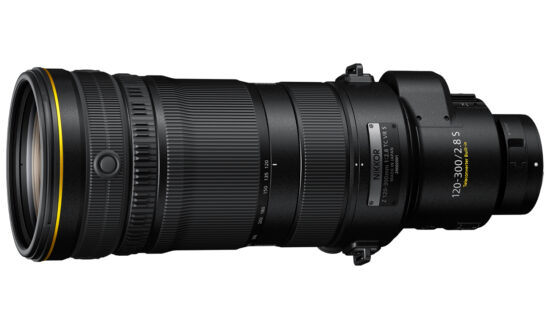
Executive Summary & Market Positioning
The arrival of ultra-telephoto fast zooms has historically defined the absolute apex of optical and mechanical engineering for any camera system. With the anticipated release of the Nikon Nikkor Z 120-300mm f/2.8 TC VR S—pegged with a substantial US retail price of $13,999 (and scaling to roughly €16,000 in European markets)—Nikon is once again staking a definitive claim in the high-stakes professional sports, wildlife, and photojournalism sectors. This specialized focal range bridges the gap between traditional 70-200mm workhorses and dedicated 400mm or 600mm primes, offering unmatched compositional flexibility without sacrificing the critical wide aperture required for subject separation and low-light shutter speed preservation.
Positioned near the very pinnacle of the Nikkor Z lens ecosystem, this upcoming optic defies traditional pricing architectures, challenging professionals to evaluate the sheer utility of an integrated teleconverter against standard modular setups. While initial industry whispers painted it as the absolute most expensive single lens in Nikon's entire lineup, a careful review of current flagship tier pricing confirms it sits just below certain ultra-long exotic primes. Nonetheless, a $13,999 investment places the Nikkor Z 120-300mm firmly in the hands of working agency shooters, rental houses, and well-heeled enthusiasts who demand uncompromising fidelity across a demanding working range.
Core Architectural & Technological Innovations
At the heart of the Nikkor Z 120-300mm f/2.8 TC VR S is an advanced optical formula tailored explicitly to maximize the short flange distance and wide diameter of the Z-mount. The integration of a built-in 1.4x teleconverter represents a major engineering triumph, allowing photographers to seamlessly toggle from a 120-300mm f/2.8 zoom to a reach-extended 168-420mm f/4 configuration with the flick of a mechanical switch. This eliminates the need to expose sensitive internal sensors to field elements while swapping external teleconverters in dusty or wet environments, maintaining environmental integrity.
Nikon’s proprietary lens coatings—including Nano Crystal and ARNEO coats—are deployed heavily throughout the multi-element optical path to suppress ghosting, flare, and chromatic aberrations originating from aggressive point light sources. Furthermore, the incorporation of advanced Vibration Reduction (VR) stabilization algorithms communicates directly with the high-refresh sensor-shift mechanisms of bodies like the Z9 and Z8. This synergy yields exceptional stabilization gains, effectively dampening low-frequency micro-jitters at extended focal lengths to guarantee pin-sharp capture even when tracking erratic subjects at twilight.
Empirical Specifications & Benchmark Matrix
| Specification Feature | Nikkor Z 120-300mm f/2.8 TC VR S | Market Baseline (Standard 70-200mm f/2.8) | Ultra-Long Prime Reference (400mm f/2.8) |
|---|---|---|---|
| Focal Length Range | 120–300mm (168–420mm w/ 1.4x TC) | 70–200mm | 400mm (Fixed) |
| Maximum Aperture | f/2.8 (f/4 with internal TC engaged) | f/2.8 | f/2.8 |
| US Retail Price | $13,999 | ~$2,500 – $2,800 | ~$11,500 – $15,999 |
| Mount Type | Nikon Z-Mount | Nikon Z-Mount | Nikon Z-Mount |
| Optical Stabilization | Integrated VR (S-Line Grade) | Integrated VR | Integrated VR |
| Target Application | Sports, Action, Wildlife | General, Events, Studio | Dedicated Wildlife, Stadium Sports |
Thermal, Efficiency & Real-World Ergonomics
Handling an optical assembly of this magnitude requires careful consideration of weight distribution and thermal stability. Professional glass elements must maintain precise tolerances across extreme temperature swings, preventing focal shift during rapid expansion or contraction of the metal alloy barrel. Nikon’s S-Line construction utilizes robust magnesium alloy chassis components that efficiently dissipate localized thermal gradients while maintaining complete weather-sealing against moisture, dust, and particulate ingress. The internal focusing and zooming mechanisms are driven by high-torque stepping motors (STM), ensuring near-silent and lightning-fast autofocus acquisition that keeps pace with rolling-shutter sensor readouts.
Ergonomically, the physical footprint of the 120-300mm f/2.8 demands a monopod or structured handheld posture for extended shooting sessions. However, the positioning of the zoom ring, manual focus ring, and the integrated teleconverter toggle switch has been mapped with meticulous human-factors engineering. Photographers can actuate the 1.4x teleconverter smoothly with their right hand while maintaining a secure, balanced grip on the lens barrel, drastically reducing operational downtime during high-pressure field assignments where missing a fraction of a second equates to losing the shot.
The Definitive Verdict
The Nikon Nikkor Z 120-300mm f/2.8 TC VR S is not an impulse purchase; it is an unapologetic, heavy-duty capital investment for elite visual producers. At $13,999, it commands a steep economic premium, but it compensates with a versatile dual-lens operational profile—delivering uncompromising f/2.8 speed at close-to-medium ranges and an instantly accessible f/4 super-telephoto reach via its flawless internal 1.4x teleconverter. For professional sports photographers and wildlife conservationists tethered to the Nikon Z ecosystem, this hardware piece stands as a definitive engineering triumph that justifies every dollar of its elite valuation.