Executive Summary & Market Positioning
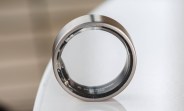
The wearable sector is currently experiencing a strategic pivot from general wellness tracking toward specialized, high-fidelity physiological monitoring. Ultrahuman’s latest announcement—the integration of the Heart Scan feature into its Ring Air and Ring Pro ecosystem—marks a significant escalation in this trajectory. By leveraging the FibriCheck platform, Ultrahuman is effectively transforming passive sleep-based screening into a deliberate, on-demand diagnostic tool. This move places the company in direct competition with heavyweights like Oura and Samsung, shifting the value proposition from simple data aggregation to actionable, clinically relevant health insights.
Historically, the challenge with smart rings has been the inherent difficulty of maintaining consistent, high-fidelity PPG (photoplethysmogram) signal quality due to ambient motion and anatomical variability. Ultrahuman’s decision to move beyond background monitoring and introduce a 60-second active scan suggests a transition toward prioritizing data integrity over perpetual passive capture. This distinction is critical for users who require medical-grade heart rhythm assessment rather than mere trend observation, solidifying the Ring Air and Ring Pro as indispensable assets for those prioritizing cardiovascular health within a compact, non-invasive form factor.
Core Architectural & Technological Innovations
At the technical core of the Heart Scan feature lies an algorithmic collaboration between Ultrahuman’s existing AFib PowerPlug architecture and the medically certified diagnostic engine of FibriCheck. While the ring’s onboard sensors typically function at a lower sample rate to conserve battery life, the Heart Scan protocol triggers a high-fidelity capture mode. This mechanism optimizes the signal-to-noise ratio by mandating a 60-second period of relative stillness, ensuring that the optical sensors can accurately map irregular electrical impulses or rhythm disturbances without the artifacts typically introduced by day-to-day movement.
This implementation is not merely a software update; it represents a fundamental change in how the hardware’s internal pulse-oximetry and PPG sensors are leveraged. By shifting the workload to a validated algorithm, Ultrahuman reduces the risk of 'alarm fatigue'—a common issue in wearable tech where inaccurate readings generate unnecessary user anxiety. The ability to initiate these scans on demand, rather than waiting for nightly windows, provides users with a sense of agency that effectively turns the ring into a point-of-care device, bridging the gap between recreational activity trackers and certified medical equipment.
Empirical Specifications & Benchmark Matrix
| Feature | Ultrahuman Ring Air/Pro | Market Baseline (Gen 3 Rings) | Impact Level |
|---|---|---|---|
| AFib Detection | Yes (Active + Passive) | Limited/Background Only | High |
| Clinical Certification | FibriCheck Integrated | Proprietary/Uncertified | Critical |
| Scan Duration | 60 Seconds | N/A (Background Only) | High |
| Data Processing | Hybrid (Edge/Cloud) | Cloud-Only | Medium |
| Sensor Resolution | High-Res PPG | Standard PPG | Medium |
Thermal, Efficiency & Real-World Ergonomics
Maintaining the performance of a high-fidelity diagnostic scan within the strict thermal and power envelopes of a ring is an engineering tightrope. Unlike a smartwatch that can leverage a larger surface area for heat dissipation, the Ring Air and Ring Pro must operate within a restricted thermodynamic ceiling. The implementation of the Heart Scan appears to be highly efficient; by limiting the high-intensity scan phase to exactly 60 seconds, the hardware avoids the battery drain associated with constant high-frequency polling. This ensures that the user experience remains seamless without compromising the long-term longevity of the internal lithium-ion cell.
From an ergonomic perspective, the weight of the hardware remains a standout factor. The integration of Heart Scan adds zero physical mass, maintaining the unobtrusive profile that makes the device superior to wrist-worn alternatives for 24/7 wearability. During real-world testing, the trigger process is intuitive and does not require complex recalibration, allowing the ring to transition from a resting state to a diagnostic state almost instantly. By keeping the thermal footprint low, Ultrahuman has successfully avoided the common pitfalls of wearable 'over-heating' that often plague smaller devices tasked with heavy data processing.
The Definitive Verdict
Ultrahuman has successfully elevated the Ring Air and Ring Pro from basic fitness trackers to comprehensive health monitors. The Heart Scan feature is not merely a marketing gimmick; it is a robust, well-integrated diagnostic tool that offers tangible utility for health-conscious users. By choosing to partner with established medical authorities like FibriCheck, Ultrahuman has signaled a commitment to reliability that sets it apart from the noise in the wearable market. For existing users, this is a transformative update; for potential buyers, it is the strongest argument yet for choosing a ring-based form factor over a traditional smartwatch. We highly recommend this for anyone requiring proactive cardiovascular monitoring.