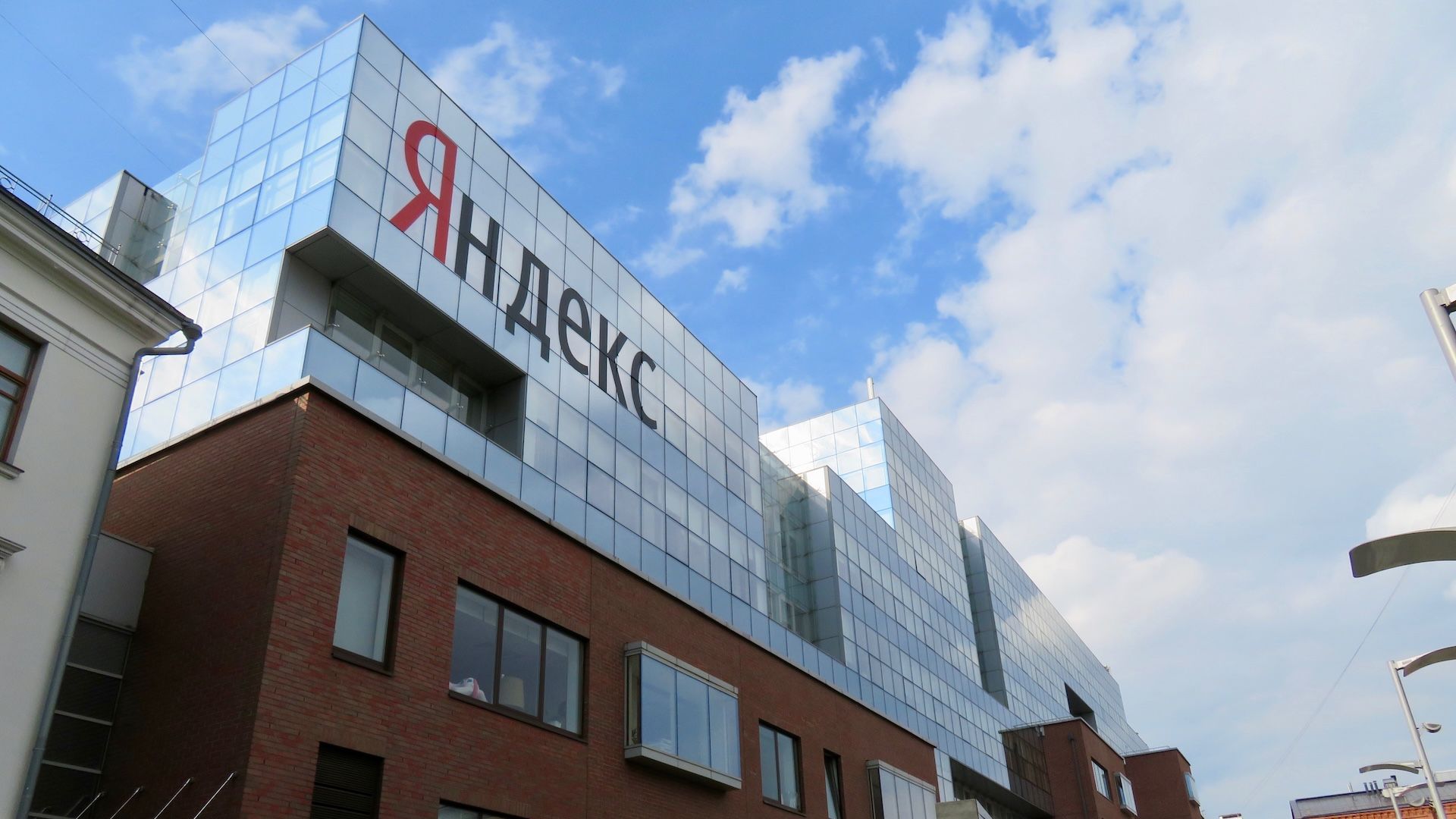
Executive Summary & Market Positioning
The ongoing geopolitical conflict has increasingly manifested as a war of attrition on digital infrastructure, culminating in a recent drone strike on Yandex's major data center facility in Sasovo, Russia. The kinetic attack triggered a catastrophic fire that forced the immediate shutdown of the facility, taking down critical pillars of Yandex Cloud and disrupting a wide swath of Russian enterprise, financial, and media services. Beyond the immediate commercial outages, the incident highlights a severe vulnerability in compute-constrained economies: the physical fragility of high-density AI clusters.
At the center of the operational fallout are two of Yandex's premier supercomputers, Chervonenkis and Lyapunov, both heavily reliant on enterprise-grade Nvidia architectures. Because sweeping Western export controls and semiconductor sanctions have effectively locked Russian firms out of direct procurement channels for advanced accelerators, these legacy clusters represent irreplaceable national assets for domestic large language model development, specifically the training of the YandexGPT ecosystem. While the exact thermal and structural damage to the server halls remains unverified at the time of reporting, the severity of the fire points to a grim reality for hardware that cannot be easily replaced.
Core Architectural & Technological Innovations
The Sasovo facility represents a dense, hyper-scale deployment tailored for heavy tensor workloads, housing tens of thousands of rack servers optimized for distributed training routines. The flagship system, Chervonenkis, was historically engineered around Nvidia A100 Tensor Core GPUs, utilizing high-bandwidth interconnect fabric to minimize latency across multi-node training jobs. Lyapunov mirrors this dense, accelerator-heavy topology, designed to crunch massive datasets required for natural language processing and deep learning paradigms.
However, the technological narrative here is defined as much by stagnation as it is by raw capability. When Chervonenkis debuted, its 21.53 FP64 PFLOPS placed it comfortably on the global Top500 stage. In the intervening years, relentless generational leaps in accelerator density, interconnect bandwidth, and FP8/FP4 mixed-precision optimizations have pushed systems utilizing Hopper and Blackwell architectures far ahead. Due to the absolute blockade on advanced semiconductor imports, Yandex has been legally and logistically barred from performing standard hardware refreshes, leaving its core computational fleet to age in place against a backdrop of rapidly accelerating global AI benchmarks.
Empirical Specifications & Benchmark Matrix
| Hardware Metric / Parameter | Yandex Chervonenkis (Sasovo) | Yandex Lyapunov (Sasovo) | Global Enterprise Baseline (Nvidia H100 Cluster) |
|---|---|---|---|
| Primary Accelerator | Nvidia A100 (Legacy) | Nvidia A100 (Legacy) | Nvidia H100 / Blackwell B200 |
| Peak FP64 Performance | ~21.53 PFLOPS | Undisclosed Sub-Tier | 100+ PFLOPS (Equivalent scale) |
| Top500 Standing (Historical/Current) | Peak 19th (2021) / 101st (Current) | Unranked / Regional Scale | Top 10 to Top 50 Globally |
| Interconnect Fabric | InfiniBand HDR | InfiniBand HDR | InfiniBand NDR / Quantum-2 |
| Sanction / Supply Vulnerability | Critical (Irreplaceable) | Critical (Irreplaceable) | Fully Supported / Refreshed |
Thermal, Efficiency & Real-World Ergonomics
Operating dense clusters of Nvidia A100 accelerators demands robust, continuous mechanical and electrical engineering support. Facilities like the Sasovo data center—situated ironically on the former grounds of the Sasta machine-tool factory—rely on massive continuous power delivery and advanced liquid- or high-volume air-cooling systems to manage the intense thermal envelopes generated by thousands of GPUs running near 100% TDP. When kinetic impacts breach these environments, the simultaneous disruption of power grids and cooling loops typically results in rapid thermal runaway, even before secondary fires consume the server racks.
From a real-world ergonomics and operational standpoint, the destruction or prolonged offline status of Sasovo cascades across the entire Russian digital ecosystem. Yandex Cloud's forced migration recommendations have exposed systemic dependencies, as financial institutions, logistics firms, and state media outlets experienced cascading downtime. Without access to local high-performance compute nodes, domestic developers face an agonizing choice: throttle their machine learning ambitions or attempt the complex pivot toward foreign, non-sanctioned infrastructure alternatives, predominantly found in restricted overseas markets.
The Definitive Verdict
The kinetic strike on the Sasovo facility underscores a brutal truth in modern hardware intelligence: supply chain blockades and physical vulnerabilities compound one another exponentially. For Yandex and the broader Russian AI sector, the loss—or even prolonged incapacitation—of the Chervonenkis and Lyapunov supercomputers represents a severe, potentially permanent setback. Because replacement Nvidia silicon is legally unobtainable, any destroyed hardware is lost forever. Ultimately, this event signals a permanent shift in how sovereign AI infrastructure must be evaluated, transforming data centers from abstract cloud nodes into highly strategic, kinetic targets in modern geopolitical conflict.