Executive Summary & Market Positioning
TP-Link, long established as the world's leading volume provider of consumer and small-office networking hardware, finds itself at a historical crossroads. Facing intense geopolitical pressure, sweeping federal scrutiny, and placement on the Federal Communications Commission's (FCC) restrictive Covered List, the company has been systematically locked out of the lucrative U.S. market for its newly deployed generation of wireless infrastructure. Competitors like Amazon (eero), Asus, and Netgear have successfully secured conditional FCC approvals, leaving TP-Link's groundbreaking Archer 8 and Deco 8 Ultra Wi-Fi 8 portfolios completely absent from American retail shelves while simultaneously rolling out across the United Kingdom, Europe, and Australia.
In response to these existential regulatory barriers—compounded by coordinated state-level lawsuits alleging misleading security claims and opaque historical supply chains tied to mainland China—TP-Link is executing a massive strategic pivot. The company has announced a landmark letter of intent proposing a $1 billion domestic manufacturing alliance with Key Tronic. By shifting assembly operations from overseas facilities to Corinth, Mississippi, TP-Link aims to directly align with domestic industrial policy objectives, generate local high-paying manufacturing jobs, and clear the formidable regulatory hurdles currently paralyzing its North American market penetration.
Core Architectural & Technological Innovations
From a silicon and RF engineering perspective, the transition to domestic assembly arrives as TP-Link pushes the bleeding edge of wireless communications with its Wi-Fi 8 architecture. The upcoming hardware lines—exemplified by the Archer 8 Ultra and Deco 8 Ultra mesh systems—represent a fundamental evolution in multi-gigabit routing. Unlike transitional Wi-Fi 7 implementations, these next-generation units integrate advanced multi-link operation (MLO) algorithms, dynamic channel utilization across congested spectrums, and ultra-dense quadrature amplitude modulation (4096-QAM and beyond) to minimize latency down to single-digit microsecond thresholds in complex home and office topologies.
Under the hood, these platforms leverage highly integrated system-on-chip (SoC) network processors paired with expansive non-volatile flash storage and high-speed DDR4/DDR5 RAM pools to manage stateful inspection, deep packet analysis, and hardware-accelerated VPN throughput without CPU throttling. The Key Tronic manufacturing partnership in Mississippi will require the precise replication of surface-mount technology (SMT) lines capable of handling complex radio frequency (RF) front-end modules, intricate multi-antenna arrays, and high-frequency printed circuit boards (PCBs). Ensuring that these domestically assembled units maintain the exact thermal tolerances, signal integrity, and manufacturing yield of their Asian counterparts will be the ultimate engineering test for the alliance.
Empirical Specifications & Benchmark Matrix
| Specification / Feature | TP-Link Archer 8 Ultra (Wi-Fi 8) | Market Baseline (Wi-Fi 7 Competitors) | Key Tronic US Assembly Target |
|---|---|---|---|
| Wireless Standard | Wi-Fi 8 (Draft / Advanced MLO) | Wi-Fi 7 (802.11be) | Wi-Fi 8 (Aligned with Global Spec) |
| Max Theoretical Aggregate Speed | Up to 24 Gbps | 18.5 - 22 Gbps | Up to 24 Gbps |
| Wired Backhaul / LAN Ports | Dual 10GbE SFP+ / RJ45 Combos | Single 10GbE + Multi-Gigabit LAN | Dual 10GbE SFP+ / RJ45 Combos |
| SoC Architecture | Multi-Core ARM Cortex (High-End) | Quad-Core 2.0 GHz+ Network SoC | Identical Silicon Import Specification |
| Manufacturing Origin | Corinth, Mississippi (Proposed) | Vietnam / Taiwan / China | United States (Domestic Assembly) |
| Regulatory Status (U.S.) | Pending Conditional FCC Review | Approved (Conditional 18-Month) | Designed for Full Compliance |
Thermal, Efficiency & Real-World Ergonomics
High-performance routing at multi-gigabit speeds generates substantial thermal output, demanding rigorous thermal management and structural chassis engineering. TP-Link's modern enterprise-grade consumer routers employ sophisticated passive cooling architectures, utilizing heavy-gauge aluminum heatsinks, copper vapor chambers, and intelligently placed convective airflow channels to dissipate heat away from high-draw RF amplifiers and multi-core network processors. The proposed Mississippi production line must rigorously adhere to these precise thermal dissipation tolerances to ensure long-term hardware reliability under continuous 100% network loads.
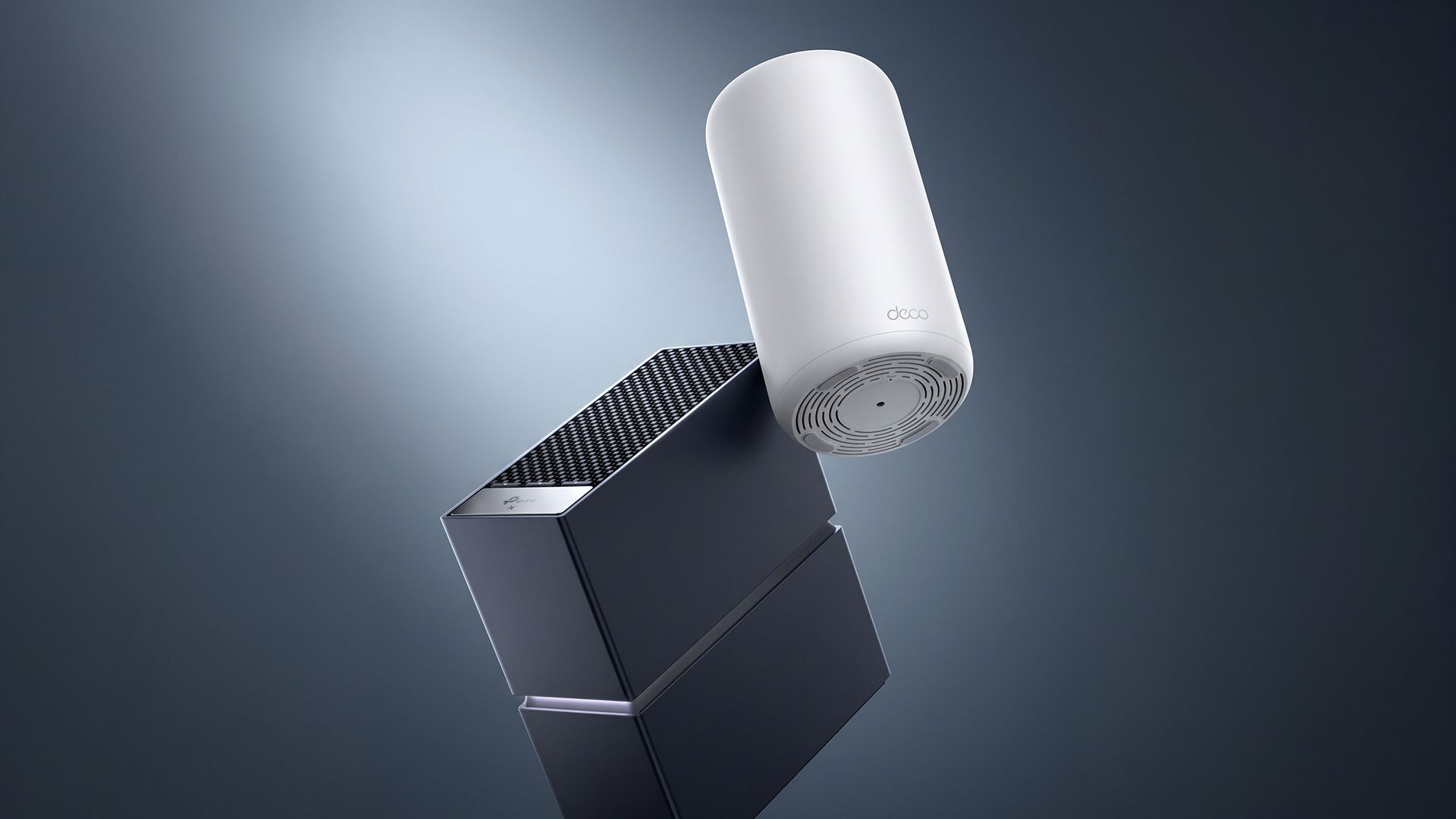
Real-world deployment ergonomics are equally critical for enterprise and prosumer environments. The architectural layout of the upcoming domestic units maintains the clean, vertical-tower aesthetic of the global Archer series, balancing internal antenna isolation with spatial separation to maximize spatial stream performance. Power efficiency has also been optimized, with dynamic power-scaling states that reduce operational draw during idle periods while instantly ramping up power delivery to transceiver chains during heavy data packet bursts. Quality control testing at the Key Tronic facility will need to rigorously verify these power management profiles to meet stringent U.S. energy efficiency standards.
The Definitive Verdict
TP-Link's proposed $1 billion investment and manufacturing alliance with Key Tronic is a masterclass in corporate adaptation. While state-level legal challenges and the federal FCC ban have severely disrupted the company's North American momentum, this decisive pivot toward domestic assembly in Mississippi addresses the core geopolitical grievances driving the regulatory blockade. For hardware consumers and enterprise networks alike, the successful execution of this partnership is paramount: it promises to restore hyper-competitive pricing, break stagnant localized monopolies, and ensure American households gain unimpeded access to world-class Wi-Fi 8 connectivity.