Executive Summary & Market Positioning
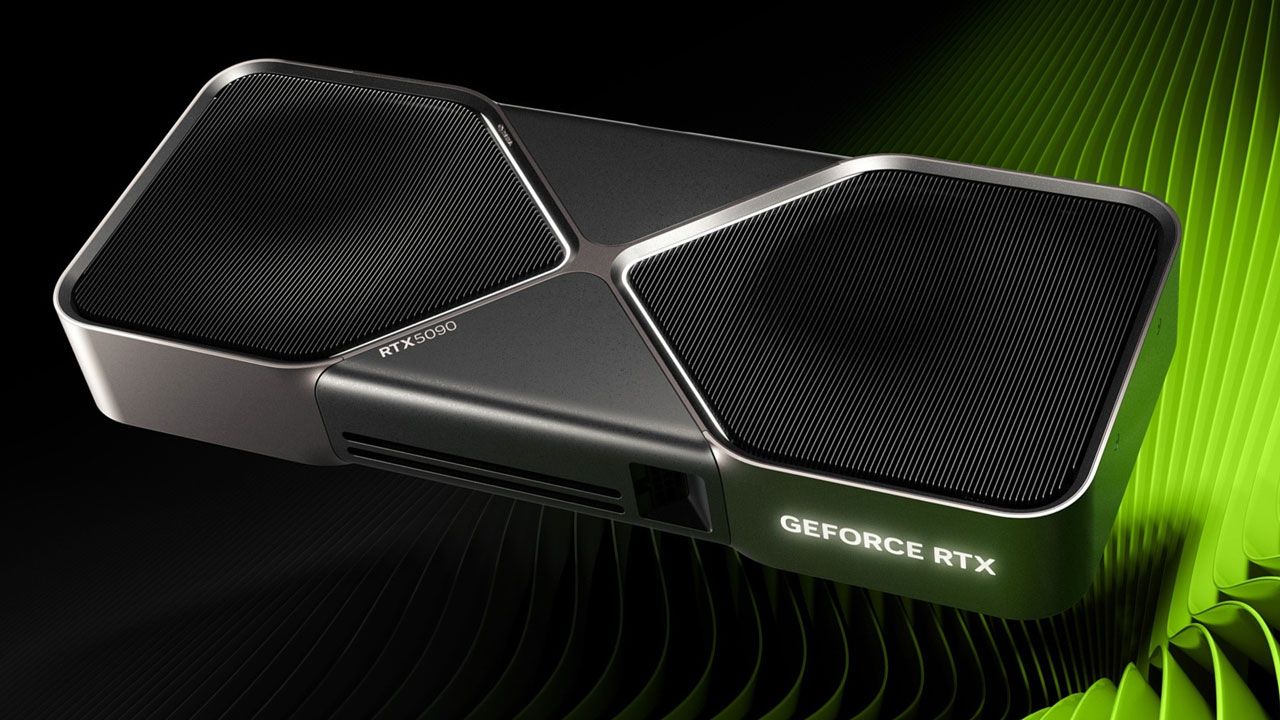
The high-end enthusiast graphics card market is facing a profound structural shift marked by the impending discontinuation of NVIDIA’s flagship consumer processor, the GeForce RTX 5090. Industry rumblings and inventory patterns indicate that independent retail stock is rapidly evaporating, with key distributors scaling back standalone availability. Given that no direct architectural successor from NVIDIA is anticipated on hardware roadmaps until at least 2028, the window to secure ultimate-tier consumer rendering hardware is slamming shut. Originally introduced at a formidable base MSRP of $1,999, standalone card pricing has since decoupled from standard economic realities, surging past $7,500 across secondary and residual channels due to intense supply constraints and insatiable enterprise-adjacent demand.
For the discerning hardware analyst, this market dynamic mirrors the inflationary spirals observed during previous generation twilight phases, such as the sudden supply drought of the RTX 4090. However, the velocity of the RTX 5090's phase-out is unprecedented. With bare-board availability vanishing from major outlets like Micro Center, enthusiasts are forced to look at systemic purchasing workarounds. Prebuilt desktop ecosystems—featuring high-end chassis integrations from Dell, MSI, and Skytech—now represent the most viable, economically rational pathway to acquiring this silicon titan. Rather than paying exorbitant scalper tariffs for loose inventory, acquiring a fully integrated system containing the RTX 5090 effectively subsidizes the peripheral hardware, shielding buyers from the worst of the standalone price gouging.
Core Architectural & Technological Innovations
At the silicon level, the RTX 5090 remains an engineering marvel that drastically redefines the boundaries of consumer graphics microarchitecture. Built upon a massive, bleeding-edge die, the card houses an astonishing 21,760 CUDA cores—more than double the compute density found in the step-down RTX 5080, which sits at 10,752 cores. This colossal scaling in parallel processing units translates directly into unprecedented raw floating-point performance, solidifying its role as a computational powerhouse capable of handling not only uncompressed native 4K gaming at maximal refresh rates, but also localized large-scale AI model training, complex path tracing, and real-time ray reconstruction workloads.
Memory subsystem architecture is equally revolutionary. The RTX 5090 equips a staggering 32GB of ultra-fast GDDR7 VRAM operating across a wide 512-bit memory bus. This configuration yields an incredible peak memory bandwidth of up to 1,792 GB/s, effectively obliterating frame-buffer bottlenecks in memory-intensive scenarios such as uncompressed texture streaming and multi-display simulation rigs. When paired with advanced cache hierarchies and hardware-accelerated tensor cores, the architectural envelope of the RTX 5090 ensures it will remain a relevant, uncompromised compute engine well into the next decade, effortlessly justifying its technological supremacy over contemporary competitors.
Empirical Specifications & Benchmark Matrix
| Specification Metric | NVIDIA GeForce RTX 5090 | NVIDIA GeForce RTX 5080 (Baseline) | Delta / Scaling Factor |
|---|---|---|---|
| CUDA Cores | 21,760 | 10,752 | +102.4% (Over 2x) |
| VRAM Capacity & Type | 32GB GDDR7 | 16GB GDDR7 | +100% Capacity, Same Type |
| Memory Bus Width | 512-bit | 256-bit | +100% Bandwidth Path |
| Peak Memory Bandwidth | Up to 1,792 GB/s | ~960 GB/s | ~86.6% Increase |
| Base Launch MSRP | $1,999 (Current: $7,500+) | $999 - $1,199 | Severe Market Inflation |
Thermal, Efficiency & Real-World Ergonomics
Managing the thermal output of a 21,760-core silicon behemoth requires uncompromising engineering rigor. The thermal design power (TDP) of the RTX 5090 pushes the absolute limits of standard PCIe power delivery and conventional air-cooling configurations. In real-world deployment, reference and custom partner boards utilize massive triple-slot (and occasionally quadruple-slot) vapor chamber heatsinks paired with high-static-pressure axial fans to dissipate hundreds of watts of sustained thermal energy. Case airflow becomes a critical path requirement; restricted chassis designs will quickly trigger thermal throttling, diminishing the card's ability to maintain peak boost clocks during marathon rendering or gaming sessions.
Power delivery systems on these boards are similarly industrial-grade, demanding robust multi-phase VRMs and reliable 12V-2x6 power connections to prevent the melting anomalies seen in earlier high-wattage connectors. Users adopting prebuilt configurations—such as the Alienware Area-51 or MSI Infinite ZS—benefit from factory-tuned thermal management and chassis designs specifically optimized to exhaust the thermal plumes generated by the GPU. However, the sheer physical dimensions and weight of the card necessitate reinforced PCIe slots and anti-sag brackets to prevent structural PCB damage over extended operational lifespans.
The Definitive Verdict
The NVIDIA GeForce RTX 5090 represents the absolute pinnacle of consumer graphics engineering, combining unmatched parallel compute capability, a massive 32GB GDDR7 frame buffer, and raw performance metrics that stand unchallenged in the market. With its imminent discontinuation and the absence of a replacement until 2028, the hardware landscape is entering an era of severe scarcity. For elite enthusiasts and professional creators with deep pockets, purchasing standalone stock at inflated secondary prices is an exercise in diminishing returns. Instead, leveraging high-end prebuilt systems—such as those pairing the RTX 5090 with AMD’s formidable Ryzen 9 9950X3D processors—offers the smartest tactical acquisition vector. If you demand the absolute best and have the capital to invest, this is your final definitive window to pull the trigger before the silicon vanishes entirely.