Executive Summary & Market Positioning
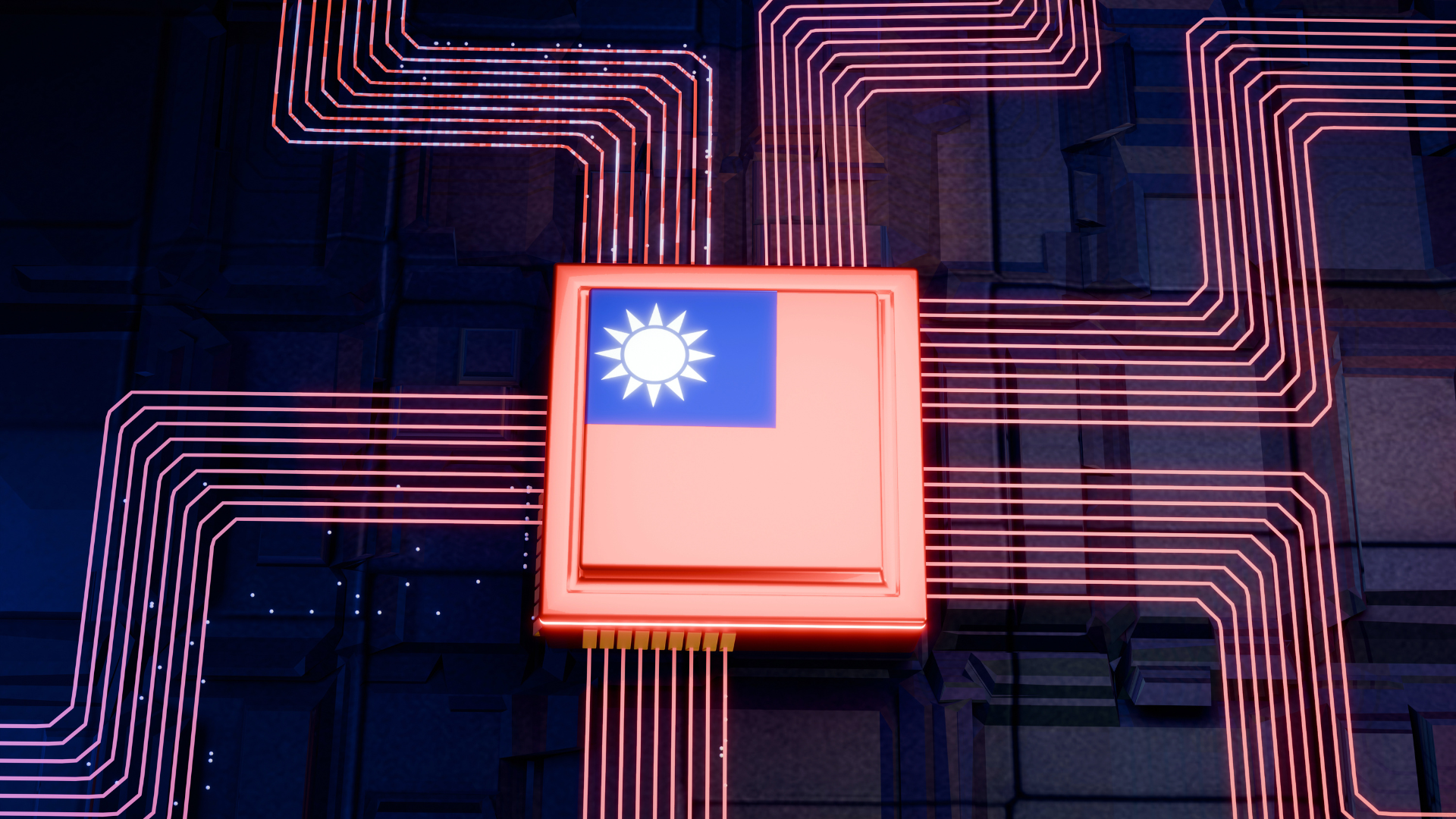
The semiconductor renaissance currently underway in the United States faces a critical vulnerability: the deep, interdependent ecosystem of specialized sub-tier suppliers. While headline-grabbing capital expenditures—such as TSMC's staggering $165 billion outlay in Arizona and its subsequent $100 billion commitment for advanced 2nm fabs—dominate financial news, raw fabrication real estate tells only half the story. To produce bleeding-edge silicon at scale, foundries rely on hundreds of smaller, highly specialized Tier-2 and Tier-3 enterprises providing chemical precursors, precision mechanical components, specialized cleanroom substrates, and advanced packaging tooling. Recognizing this systemic fragility, Taiwan is spearheading a massive counter-initiative through the Taiwan Electrical and Electronic Manufacturers’ Association (TEEMA), raising at least $4 billion to construct a dedicated industrial park in Texas.
This strategic positioning is designed to eliminate the logistical friction that has traditionally plagued trans-oceanic semiconductor supply chains. By establishing a localized manufacturing cluster in Texas, Taiwanese smaller-scale partners can co-locate near major regional consumers, including emerging mega-facilities like Elon Musk's Terafab and Texas-based enterprise nodes. Crucially, the Taiwanese government is backing this endeavor with robust financial instruments, including direct loan guarantees and bureaucratic navigation support for visas and federal permits. This infrastructure bridge ensures that the vital mechanical and chemical cogs required to keep multi-billion-dollar Extreme Ultraviolet (EUV) lithography tools running 24/7 are forged on domestic soil, drastically shortening lead times and hardening the US AI hardware supply chain against geopolitical and logistical disruptions.
Core Architectural & Technological Innovations
At the silicon level, the integration of sub-tier suppliers into domestic clusters is inextricably linked to the success of advanced packaging paradigms like Chip-on-Wafer-on-Substrate (CoWoS) and System-on-Integrated-Chips (SoIC). As the industry pushes past the 2nm threshold and toward sub-1.4nm nodes, the mechanical tolerances required for wafer handling, precision etching gases, and interposer substrates become exponentially tighter. The Texas industrial park initiative is structurally architected to solve these micro-logistical hurdles. Without localized access to high-purity chemical suppliers and ultra-precise calibration equipment vendors, advanced packaging yields plummet, directly throttling the throughput of AI accelerators demanded by hyperscalers and enterprises.
Furthermore, this infrastructure play directly addresses the technological bottlenecks highlighted by industry luminaries such as Nvidia CEO Jensen Huang. The complex orchestration of high-bandwidth memory (HBM), multi-die interposers, and massive silicon interposers requires real-time collaboration between the foundry and its auxiliary component providers. By embedding these Tier-2 specialists directly into the Texas ecosystem, communication latency is minimized. However, the architectural boundary remains strictly defined: while American firms and regional partners are explicitly invited to integrate into this supply chain, core proprietary manufacturing know-how and foundational intellectual property remain protected under strict national frameworks, ensuring that technology transfer is balanced with localized manufacturing efficiency.
Empirical Specifications & Benchmark Matrix
| Parameter / Metric | Legacy US Supply Baseline | New Texas Industrial Park Framework | Empirical Impact |
|---|---|---|---|
| Capital Deployment | Fragmented / Ad-hoc sub-tier funding | $4B+ initial TEEMA-backed consortium | High-density localized funding |
| Supply Chain Proximity | 7,000+ miles (Trans-Pacific transit) | Direct co-location in Texas corridor | Reduces transit lead times by up to 80% |
| Regulatory & Visa Support | Self-navigated federal/state permits | Streamlined government-backed facilitation | Accelerates facility time-to-market |
| Ecosystem Integration | TSMC/Foxconn primary focus only | Open to US firms & regional giants (e.g., Terafab) | Broadens cross-border technical synergy |
| Financial Instruments | Commercial loans with high interest | State-backed loan guarantees & subsidies | Lowers operational barrier to entry |
Thermal, Efficiency & Real-World Ergonomics
Transitioning high-precision component manufacturing to a domestic footprint introduces significant operational challenges, particularly concerning environmental control, power delivery, and thermal management. Semiconductor sub-tier manufacturing—ranging from ultra-pure chemical synthesis to precision ceramic machining—demands continuous, uninterrupted power grids and stringent cleanroom environments. Texas was strategically selected not only for its geographic proximity to key tech hubs but also for its industrial real estate scalability. Nevertheless, managing the massive electrical loads required by advanced manufacturing facilities will test local power infrastructure reliability, requiring micro-grid integration and heavy investment in industrial-grade cooling systems.
Operationally, the human element remains a paramount bottleneck. While the physical infrastructure can be erected via the $4 billion capital injection, upskilling the local Texas workforce to meet the exacting quality control standards of Taiwanese precision manufacturing requires intensive, long-term collaboration. The initiative successfully bridges this gap by establishing a collaborative framework where local American workers train alongside seasoned Taiwanese engineers. This knowledge transfer optimizes real-world operational ergonomics, ensuring that the defect densities of locally produced components match or exceed traditional overseas manufacturing benchmarks.
The Definitive Verdict
Taiwan's $4 billion Texas industrial park initiative is not merely a real estate venture; it is a vital structural intervention that addresses the weakest link in the Western semiconductor supply chain. By underwriting the expansion of essential sub-tier manufacturers, this project solves the hidden bottlenecks that threaten to stall advanced nodes and AI hardware scaling. For the broader hardware industry, this development transitions the 'Taiwan model' from a theoretical blueprint into operational reality, solidifying a resilient, high-yield manufacturing corridor on US soil.