Executive Summary & Market Positioning
Recent financial reports indicate that SpaceX is actively engineering a massive $40 billion debt package slated for 2027, engineered primarily to procure next-generation Nvidia artificial intelligence processors. While corporate structures formally route this initiative through Elon Musk’s broader ecosystem, the operational windfall targets xAI's hyper-scale compute clusters. The proposed financial vehicle reportedly combines $10 billion in direct bank loans with $30 billion in investment-grade debt, with financial heavyweights like Apollo Global Management and Pimco rumored to helm the structuring. This unprecedented capital injection underlines a fundamental shift in hyperscale infrastructure acquisition, moving past traditional venture capital and corporate cash flows into sovereign-scale debt instruments.
From a market positioning standpoint, this expenditure shatters historical precedents for single-entity hardware procurement cycles. Building upon xAI's previous deployments—such as the Colossus cluster iterations leveraging hundreds of thousands of Blackwell-architecture accelerators—the 2027 deployment timeline maps directly to Nvidia's upcoming Vera Rubin generation. By locking in billions in dedicated hardware financing years in advance, xAI is attempting to preempt global silicon scarcity, secure tier-one foundry allocations, and maintain an aggressive trajectory in the generative AI foundational model arms race. This strategy treats advanced silicon not merely as a capital expense, but as a primary strategic asset comparable to heavy industrial infrastructure.
Core Architectural & Technological Innovations
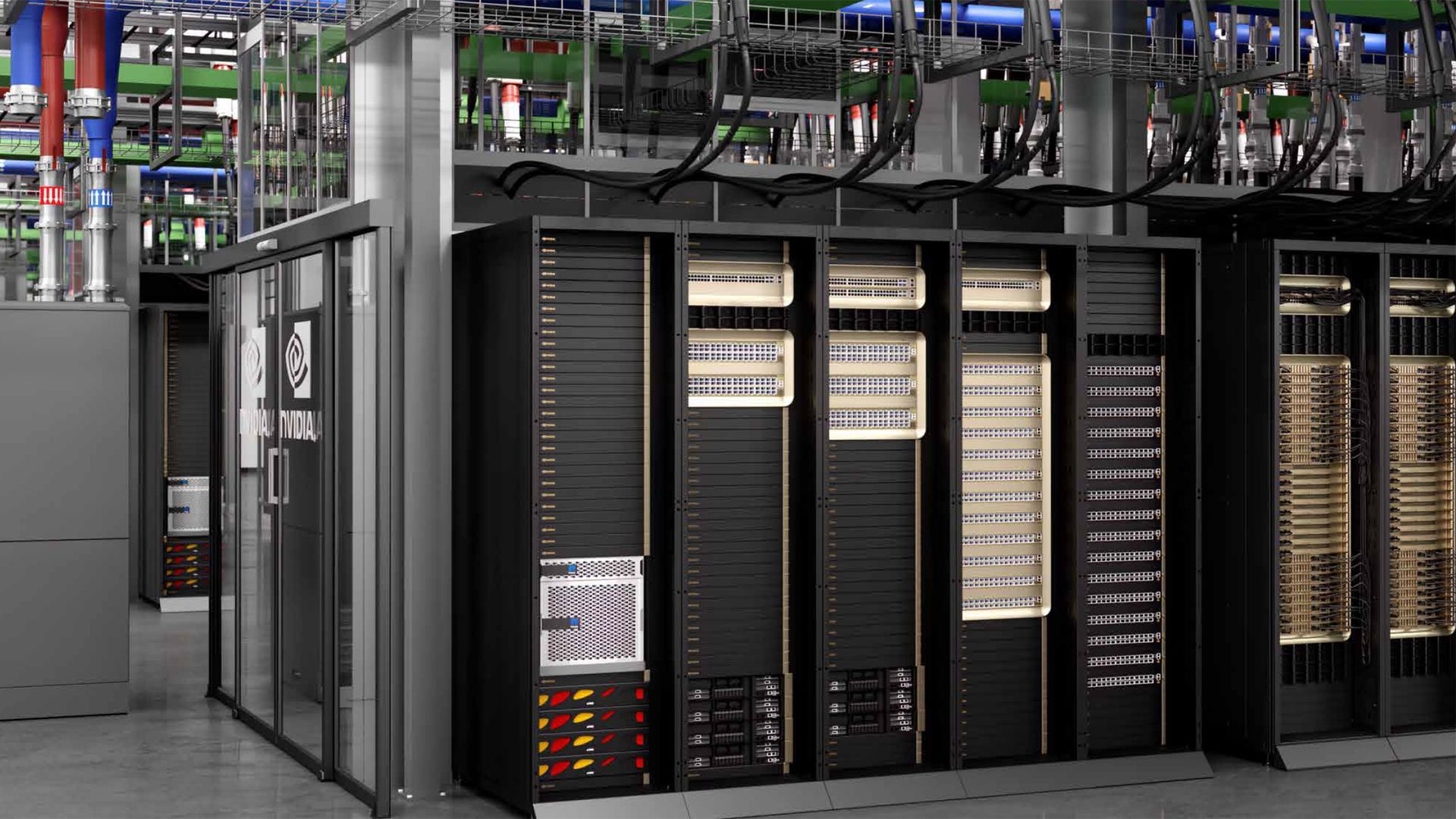
The technological anchor of this projected $40 billion spend is Nvidia's forthcoming Vera Rubin architecture, specifically expected to deploy in rack-scale configurations akin to the Rubin NVL72. Moving past the architectural paradigms of Hopper and Blackwell, the Rubin generation introduces sweeping overhauls to compute-to-memory ratios, optical interconnect integration, and proprietary NVLink switch fabrics. With individual rack units commanding astronomical valuations—estimated around $8.8 million per NVL72 assembly—the hardware represents the absolute bleeding edge of dense heterogeneous computing. Each rack integrates custom-designed processors, advanced high-bandwidth memory (HBM4), and co-designed silicon optimized for massive transformer-based inference and training workloads.
At a macro scale, allocating $40 billion to the Rubin NVL72 ecosystem translates to approximately 5,000 fully integrated rack systems housing roughly 360,000 individual Nvidia Rubin AI accelerators. This density drastically alters data center topology requirements. Unlike traditional server deployments where nodes are assembled incrementally from disparate motherboards and interface cards, the Rubin rack-scale approach treats the entire 72-GPU chassis as a single monolithic compute engine. This minimizes latency bottlenecks, maximizes intra-rack bandwidth through multi-terabit optical transceiver arrays, and streamlines the complex orchestration required to train frontier-class foundational models without suffering from network-induced starvation.
Empirical Specifications & Benchmark Matrix
| Hardware Metric | Nvidia Blackwell GB200 (Baseline) | Nvidia Vera Rubin NVL72 (Projected) | Architectural Delta |
|---|---|---|---|
| Process Node | TSMC 4NP Custom | Advanced N3 / N2 Class | Higher transistor density & lower leakage |
| Memory Standard | HBM3e (up to 192GB/pkg) | HBM4 (Expanded capacity/bus width) | Exponential memory bandwidth increase |
| Interconnect Bandwidth | 1.8 TB/s bidirectional per GPU (NVLink) | Next-Gen NVLink Switch Fabric | Reduced latency, higher scaling efficiency |
| Estimated Unit Cost | ~$3M – $4M per rack equivalent | ~$8.8M per NVL72 rack | Reflects integration scale and HBM4 premiums |
| Target Deployment | 2024–2025 (Colossus iterations) | 2027 (xAI Target Window) | Next-generation frontier training capability |
Thermal, Efficiency & Real-World Ergonomics
Deploying approximately 360,000 Rubin accelerators across 5,000 rack units introduces unprecedented thermodynamic and facility-engineering challenges. With individual rack power densities scaling well past 100 kilowatts—and potentially approaching the 150kW threshold depending on clock tuning and workload intensity—air cooling is entirely obsolete for this class of hardware. Facilities housing the xAI rollout will rely entirely on advanced liquid-to-chip cooling loops, precise coolant distribution manifolds (CDMs), and high-capacity secondary loop heat exchangers. The thermal management must maintain strict junction temperatures to prevent thermal throttling while sustaining multi-month, uninterrupted training runs.
Power delivery ergonomics are equally formidable. Operating 5,000 dense racks demands dedicated megawatt-scale substation infrastructure, robust battery energy storage systems (BESS) for grid stabilization, and redundant uninterruptible power supplies (UPS) to mitigate micro-outages that could otherwise corrupt active checkpoint states during massive model training runs. The efficiency gains delivered by the Rubin architecture's advanced lithography nodes are crucial here; without dramatic improvements in performance-per-watt, the sheer electrical draw of scaling to 360,000 units would exceed the practical grid interconnect limits of standard data center corridors, forcing hyper-scalers to co-locate adjacent to dedicated power generation sources.
The Definitive Verdict
SpaceX and xAI’s calculated pursuit of a $40 billion debt package for Nvidia Rubin hardware is a high-stakes, capital-intensive masterclass in infrastructure dominance. Financially, leveraging investment-grade debt via institutions like Apollo and Pimco allows the enterprise to secure generational compute without diluting equity prematurely. Technologically, the deployment of roughly 5,000 Vera Rubin NVL72 systems positions xAI at the absolute frontier of global artificial intelligence capability, providing the raw FLOPS and memory bandwidth required to outpace competitors constrained by conventional capital expenditure models.
Final Recommendation: For institutional analysts and hardware engineers alike, this move signals that the AI infrastructure race has entered an industrial-scale phase where access to debt markets and advanced rack-scale silicon dictate market leadership. While the financial exposure is staggering, the technological dividends of securing 360,000 Rubin accelerators ensure that xAI's compute moat will remain virtually impenetrable through the late 2020s.