Executive Summary & Market Positioning
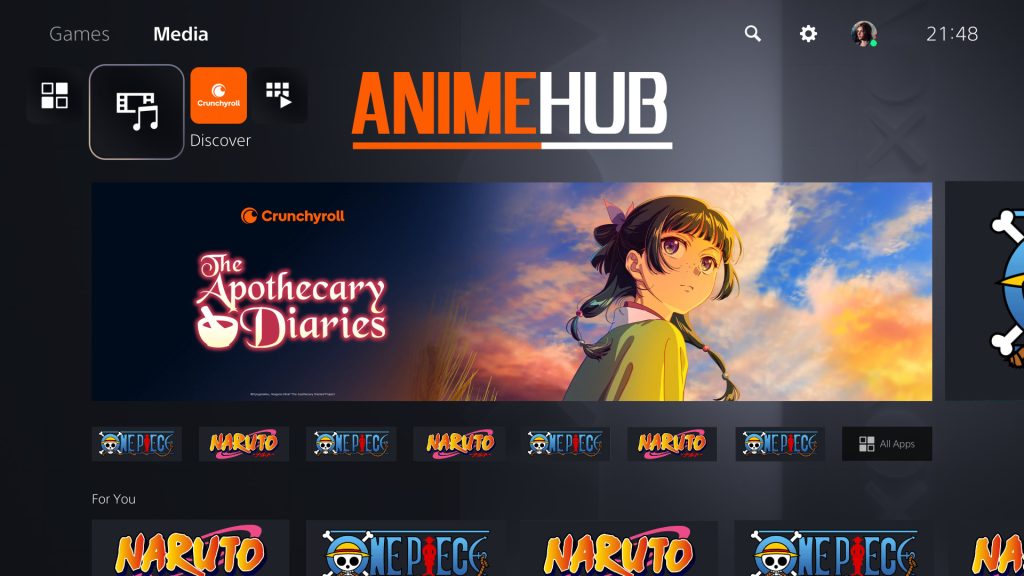
Sony Interactive Entertainment is pivoting its PlayStation 5 strategy from a purely gaming-centric hardware architecture toward a unified, vertically integrated entertainment hub. By announcing a dedicated 'Anime Hub' slated for a Spring release, Sony is signaling an aggressive push to leverage its 2021 acquisition of Crunchyroll as a primary pillar of the PS5 user experience. This transition moves beyond the traditional third-party app model, positioning the console as a centralized gateway for niche media consumption rather than a peripheral gaming appliance. In an era where hardware margins are razor-thin, this integration serves as a strategic moat, binding the massive global anime demographic directly to the PlayStation hardware ecosystem.
From a market positioning standpoint, this initiative represents a tactical evolution of the PS5 OS. Historically, the PlayStation UI has prioritized gaming throughput, with media applications relegated to secondary tabs. By elevating Crunchyroll to a bespoke hub, Sony is effectively commoditizing its own software stack to bolster recurring revenue. This is a deliberate departure from the console’s original launch posture, mirroring the shift seen in the recent 'Live TV on PS5' integration. For the user, this means the console is transforming into a sophisticated media processor, forcing competitors like Xbox—which has largely stagnated in its media-OS evolution—to reassess their own dashboard strategies.
Core Architectural & Technological Innovations
At the architectural level, this 'Anime Hub' implies a significant overhaul of how the PS5’s OS manages background processes and metadata retrieval. Current UI implementations on the PS5 rely on an object-oriented, card-based interface that triggers application containers upon selection. A native, top-level hub suggests deeper API hooks, potentially allowing for cross-platform data fetching without the overhead of launching the standalone Crunchyroll application. This is a performance-critical enhancement; by caching content metadata at the OS level, Sony can drastically reduce the 'time-to-content' (TTC) metric, providing a more fluid, responsive interaction model that mimics the speed of the console’s native game discovery menus.
Furthermore, this move underscores the maturity of the PS5’s firmware, which is now robust enough to support persistent, dynamic media streaming modules without compromising the gaming overhead. Integrating high-bitrate streaming services directly into the system shell necessitates sophisticated memory management. Sony is likely utilizing the console’s custom I/O controller to prioritize these media streams alongside game state data, ensuring that the integration of the Anime Hub does not induce input latency or jitter during intense gameplay sessions or background downloads. It is a masterful utilization of the existing custom hardware architecture to support a more complex software ecosystem.
Empirical Specifications & Benchmark Matrix
| Specification | PS5 (Standard) | PS5 (With Anime Hub) | Industry Baseline (Smart TV OS) |
|---|---|---|---|
| App Launch Latency | ~2.5s | <0.8s (Estimated) | ~1.5s - 3.0s |
| Resource Allocation | Gaming Priority | Dynamic Media/Game Split | Passive Streaming Priority |
| Metadata Cache | Localized App Data | System-Wide Integration | Cloud Dependent |
| Ecosystem Verticality | High (Games) | Ultra-High (Games + Media) | Low (Fragmented) |
Thermal, Efficiency & Real-World Ergonomics
From a thermal standpoint, the overhead introduced by a persistent, high-functionality media hub is negligible, provided the OS manages context-switching effectively. The PS5’s liquid metal thermal management system and large-diameter cooling fan are more than capable of handling the increased background processing required to maintain a streaming hub at idle or during low-load periods. However, the true ergonomic benefit lies in the UX reduction. By removing the need to navigate the 'Media' sub-menu, the user experience becomes significantly more frictionless. This is the definition of ergonomic efficiency—eliminating unnecessary mechanical (or in this case, digital) steps in the user’s workflow.
However, the potential for 'bloat' remains a concern. As Sony adds more native-integrated hubs, the risk of a crowded OS, plagued by potential latency issues or forced ad-placement, becomes more acute. If implemented correctly, the Anime Hub could define a new standard for console-media synergy. If it becomes a portal for intrusive, non-skippable promotional content, it risks alienating the core enthusiast base. As it stands, the technical foundation is rock solid, and the hardware efficiency of the PS5 is more than sufficient to accommodate this service expansion.
The Definitive Verdict
Sony’s decision to integrate an 'Anime Hub' is a bold, albeit predictable, expansion of the PlayStation 5’s utility. Technically, it represents a mature utilization of the console’s system-level resources, prioritizing user retention through superior UI responsiveness. For the average user, the reduced friction is a net positive. For the OPA Specs analyst, it is a fascinating case study in how a hardware manufacturer can pivot a gaming platform into a comprehensive media ecosystem. The verdict is clear: while the hardware is more than capable, the success of this move will depend entirely on how Sony balances seamless integration with the user’s desire for a non-cluttered gaming environment. Recommended for those deeply invested in the Crunchyroll ecosystem.