Executive Summary & Market Positioning
As the artificial intelligence boom continues to strain global power grids, the data center industry faces an unprecedented energy crisis. Current projections from the International Energy Agency indicate that electricity consumption by data centers could reach 945 TWh by 2030—rivaling the entire annual power consumption of modern industrial nations like Japan. Amid this escalating power squeeze, the hyperscale hardware ecosystem has remained laser-focused on physical interventions: building more thermally efficient silicon, expanding liquid-cooling arrays, and securing direct long-term power purchase agreements with energy utilities. Yet, systemic metrics reveal a stagnant baseline. According to the Uptime Institute’s 2025 survey, average Power Usage Effectiveness (PUE) has remained essentially flat for six consecutive years. While PUE measures facility-level overhead, it remains blind to the computational utility of the software stack driving the hardware.
Servers account for roughly 60 percent of electricity demand in modern hyperscale installations, whereas cooling infrastructure spans from 7 percent in elite facilities to over 30 percent in legacy enterprise setups. This imbalance underscores a myopic industry reliance on physical hardware replacement. Silicon cycles are notoriously slow and capital-intensive, encumbered by mounting fabrication costs on advanced semiconductor nodes. Conversely, the upper tiers of the computing stack—systems software, compilation frameworks, optimization algorithms, and inference models—offer agile levers for efficiency. By rethinking algorithmic workloads and execution parameters, hyperscalers can bypass physical hardware lead times and extract compounding energy savings from existing silicon deployments without sacrificing raw computational throughput.
Core Architectural & Technological Innovations
Recent empirical research from academic initiatives and silicon vendors demonstrates that software-driven optimization can radically slash energy profiles. Jae-Won Chung and researchers at the ML.Energy initiative have shown that model execution precision profoundly impacts energy consumption. Tests involving the Alibaba Qwen 3 235B A22B Thinking model reveal that executing inference in the FP8 lower-precision format cuts energy expenditure by up to one-third compared to bfloat16 equivalents, without destabilizing complex problem-solving routines. Furthermore, training optimizations such as the Perseus optimizer dynamically identify and throttle under-loaded training phases to align execution timelines with heavier compute loops, shaving up to 30 percent off training energy requirements.
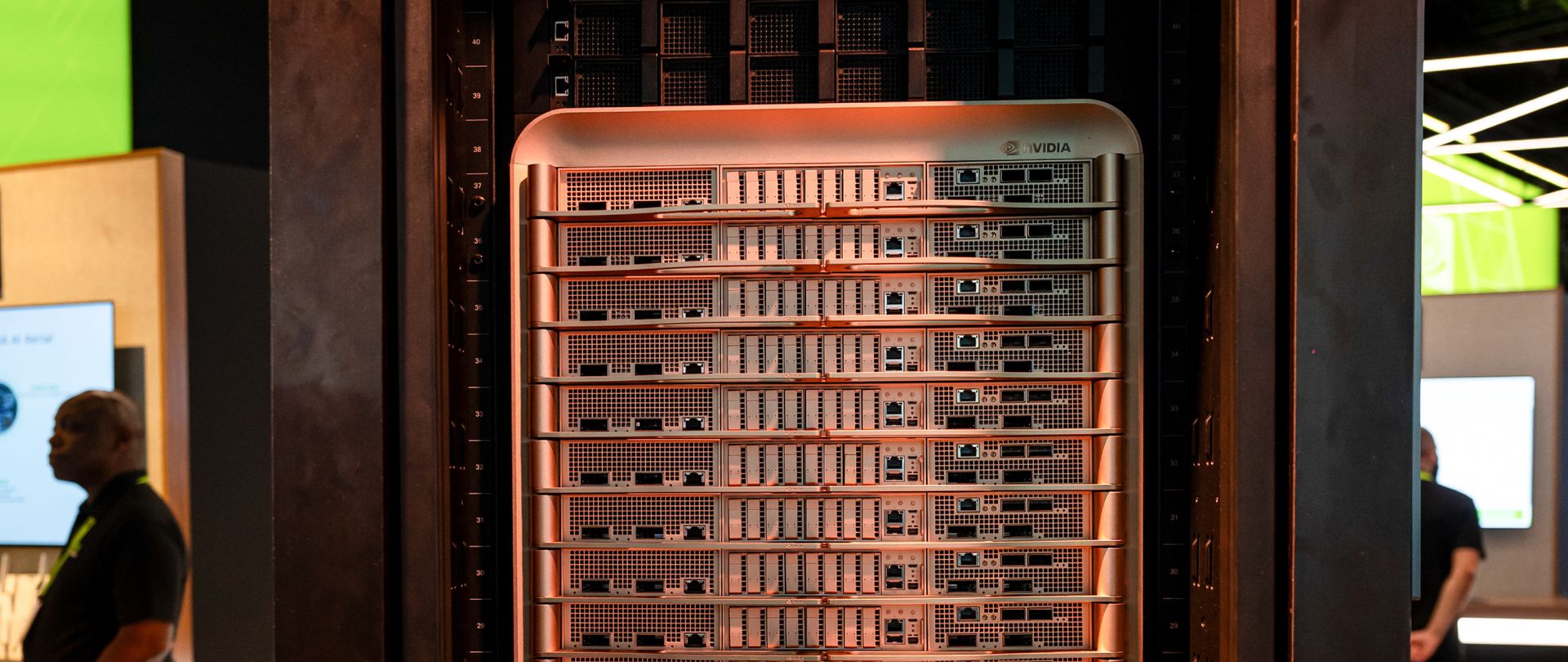
Hardware vendors are similarly capitalizing on algorithmic and firmware-level controls. Nvidia’s Blackwell power profiles illustrate this shift, dynamically fine-tuning GPU compute clocks, memory frequencies, power caps, NVLink states, and cache configurations in real-time to match specific workloads. These fine-grained adjustments yield up to 15 percent energy reductions while retaining 97 percent or more of baseline performance, effectively allowing power-constrained facilities to deploy denser GPU clusters and boost overall cluster throughput by up to 13 percent. Beyond intra-node tuning, software orchestration enables temporal and spatial workload shifting. By leveraging day-ahead planning and real-time grid signaling, operators can defer batch jobs or migrate computations across global data center fleets to regions enjoying surplus renewable capacity and lower carbon intensity.
Empirical Specifications & Benchmark Matrix
| Optimization Vector | Traditional Baseline | Optimized Software State | Measured Energy Delta | Throughput Impact |
|---|---|---|---|---|
| Model Inference Precision | bfloat16 Format | FP8 Mixed-Precision Format | ~33% Reduction | Negligible degradation |
| Model Training Scheduling | Static Synchronous Loops | Perseus Dynamic Workload Balancing | Up to 30% Reduction | Neutral (Matched baseline) |
| GPU Power Profile Tuning | Maximum TDP Enforced | Nvidia Blackwell Dynamic Profiles | Up to 15% Reduction | Retains $\ge$97% performance |
| Fleet Workload Migration | Localized Continuous Compute | Grid-Aware Temporal/Spatial Shifting | Variable (Carbon-optimized) | Varies by network latency |
Thermal, Efficiency & Real-World Ergonomics
Addressing the AI power crunch also requires purging legacy technical debt from data center floors. Enterprise infrastructure managed by third-party integrators often harbors orphaned legacy equipment running unoptimized, outdated code. These legacy racks frequently represent the loudest, most power-inefficient bottlenecks in a facility. Transitioning from bloated architectures to right-sized cloud instances, implementing aggressive output token limits, and deploying routing cascades—where smaller models field routine queries while massive foundation models handle complex edge cases—dramatically curtails unnecessary compute cycles.
However, software optimization is not without friction. Fleet-wide workload migration is constrained by stringent data sovereignty regulations and the sheer network bandwidth overhead required to physically shift massive petabyte-scale datasets across geographic borders. Additionally, engineers must contend with Jevons' Paradox: efficiency gains rarely translate to absolute reductions in power consumption if every watt saved is immediately repurposed to generate an exponentially larger volume of tokens. Consequently, software must act as a sophisticated governor rather than an unconditional accelerator, ensuring every consumed watt translates directly to computational utility.
The Definitive Verdict
Software optimization is not a silver bullet capable of single-handedly replacing the need for advanced silicon or grid infrastructure upgrades. Nevertheless, it serves as an indispensable control layer for hyperscalers navigating severe power constraints. By deploying mixed-precision inference, dynamic workload balancing, and grid-aware orchestration, data center operators can maximize the ROI of increasingly expensive hardware investments while navigating tightening energy limits.
Final Recommendation: Hyperscalers and enterprise operators must immediately elevate software efficiency from an afterthought to a primary architectural pillar, prioritizing precision-scaling frameworks and dynamic power profiles to outpace physical grid limitations.