Executive Summary & Market Positioning
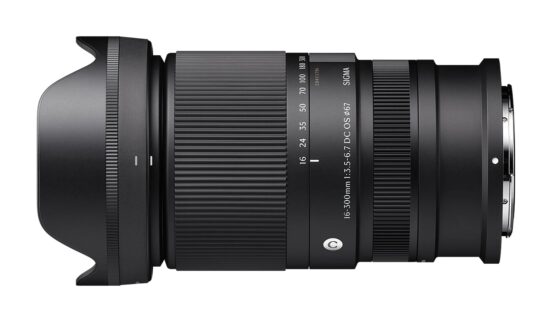
The expansion of third-party optical ecosystems for Nikon’s mirrorless architecture hits a significant milestone with the formal announcement of the Sigma 16-300mm f/3.5-6.7 DC OS Contemporary lens for Nikon Z-mount. Representing the fifth dedicated native Sigma optic designed specifically for Nikon's crop-sensor (APS-C) ecosystem, this high-ratio zoom directly addresses a critical demand among enthusiast and travel shooters: extreme focal length versatility without the historical optical compromises typically associated with ultra-wide zoom ranges. By bringing its record-breaking platform architecture to the Z-mount, Sigma bridges a crucial gap in Nikon's native DX lineup, offering an all-in-one imaging tool that minimizes kit weight while maximizing compositional reach.
Positioned squarely at the intersection of consumer accessibility and advanced mechanical engineering, this Contemporary-series lens is engineered to compete against standard kit glass and slow travel zooms. However, its expansive 18.8x zoom factor sets it apart from traditional offerings. By catering to the burgeoning market of hybrid shooters utilizing bodies like the Nikon Zfc, Z50, and newer DX platforms, Sigma is capitalizing on the physical advantages of the Z-mount's wide throat diameter and short flange focal distance. This structural synergy allows for optimized rear-element positioning, reducing peripheral light falloff and enhancing corner-to-corner optical transmission metrics across the entirety of the focal envelope.
Core Architectural & Technological Innovations
At the heart of the Sigma 16-300mm f/3.5-6.7 DC OS Contemporary lies a groundbreaking optical and mechanical design that achieves an approximate 18.8x zoom ratio—notably cited as a world first for mirrorless APS-C interchangeable lenses. Covering a 35mm-equivalent focal range that spans aggressive ultra-wide landscapes to telephoto wildlife framing, the internal configuration utilizes a complex arrangement of specialized glass elements to suppress chromatic aberrations, distortion, and field curvature. Furthermore, the optical formula facilitates a maximum magnification ratio of 1:2, granting pseudo-macro performance that elevates the lens far beyond standard walk-around utility by enabling tight, highly detailed close-up framing.
Autofocus actuation and stabilization mechanics have also received a thorough engineering overhaul. Driven by Sigma’s proprietary HLA (High-response Linear Actuator) motor, the lens delivers rapid, highly repeatable focus positioning capable of tracking unpredictable subjects like sports or avian fauna with minimal latency. To complement this speed, the integrated Optical Stabilizer (OS) system yields up to 6 stops of compensation at the wide-angle extreme and 4.5 stops at the 300mm telephoto terminal, adhering strictly to CIPA measurement guidelines. Crucially, Sigma has engineered a custom control algorithm specifically for Nikon Z-mount standards, ensuring optimized communication speeds, native support for Continuous AF (AF-C), and seamless in-camera digital aberration corrections on supported camera bodies.
Empirical Specifications & Benchmark Matrix
| Specification Parameter | Sigma 16-300mm f/3.5-6.7 DC OS | Market Baseline (Standard DX Kit Zooms) |
|---|---|---|
| Mount Type | Nikon Z-Mount (Native APS-C) | Various (Nikon, Sony, Fujifilm) |
| Focal Length Range | 16–300mm (Approx. 18.8x zoom) | 18–55mm or 55–250mm (Split kits) |
| Maximum Aperture | f/3.5 (Wide) – f/6.7 (Tele) | f/3.5–5.6 or variable slow apertures |
| Autofocus Actuator | HLA (High-response Linear) | DC Motor or Stepping Motor (STM) |
| Image Stabilization | Integrated OS (6.0 to 4.5 stops) | Variable (In-body stabilization only) |
| Macro Magnification | 1:2 Maximum Reproduction Ratio | Typically 1:4 to 1:5 max |
| Environmental Sealing | Rubber-sealed mount interface | Plastic mounts, largely unsealed |
Thermal, Efficiency & Real-World Ergonomics
From a thermodynamic and field-reliability perspective, the 16-300mm f/3.5-6.7 DC OS Contemporary is built to withstand rigorous environmental conditions. The inclusion of a rubber-sealed lens mount successfully mitigates particulate and moisture ingress at the critical camera-lens junction, a vital consideration for documentary and travel photographers operating in inclement weather. Because the lens draws minimal operational power from the host body via the electronic contacts, thermal dissipation remains entirely unproblematic during prolonged shooting sessions, ensuring that rapid focus adjustments and continuous stabilization duties do not induce hardware throttling or excessive battery drain.
Ergonomically, balancing an 18.8x zoom on compact APS-C mirrorless bodies requires careful weight distribution and tactile feedback. The zoom ring features progressive resistance to prevent barrel creep during vertical carry, while the manual focus ring offers direct linear response when paired with camera-assisted fine-tuning. Although super-zooms inherently require compromises regarding maximum aperture values at the telephoto end, the efficiency of the integrated OS system offsets the physical need for excessively high ISO values in fading light, effectively widening the operational envelope of the hardware configuration in real-world scenarios.
The Definitive Verdict
The Sigma 16-300mm f/3.5-6.7 DC OS Contemporary for Nikon Z-mount stands as a triumph of optical engineering and hardware integration. By delivering an unprecedented 18.8x zoom range paired with rapid HLA autofocus and robust optical stabilization, it eliminates the necessity of carrying multiple lenses in the field. For Nikon APS-C shooters demanding uncompromising versatility, weather-sealed durability, and exceptional close-focus capabilities in a single portable chassis, this lens earns an unreserved recommendation as an indispensable addition to the Z-system ecosystem.